The shutdown of Qatar's LNG facilities due to Middle East conflict has wiped out 30% of global helium supply. Without helium, dry etching, essential for all advanced chips, physically cannot function. South Korea's memory makers face a 5-month countdown, and the U.S. no longer has a strategic reserve to cushion the blow.
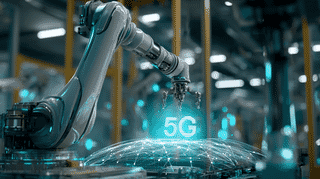
SoftBank Group is betting big on Physical AI, merging telecom infrastructure with robotics. From its $5.4B ABB acquisition to AI-RAN partnerships with NVIDIA, Arm, and Yaskawa, here's how Japan's tech giant plans to make robots think and move in real time.
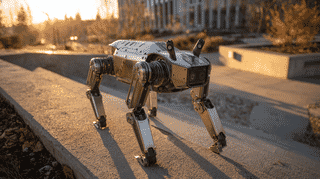
University of Tokyo's MEVIUS2 is a Spot-sized open-source quadruped robot built from sheet metal and e-commerce parts. With full hardware and software on GitHub, LiDAR and HDR camera perception, and reinforcement learning locomotion, it aims to democratize advanced robotics, at a fraction of Spot's $74,500 price tag.
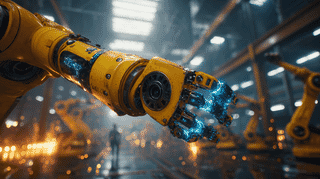
FANUC, the world's largest industrial robot maker, partners with NVIDIA for Physical AI while deliberately avoiding humanoid robots. We break down its historic open-platform shift, the NVIDIA Isaac integration, and how it plans to compete against ABB, KUKA, and China's robot surge.
AIST developed a voltage-induced static magnetization switching method using artificial antiferromagnets, enabling stable writing across a wide pulse-width range for voltage-driven MRAM. Published in Nature Materials, this breakthrough could lead to ultra-low-power memory for AI and IoT devices.
Global chip sales hit $88.8B in Feb 2026, up 61.8% YoY. Yet Japan is the only region with 9 consecutive months of decline. We analyze the structural reasons behind Japan's stagnation amid the AI-driven global boom.
UK activist fund Palliser Capital has become a top-25 shareholder of Ajinomoto and is demanding a 30%+ price increase for its ABF semiconductor insulation material. We explore how a food company holds near-100% global market share in chip packaging and what the activist wave means for Japanese corporations.
An in-depth look at Woven by Toyota, the software subsidiary steering Toyota's transformation. From the Arene platform's debut in the new RAV4 to the $1B Woven City experiment, we analyze how Toyota is fighting Tesla and BYD in the SDV era.
Asia's largest satellite operator SKY Perfect JSAT has unveiled plans to build a 100-satellite constellation combining Earth observation and communications. With a $230M investment in Planet Labs' Pelican satellites and expanded partnerships with QPS Institute, the company is positioning itself as a 'space solutions provider', taking a fundamentally different approach from SpaceX's Starlink and Amazon's Leo broadband networks.
SmartHR, Japan's leading cloud HR platform, had targeted a Tokyo Stock Exchange listing at a ¥160B (about $1B) valuation. In July 2026 Bloomberg reported the IPO was pushed to 2027 at the earliest after investors balked at the price. We look at the ARR trajectory to ¥30B, the General Atlantic and KKR backing, and what the delay says about how AI is repricing SaaS.
Microsoft announced a $10 billion investment in Japan by 2029 to expand AI data centers, strengthen cybersecurity, and train 1 million engineers. We explore the partnerships with SoftBank and Sakura Internet, Japan's sovereign AI strategy, and why US tech giants are racing to invest across Asia.
Japan's shipping giant MOL and tech conglomerate Hitachi have agreed to jointly develop floating data centers by converting used ships. Using seawater cooling to slash power costs, needing no land, and deployable in just one year, these maritime server farms offer a creative answer to the AI era's insatiable appetite for computing power.
Fujitsu will develop a fully domestic AI semiconductor (NPU) using 1.4nm process technology, with manufacturing outsourced to Japan's national chipmaker Rapidus. Backed by Japan's Ministry of Economy, the move leverages supercomputer Fugaku's energy-efficient technology. We analyze Japan's semiconductor revival strategy vs. the US CHIPS Act, EU Chips Act, and Korea's K-Chips initiative.
NTT has developed multi-core optical fiber technology that quadruples submarine cable capacity without changing cable structure. Achieving 192 cores (48 fibers × 4 cores) with deployment targeted for 2029, this Japanese innovation addresses the explosive data demands of the AI era. We explore the technology alongside Big Tech's submarine cable investment race.
Researchers at the University of Tokyo developed an AI model that integrates cine MRI imagery of uterine peristalsis with clinical data, significantly improving pregnancy prediction for patients with recurrent implantation failure. The novel approach condenses 18 seconds of uterine movement into a single image for deep learning analysis.
Four Japanese companies formed J-HRTI, a consortium to accelerate humanoid robot deployment in factories. With Japan's first private data collection center opening in July 2026, the initiative takes a unique approach focused on industrial data and real-world implementation amid fierce US-China competition.
Japan's LDP launches the 'Next-Generation AI & On-Chain Finance Vision PT' to reshape the country's financial system using blockchain and AI. From stablecoin pilots by mega-banks to international comparisons with the US SEC, EU MiCA, and Asian finance hubs.
Sony has removed approximately 700 game listings from NOSTRA GAMES on the PlayStation Store, targeting low-quality titles that relied heavily on AI-generated assets and mimicked popular games. This latest purge follows similar actions earlier in 2026, signaling Sony's intensifying crackdown on shovelware flooding its digital storefront.
Japan's Ministry of Economy, Trade and Industry (METI) has formulated a roadmap for deploying AI-powered autonomous robots in security, waste management, and other labor-short sectors by 2030. While Japan commands ~70% of the industrial robot market, it lags behind the US and China in service robotics. The government now targets 30%+ global market share and $130 billion in the AI robot market by 2040. Here's what this national strategy means for Japan and the world.
SoftBank CEO Masayoshi Son has announced a $500 billion AI data center campus at a former uranium enrichment site in Ohio—the largest single-site investment in history. With 21 Japanese and American companies involved and 9.2 GW of gas-fired power, this project reshapes the global AI infrastructure race. Here's what Japan thinks.