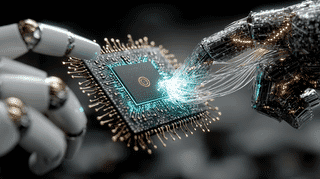
Kioxia has developed foundational 3D DRAM technology using IGZO oxide semiconductors, signaling the NAND-only maker's bold entry into the DRAM market. Behind this challenge: exploding AI demand and the physical limits of current memory. We break down the competition with Samsung, SK hynix, and China's CXMT.
Rapidus's AI design agent 'Raads' is already in use by 3 companies — 2 domestic, 1 overseas. This LLM-based EDA suite enables natural language chip design, cutting design time by 50% and costs by 30%. We compare it with TSMC and Intel's AI tools and examine Rapidus's path to 2nm mass production.
Furukawa Electric's Lightera begins mass production of the world's highest-class 13,824-core ultra-high-density fiber optic cable. Learn how this Japanese innovation doubles transmission capacity for hyperscale AI data centers.
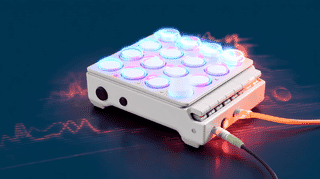
Japanese startup DOT P unveiled PONKEY, a solenoid-powered instrument robot, at SXSW 2026 in Austin, Texas. Featuring 16 custom-designed keys that light up, produce sound, and physically pop out, PONKEY functions as a drum machine, digital synthesizer, and AI communication device. Backed by Tokyo's TOKYO SUTEAM program, it's set for public release in 2027.
Japanese esports team ZETA DIVISION partners with the University of Tokyo to scientifically extend pro player careers through neuroscience research on reflexes, cognition, and motor control. Fighting game legends Momochi and Higuchi join the study.
Australian data center giant AirTrunk has expanded its Japan investment to over $8 billion. We analyze the paradox of how Japan's population decline is creating prime opportunities for AI infrastructure, examine the 'Data Center Ginza' cluster in Inzai, and compare Japan's position with Singapore and Southeast Asia.
Yaskawa's June 2026 plan puts 120 billion yen into Physical AI. FANUC published a ROS 2 driver on GitHub and partnered with both NVIDIA and Google. Mujin raised 36.4 billion. Japan still owns 35% of an industrial robot's cost through precision reducers, but the killer app hasn't shown up.
Japan's Prime Minister Takaichi and Finance Minister Katayama opened FIN/SUM 2026 with messages on AI, blockchain innovation, and stablecoin regulation. With three mega-banks testing joint stablecoins and new yen-backed digital currencies emerging, Japan's fintech strategy is compared with Trump's pro-crypto agenda and EU's MiCA framework.
Japan's government has set an ambitious target of ¥40 trillion ($260B) in domestic semiconductor sales by 2040, announcing plans for cutting-edge AI research hubs. From Rapidus's 2nm chips in Hokkaido to TSMC's $17B 3nm fab in Kumamoto and JDI's $13B US display plant, we break down Japan's full semiconductor strategy—and compare it with the US CHIPS Act, EU Chips Act, and South Korea's and Taiwan's chip policies.
Kioxia's Q4 net profit surged 17x year-over-year as NAND flash prices skyrocket. AI-driven demand for HBM is squeezing memory supply for smartphones, PCs, and automobiles — creating a global shortage that may last until 2028. We analyze the competitive landscape with Samsung, SK Hynix, and Micron, and Kioxia's post-IPO growth strategy including its NVIDIA partnership for next-gen AI SSDs.
MUFG Bank CEO Junichi Hanzawa unveiled his vision for on-chain financial transactions at FIN/SUM 2026. Explore Japan's three megabanks' joint stablecoin initiative and how AI × blockchain is reshaping banking — compared with JPMorgan and HSBC's strategies.
Sakana AI, the Tokyo-based startup founded by former Google researchers, has raised $135M to reach a record $2.65B valuation — making it Japan's top unicorn. Citibank made its first-ever strategic investment in a Japanese company through this round. With backing from the CIA's venture arm and Google, Sakana is spearheading Japan's push for sovereign AI.
A Japanese research team has developed OrthologTransformer, a generative AI that treats DNA like a language and redesigns genes to work better in new organisms. The result? Plastic-eating bacteria that are up to 10x more effective. Published in Nature Communications, this breakthrough could reshape how we fight plastic pollution worldwide.
JPYC CEO Noritaka Okabe laid out a vision for AI-agent payments using yen stablecoins at GFTN 2026. We break down Japan's pioneering regulation, the $6,500 transaction cap challenge, megabank trust-type competition, US GENIUS Act and EU MiCA comparisons, and how it all fits with the digital yen.
Murata Manufacturing, SoftBank, and CC-Link Partner Association achieved the world's first TSN over 5G connectivity demonstration by a telecom operator, reaching an average time synchronization accuracy of 122 nanoseconds, over 7x better than the international standard requires. A major step toward wireless smart factories and Physical AI.
Japan's Ministry of Internal Affairs and Communications has joined the AI-RAN Alliance, an international consortium turning cell towers into AI processing hubs. With SoftBank, NVIDIA, Samsung, and other tech giants on board, this move signals Japan's commitment to distributed AI infrastructure and its strategic positioning in the US-China tech race heading into the 6G era.
Japan's Fair Trade Commission raided Microsoft Japan over suspected antitrust violations in cloud computing. The investigation targets licensing practices that may have hindered competitors to Azure. We explore how this fits into the global wave of Big Tech regulation, from the EU's Digital Markets Act to the US FTC probe and UK CMA scrutiny.
The explosive growth of AI data centers is creating a golden age for power electronics. With tens of thousands of GPUs fluctuating power equivalent to a nuclear plant by over 50%, Japanese makers like Mitsubishi Electric, Fuji Electric, and Toshiba see a massive opportunity. Includes US and Europe comparisons.
AGIBOT, the world's top humanoid robot shipper from China, has established a Japanese subsidiary for full-scale market entry. Having shipped over 5,100 units globally in 2025 with 39% market share, the company claims the humanoid market will surpass the auto industry. We examine how Japan — an industrial robotics powerhouse — now trails China and the US in humanoid development, and explore adoption potential in Japan's labor-starved manufacturing and elderly care sectors.
As AI demand pushes terrestrial data centers toward their limits in power and cooling, a new frontier is opening in orbit. Japan's NTT Group and SKY Perfect JSAT are moving first through their joint venture Space Compass, built on the IOWN optical platform, while Google's Project Suncatcher and the startup Starcloud race to put solar-powered AI infrastructure in space. Inside Japan's edge in inter-satellite optical links, and the radiation, cooling and launch-cost problems still unsolved.