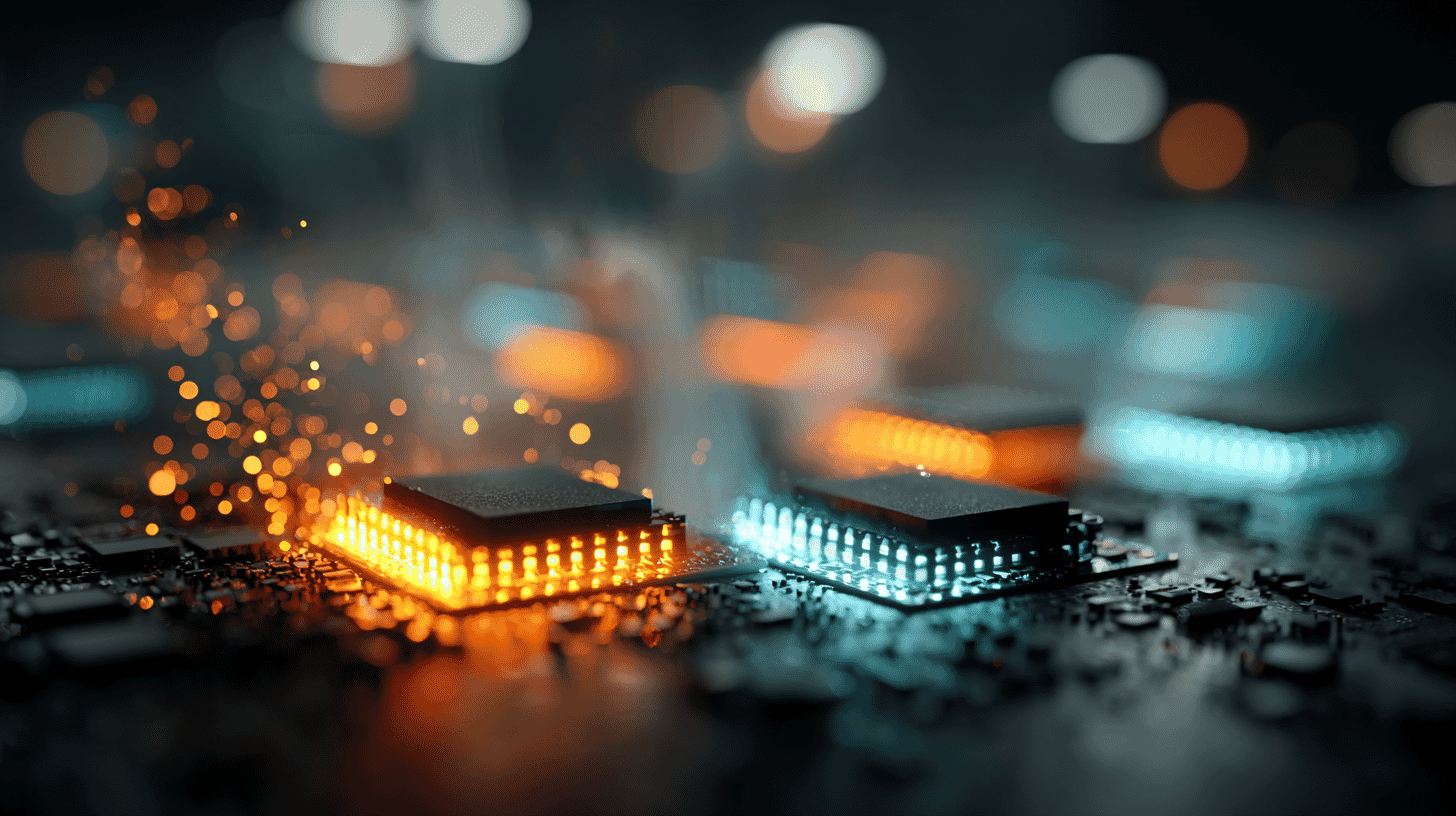
On February 12, 2026, Kioxia Holdings, formerly Toshiba Memory, announced its Q3 FY2025 results (October-December 2025). Revenue hit a record $3.6 billion for the quarter, up 20.8% year-over-year. For the full fiscal year ending March 2026, the company projects revenue of ¥2.1797–2.2697 trillion ($14.5–15.1 billion) and net profit of ¥453.7–513.7 billion ($3.0–3.4 billion), a 67–89% increase over the prior year.
The jaw-dropping figure, however, came from the Q4 forecast (January-March 2026): revenue is expected to reach 2.6 times the year-ago quarter, and net profit is projected at an astonishing 17 times. Hideki Hanazawa, Kioxia's senior executive officer in charge of finance, described the situation plainly: "Demand far exceeds supply."
The market responded enthusiastically. Kioxia's stock jumped about 7% the day after the announcement, briefly hitting an all-time high above ¥24,000 ($160). The listing itself had been a dud: when Kioxia went public on the Tokyo Stock Exchange on December 18, 2024, the shares opened at ¥1,440, below the ¥1,455 offer price. In roughly fourteen months, the stock had risen more than sixteenfold from that opening print.
Why Memory Prices Are Going Through the Roof
The root cause is simple: AI infrastructure is consuming an outsized share of the world's memory production capacity.
Cloud giants like Microsoft, Google, Meta, and Amazon are pouring hundreds of billions of dollars into AI data centers. These facilities require NVIDIA GPUs, and those GPUs need HBM (High Bandwidth Memory), a specialized type of DRAM that consumes roughly three times more silicon wafer area than standard memory chips.
This creates what IDC calls a "zero-sum game." The world's three largest memory manufacturers, Samsung, SK Hynix, and Micron, are reallocating their limited cleanroom capacity and capital spending toward higher-margin HBM and server DRAM. Every wafer dedicated to an HBM stack for an NVIDIA GPU is a wafer that won't become the LPDDR5X in a mid-range smartphone or the SSD in a consumer laptop.
The numbers are staggering. According to TrendForce, DRAM contract prices surged 90–95% quarter-over-quarter in Q1 2026, while NAND flash prices rose 55–60%. IDC expects 2026 DRAM and NAND supply growth to be just 16% and 17% year-over-year respectively, well below historical norms. Memory inventory levels, which normally sit at 10–12 weeks of supply, have dropped to just 2–4 weeks in tight segments.
The Competitive Landscape: Where Kioxia Fits In
In Q3 2025, Samsung led the global NAND flash market with 32.3%, followed by SK Hynix at 19.3% and Kioxia at 15.3%, with Micron and SanDisk (12.4%) behind them.
What makes Kioxia unique is its position as a pure-play NAND specialist. Samsung, SK Hynix, and Micron all produce both DRAM and NAND, and all are currently prioritizing the extremely profitable HBM business. Kioxia benefits most directly from NAND price appreciation.
The company's roots trace back to 1987, when Toshiba engineers invented NAND flash memory, the technology that powers everything from USB drives to data center storage. After a complex corporate saga involving Toshiba's financial crisis, a Bain Capital-led acquisition, and years of merger speculation with Western Digital, Kioxia finally went public in December 2024.
Today, Kioxia operates major fabrication facilities in Yokkaichi (Mie Prefecture) and Kitakami (Iwate Prefecture), sharing production costs with SanDisk through a long-standing joint venture. The company is currently ramping its 8th-generation BiCS FLASH (218 layers) and plans to start production of its 10th-generation BiCS10 (332 layers) during 2026.
The NVIDIA Partnership: Building Next-Gen AI Storage
At the heart of Kioxia's growth strategy is a partnership with NVIDIA to develop ultra-fast SSDs for AI servers.
Traditional SSDs connect to GPUs through the CPU, creating a data bottleneck. Kioxia's next-generation drives will connect directly to GPUs, boosting random read performance to approximately 100 million IOPS (input/output operations per second), roughly 100 times faster than current models. NVIDIA's ultimate target is 200 million IOPS, which Kioxia plans to achieve using two SSD units with PCIe 7.0 interface support.
These drives could partially replace HBM as GPU memory expanders, which is significant because HBM supply constraints are one of the biggest bottlenecks in AI infrastructure today. Sample shipments are expected in the second half of 2026, with commercialization targeted for 2027.
Kioxia projects that by 2029, nearly half of all NAND demand will be AI-related, up from about one-fifth in 2026. Analysts estimate AI-related NAND could add approximately $29 billion to the total addressable market.
The Ripple Effect: Cars, Phones, and Your Wallet
The memory shortage is no longer just an industry story. It is already affecting consumers and entire industries.
Automobiles: S&P Global has warned of potential "panic buying" in the automotive sector. Modern vehicles contain hundreds of semiconductors, and memory shortages threaten a repeat of the 2020–2021 production disruptions caused by COVID-era chip shortages. SMIC, China's largest foundry, cautioned that the situation could constrain automotive and electronics production throughout 2026.
Smartphones and PCs: Memory accounts for 15–20% of the component cost in mid-range smartphones. Chinese manufacturer Xiaomi has already raised flagship prices, and IDC projects smartphones and PCs could see price increases of up to 8%. In Japan, DDR5 memory kits that cost around ¥28,000 ($187) in late 2025 now exceed ¥50,000 ($333).
Data Centers: Even the AI companies driving the shortage are feeling its effects. Western Digital's enterprise SSDs are sold out, hard drive prices have surged 46% on average since September, and some cloud service providers are now negotiating 2027 and 2028 supply contracts in advance.
Bloomberg reports that memory maker stocks have risen over 160% since September 2025, while consumer electronics stocks have declined, a stark illustration of the market's winners and losers.
New fab capacity isn't expected to meaningfully ease the shortage until late 2027 or 2028, suggesting this structural imbalance will persist for some time.
What This Means for the Global Semiconductor Order
Kioxia's explosive growth symbolizes a broader shift in the semiconductor landscape. A company that went public at a modest valuation just over a year ago has become a $66 billion market cap giant, earning inclusion in the MSCI Global Standard Index. Customers are approaching the company with multi-year supply contracts extending into 2027 and 2028, a level of demand visibility that was unimaginable during the industry downturn of 2023.
Yet memory remains inherently cyclical. Some analysts suggest the first half of 2026 could mark a pricing peak, while others believe AI demand creates a structurally higher price floor. What's certain is that AI is fundamentally reshaping how the world allocates semiconductor memory production, and at the forefront of that transformation stands a Japanese company that traces its lineage to the very invention of flash memory.
In Japan, the memory chip shortage and soaring prices are a major talking point. How is the semiconductor memory situation affecting your country? Have you noticed price increases for PCs, smartphones, or other electronics? We'd love to hear about the situation where you live.
References
- https://eetimes.itmedia.co.jp/ee/articles/2602/13/news060.html
- https://www.trendforce.com/presscenter/news/20260105-12860.html
- https://www.idc.com/resource-center/blog/global-memory-shortage-crisis-market-analysis-and-the-potential-impact-on-the-smartphone-and-pc-markets-in-2026/
- https://www.trendforce.com/news/2026/01/29/news-second-tier-no-more-kioxia-and-sandisk-balance-alliance-and-rivalry-in-ai-nand-race/
- https://www.nikkei.com/article/DGXZQOUB120ZR0S6A210C2000000/






Global Discussion
15 comments