Some AI GPUs are now far weaker at the FP64 math science needs. A Shibaura Institute of Technology method rebuilds it from low-precision units; NVIDIA lists up to 175 TFLOPS on a B200. How it works, and its limits.
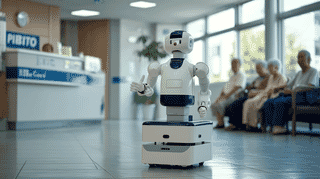
ZEALS opened orders for D1, a 129.3 cm Japanese humanoid, from 5 million yen (about $32,000). Why the company calls it semi-domestic rather than fully Japanese, and why 100 units and 10,000 hours is a modest goal.
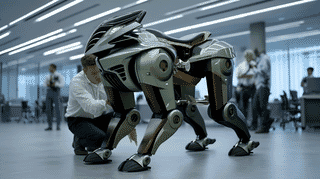
At a July 28, 2026 briefing, Kawasaki said its four-legged CORLEO has no steering or brakes planned. Force sensors in the stirrups become the controls, NVIDIA physics engines build a virtual off-road course, and the rider becomes part of the machine.
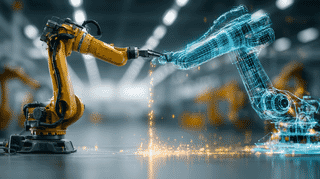
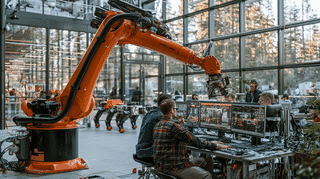
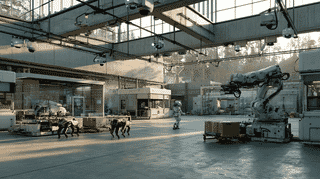
FANUC, Yaskawa and Kawasaki are teaming up with Fujitsu and NVIDIA to bring Physical AI to factories, warehouses and hospitals. What each firm is really after, how they plan to bridge simulation and real machines, and whether Japan can keep its lead against US and Chinese humanoid makers.
On July 15, 2026, Nvidia's Jensen Huang stood in a Tokyo arcade and thanked Sega for the $5 million that saved his company in the 1990s. The story ran everywhere. What almost nobody mentioned: the executive being thanked had helped pick the technology that failed.
RIKEN unveiled two supercomputers on the same day: RIKYU for AI for Science and ROQUO for quantum-HPC. Both are Japan's first to run GB200 NVL4 and Quantum-X800 InfiniBand. We compare them with US efforts like xAI's Colossus and the DOE Genesis Mission, and China, to read Japan's bet on purpose over scale.
TSMC, the world's largest foundry, is quitting GaN power-chip manufacturing. ROHM, which built its flagship 650V parts inside TSMC's fabs, has licensed the technology and is racing to mass-produce in Hamamatsu by 2027. A look at the China-US rivalry and Japan's vertical-integration bet.
Kawasaki Heavy Industries, maker of jets, bullet trains and motorcycles, has opened a physical AI development hub in Silicon Valley, teaming up with NVIDIA, Analog Devices, Microsoft and Fujitsu. We unpack why a 130-year-old industrial giant is betting on AI that acts in the real world, and where Japan stands in the US-China robotics race.
Fujitsu's new Kozuchi Physical OS isn't trying to build a smarter robot brain. It's trying to make the whole physical space intelligent. Here's how its edge-plus-sovereign-cloud design differs from NVIDIA Cosmos and Google DeepMind's Gemini Robotics — and how it fits into Japan's $126B Physical AI ambition.
Kioxia forecast a 48-fold jump in Q1 net profit to 869 billion yen ($5.5 billion), making the Japanese NAND maker Japan's single-largest AI beneficiary on a quarterly basis after Toyota. We unpack the US ADS listing plan, the supercycle reshaping NAND prices, the HBM gap with Samsung and SK Hynix, and what it all means for Japan's broader semiconductor revival.
GPU-to-GPU optical interconnects were forecast to arrive around 2033. NVIDIA just pulled them in by five years, putting co-packaged optics into the NVLink switch of its 2028 Feynman generation, and locking in supply with $2 billion investments in each of Lumentum and Coherent. Furukawa Electric is spending 38 billion yen to more than quintuple DFB laser chip capacity; Sumitomo Electric supplies core components for NVIDIA's Quantum-X Photonics switches but was left out of the funding round. Where Japan's optical suppliers stand, and how NTT's IOWN runs on a different clock.
Fujitsu is doubling down on its sovereign AI strategy with the FUJITSU-MONAKA CPU series, choosing Rapidus as a manufacturing partner and 'coexisting' with NVIDIA's GPUs rather than competing. We compare Japan's hybrid approach to China's fully autonomous Loongson (LoongArch) and Europe's Arm-based SiPearl, revealing how Japan's pragmatic balance defines a third path in global chip sovereignty.
FANUC, the world's largest industrial robot maker, partners with NVIDIA for Physical AI while deliberately avoiding humanoid robots. We break down its historic open-platform shift, the NVIDIA Isaac integration, and how it plans to compete against ABB, KUKA, and China's robot surge.
Global chip sales hit $88.8B in Feb 2026, up 61.8% YoY. Yet Japan is the only region with 9 consecutive months of decline. We analyze the structural reasons behind Japan's stagnation amid the AI-driven global boom.
Shinko Electric Industries is entering the photonic-electronic convergence manufacturing market as an OSAT, targeting CPO projects that TSMC won't take. With expertise in advanced packaging and optical alignment, this Japanese company aims to become the go-to manufacturer for Co-Packaged Optics — the technology set to slash AI data center power consumption by half. We break down the CPO race, NTT's IOWN initiative, and why NVIDIA, Intel, and AMD are all betting on light.
Osaka University's QIQB and Fixstars achieved the world's largest quantum chemistry circuit simulation using 1,024 NVIDIA H100 GPUs on Japan's ABCI-Q supercomputer. Breaking the previous 40-qubit barrier, they simulated H₂O with 42 spin orbitals and Fe₂S₂ with 41 qubits — accelerating quantum algorithm development before fault-tolerant quantum computers arrive.
To celebrate the PC launch of DEATH STRANDING 2: ON THE BEACH, director Hideo Kojima and Dollman voice actor Tomokazu Sugita sat down for their first-ever joint interview. From their 18-year partnership to the 2,000 lines recorded over 27 days, discover the behind-the-scenes story of Dollman and what 'just be Sugita' really means — plus PC-exclusive features and the new 'to the wilder' mode.
Director Naoki Hamaguchi told AUTOMATON why Cloud's hair goes rough on Switch 2: each strand switches on and off at the pixel level every frame, designed to be averaged by TAA, which DLSS reconstructs badly. The FF7 Rebirth port, out June 3, 2026, adds a light blur weighted by strand flow and density.
Yaskawa's June 2026 plan puts 120 billion yen into Physical AI. FANUC published a ROS 2 driver on GitHub and partnered with both NVIDIA and Google. Mujin raised 36.4 billion. Japan still owns 35% of an industrial robot's cost through precision reducers, but the killer app hasn't shown up.
Kioxia's Q4 net profit surged 17x year-over-year as NAND flash prices skyrocket. AI-driven demand for HBM is squeezing memory supply for smartphones, PCs, and automobiles — creating a global shortage that may last until 2028. We analyze the competitive landscape with Samsung, SK Hynix, and Micron, and Kioxia's post-IPO growth strategy including its NVIDIA partnership for next-gen AI SSDs.