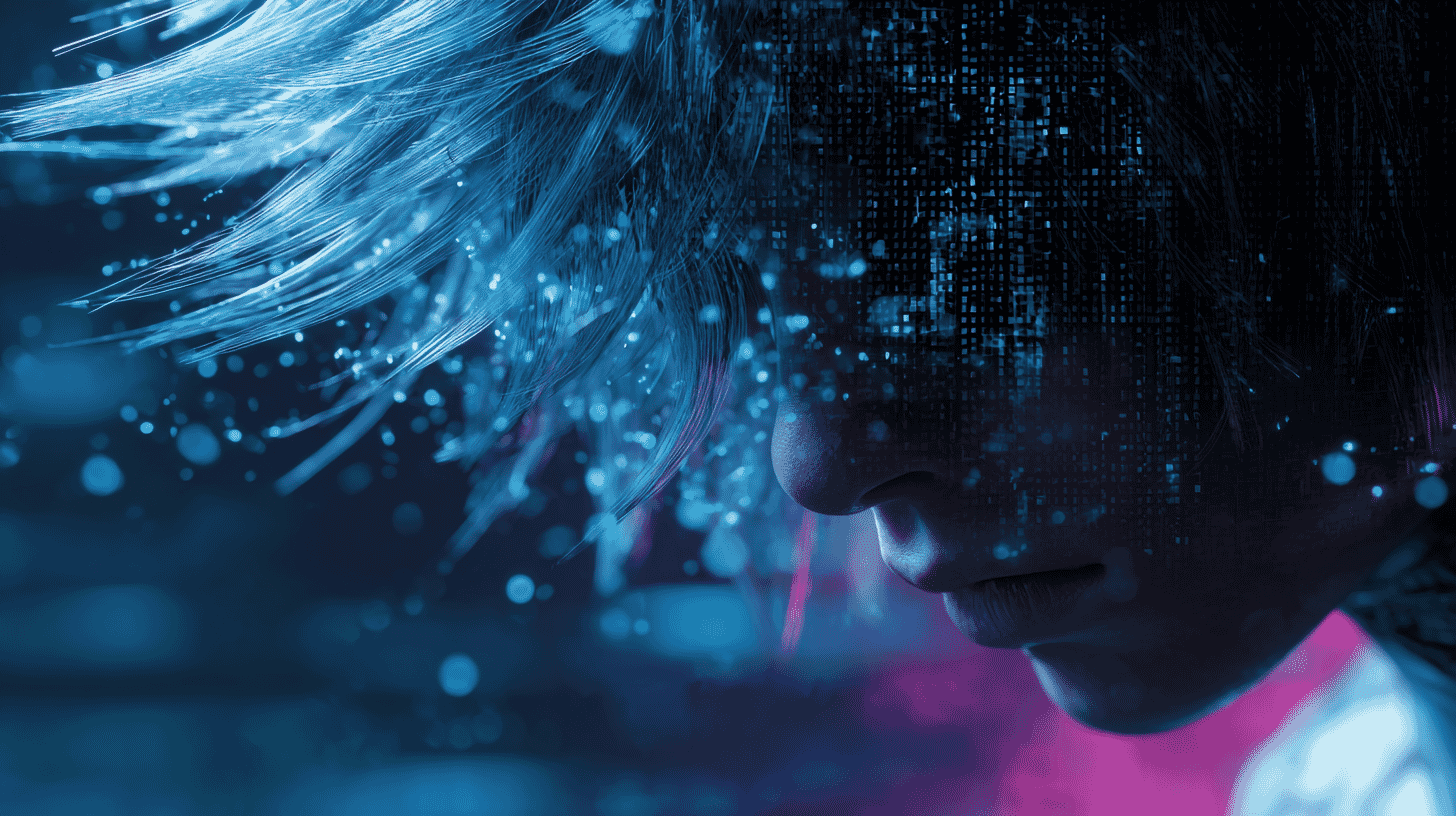
🎮 Cloud's hair gets crunchy on the Switch 2 version of FF7 Remake Intergrade. "The hair is running at a different resolution." "It looks like an oil painting." That kind of thing. Director Naoki Hamaguchi explained why to the games site AUTOMATON, and the answer is unusually specific. The hair is being switched on and off at the pixel level, every single frame. DLSS doesn't know what to do with that. Four months later, the Switch 2 port of FF7 Rebirth shipped, and we now know what they did about it.
The Hair Is Blinking, One Pixel at a Time
Square Enix released Final Fantasy VII Remake Intergrade for Nintendo Switch 2, Xbox Series X|S and Windows on January 22, 2026. The fact that a AAA RPG ran on a handheld at all was the story, mostly, except for one thing: Cloud's spiky hair goes rough in certain scenes.
Hamaguchi's explanation goes like this. The game uses TAA, temporal anti-aliasing, to keep character outlines from looking jagged. TAA references not just the frame it's currently drawing but data from previous frames, layering them to build something close to a higher-resolution image.
The problem is that hair is extremely fine. Render it straight and individual strands flicker at the pixel level. So the team built a special process where each strand switches on or off at the pixel level from frame to frame. Combined with TAA, the fine lines connect smoothly across frames. Which means the hair was designed from the start to blink and let TAA average it out.
Then DLSS Shows Up
The Switch 2's basic approach is to drop internal resolution in heavy scenes to hold the frame rate, then compensate with DLSS. DLSS uses AI to predict how the image should look and rebuilds it, and per Hamaguchi it's smarter at reconstruction than TAA, so the overall picture stays fairly clean even at lower internal resolution.
But it does not get along with hair that changes its render pattern every frame. As Hamaguchi told AUTOMATON, because the hair rendering in this game switches on and off pixel by pixel from frame to frame, it pairs badly with DLSS, and jaggedness shows up.
It isn't constant. The game uses DRS, dynamic resolution scaling, moving automatically between HD and Full HD depending on scene load, so lighter scenes push resolution up and the hair looks fine. TV mode and wide camera angles hide it. It bites in handheld mode during heavy scenes.
Digital Foundry, which does technical breakdowns, noted that the hair's dithering pattern, smoothed out by TAA on other platforms, may not be getting averaged the same way under DLSS. Its analysis puts handheld internal resolution at roughly 720p, upscaled to 1080p.
So What Happened With Rebirth
Final Fantasy VII Rebirth arrived on Nintendo Switch 2, Xbox Series X|S and Windows on June 3, 2026, at 6,578 yen. The PS5, Steam and Epic Games Store versions were cut to the same price, so every platform now costs the same.
They did do something about the hair. In a June interview with AUTOMATON, Hamaguchi said the friction between DLSS and fine shapes like hair is still being tuned, and that they now apply a very light blur weighted by the flow and density of the strands to make it look as natural as possible. The goal, he said, was for players never to notice DLSS is there at all, and for handheld and docked to feel like the same world.
The resolution design got spelled out too. Rebirth on Switch 2 is also built around Dynamic Resolution: handheld runs between 1344x756 and 672x380, TV mode between 1920x1080 and 960x540, with DLSS filling in the final image. Going open world blew up the amount of background data per frame, and the heaviest scene technically, per Hamaguchi, is riding a chocobo across the world map at speed.
Reviews of the retail build mostly land on "I can't believe they pulled this off." Line it up next to the PS5 version and you'll see the difference in ground textures and distant detail, but on its own the Switch 2 port isn't compromised in any way that matters. That said, reports of noise around hair outlines and fine lines in TV mode on a big screen haven't gone away.
It Wouldn't Have Happened to a Cel-Shaded Character
The most satisfying part of Hamaguchi's explanation is that this problem falls directly out of what FF7 is trying to be.
If the character were cel-shaded, he says, honestly it wouldn't stand out much. The more photoreal you go, the more resolution matters to making the anti-aliasing look good, and that's when the jaggedness starts showing.
Chase photorealism and you inherit the ugliness of not having enough pixels. This isn't corner-cutting. It's the side effect of trying to make hair look real.
On the trilogy's third entry, Hamaguchi has flatly said elsewhere that multiplatform releases will not drag quality down. The 3D assets are built at maximum quality on PC and then optimized per platform for the port, so the baseline doesn't get pulled toward the weakest target. The target is still a stable 30fps, and the engineers are still tuning for it.
Which would you take? FF7 in bed and on the train, or every strand of hair rendered perfectly.
References
- https://automaton-media.com/articles/interviewsjp/ff7-20260223-423487/
- https://automaton-media.com/articles/interviewsjp/ffviirebirth-20260603-446872/
- https://automaton-media.com/articles/interviewsjp/ff7f-20260216-421552/
- https://automaton-media.com/en/interviews/we-ask-final-fantasy-vii-remake-director-naoki-hamaguchi-about-the-switch-2-versions-hair-problem-why-does-it-happen-and-can-it-be-avoided/
- https://gamestalk.net/ff7-remake-switch2-hair-jaggies-dlss-compatibility-hamaguchi-explains/
- https://www.famitsu.com/article/202602/65234
- https://game.watch.impress.co.jp/docs/review/rev1/2113286.html




Global Discussion
15 comments