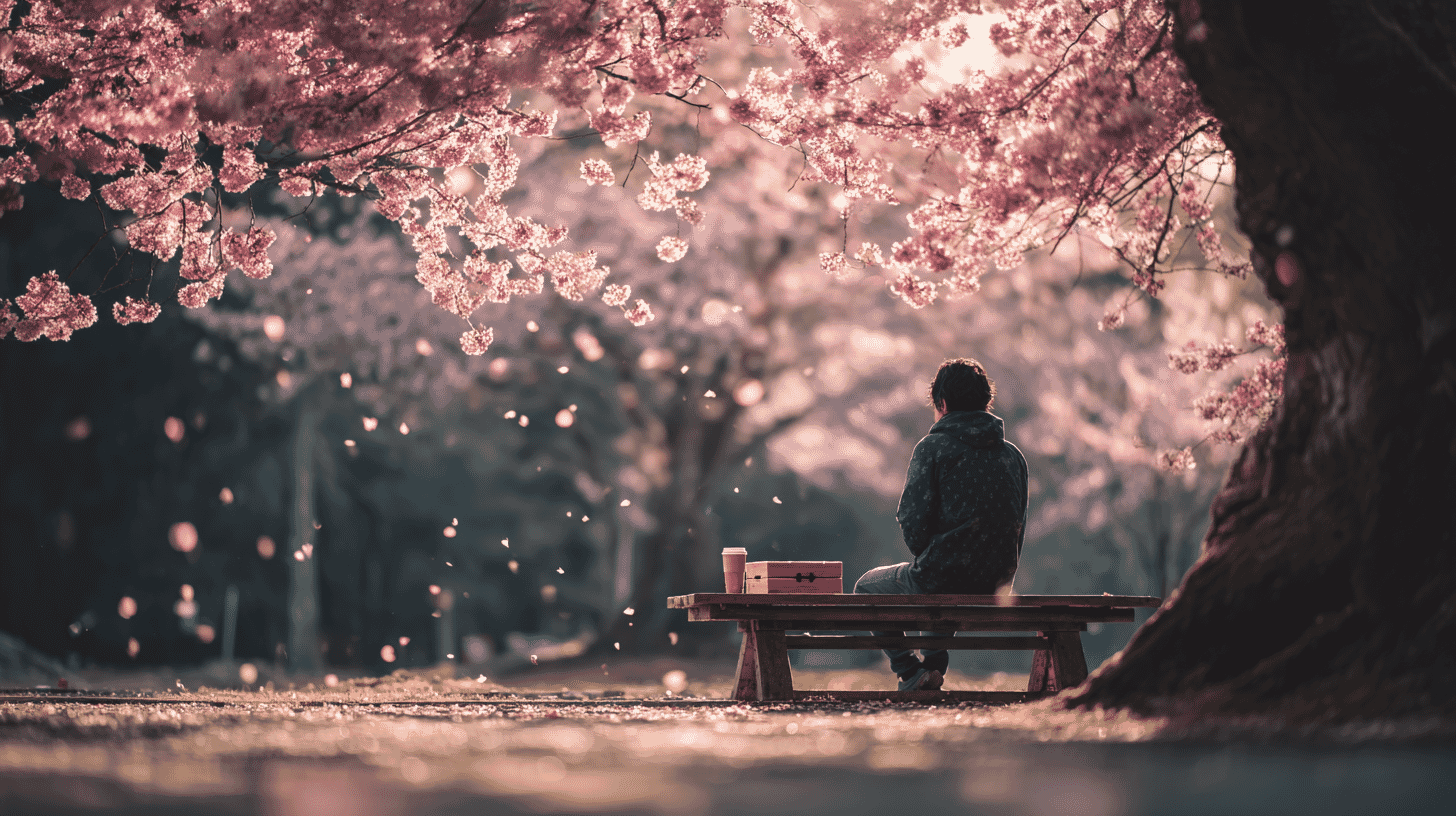
Picture a blue tarp under the cherry trees, dozens of coworkers clinking beer cans, someone asleep by 3pm. That was Japan's classic hanami scene for decades. In 2025, nearly one in three Japanese people said they would rather see the blossoms alone. Welcome to solo hanami, and to what it says about how Japan is changing.
One in Three Japanese People Now Prefer "Solo Hanami"
A nationwide survey by the Kufu Research Institute (Kufu Soken) in February 2025, covering about 9,000 respondents, revealed a striking shift in how Japanese people approach cherry blossom season.
While 63.9% said they planned to go flower viewing, the question of who they want to go with told the real story. The top answer was "casually with family in a small group" at 52.7%, followed by "quietly with a partner or friend" at 47.6%. But the surprise was that 31.2% said they wanted to enjoy hanami "alone, at my own pace", the so-called solo hanami crowd.
Meanwhile, only 13.2% chose "lively with a large group of coworkers or friends." The boozy office party under the cherry trees? It's becoming a relic.
Walking, Not Drinking
The style of hanami is transforming too. A whopping 77.5% of respondents said they prefer strolling through cherry tree-lined paths or parks, while only 37.3% want the picnic-blanket experience. The "walking hanami" has become the new default, especially after COVID-19 made people rethink crowded outdoor gatherings.
The drinks have changed as well. Across all age groups, more than half chose soft drinks or non-alcoholic beverages. Even among people in their 50s, the age group most likely to choose alcohol, only 33.8% opted for beer, sake, or wine.
A separate study by Intage found that hanami budgets dropped by over 1,000 yen ($7) from the previous year to an average of 6,383 yen ($42). At the same time, solo hanami during commutes, people pausing on their way to or from work to admire nearby cherry trees, increased 1.3 times. Hanami is becoming more personal, more casual, and more budget-friendly.
The "Ohitorisama" Society Behind the Trend
The rise of solo hanami isn't just a seasonal quirk, it reflects deep structural shifts in Japanese society.
Single-person households have tripled over the past 40 years and now make up about 38% of all households in Japan (2020 Census). By 2050, that number is projected to reach 44.3%, according to Japan's National Institute of Population and Social Security Research. The lifetime unmarried rate (measured at age 50) has skyrocketed from 1.7% for men and 3.3% for women in 1970 to 28.3% and 17.8% respectively in 2020.
In this context, being ohitorisama (a person who lives or does things alone) is no longer seen as sad or lonely. It's a lifestyle. The Japanese word carries a sense of independence and self-sufficiency rather than isolation. And it's spawning an entire economy.
Solo Camping, Oshi-Katsu, Solo BBQ
Japan's solo consumption culture extends far beyond cherry blossoms.
Solo camping (solo camp) exploded during the pandemic, fueled by the desire to escape daily routines and spend time in nature at one's own pace. A survey by Values found that when asked what comes to mind with "solo activities," camping ranked #1 at over 20%.
Oshi-katsu, supporting a favourite idol, character, or celebrity, is another large solo spending category. A January 2025 survey of 23,069 people by Oshi-Katsu Soken, run by CDG and Oshicoco, found 16.7% of respondents engaged in oshi-katsu. That works out to roughly 13.84 million people, up 2.5 million from the previous year. Average annual spending per person came to ¥255,035, putting the market at roughly ¥3.5 trillion (about $23 billion). Many fans attend concerts alone, buy merchandise alone, and post about it alone. Solo activity, enormous aggregate value.
The broader ohitorisama market is staggering. According to the Yano Research Institute, the solo dining-out market alone reached approximately 7.9 trillion yen ($52 billion), while the solo ready-to-eat food market hit 7.4 trillion yen ($49 billion). Dedicated solo services have proliferated: solo yakiniku (BBQ) restaurants with individual grills, hitokara (solo karaoke) booths, and travel packages designed for one.
A 2024 survey by Cross Marketing found that 70.5% of respondents had free alone time on weekdays, rising to 79.4% on holidays. Time alone is no longer "lonely time", it's been reframed as "enriching time."
The Contrast With Washington D.C.
Japan's cherry blossom culture has crossed borders in spectacular fashion.
The most famous example is Washington D.C.'s National Cherry Blossom Festival, which traces its origins to 1912, when Tokyo Mayor Yukio Ozaki gifted 3,000 cherry trees to the American capital. The 2024 festival drew a record 1.6 million attendees, surpassing the pre-pandemic 2019 figure of 1.5 million. The 2026 edition ran from March 20 to April 12, with parades, kite festivals, fireworks, and cultural events.
What's notable is the contrast in styles. Washington's cherry blossom celebration is essentially a social event, food booths, live music stages, families and friend groups filling the National Mall. It's the communal, party-style hanami that Japan is moving away from.
Cherry blossom viewing has also taken root in Seoul's Yeouido district, Bonn's Heerstraße in Germany, and Stockholm's Kungsträdgården in Sweden. The love of cherry blossoms is universal, but the Japanese impulse toward quiet, solitary appreciation may be culturally unique.
Is "Solo Activity" Culture Growing in Your Country?
Japan's hanami tradition is undergoing a quiet revolution, from rowdy group parties to peaceful solo strolls under the blossoms. Behind this shift lies the expansion of single-person households and the maturing of ohitorisama culture, where spending time alone is seen not as a deficit but as a deliberate, fulfilling choice.
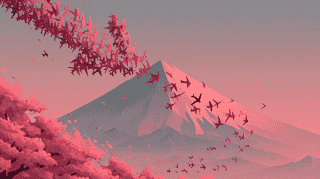
Sipping coffee alone under falling petals. Pausing on your morning commute to gaze up at a canopy of pink. These simple pleasures are the heart of solo hanami.
Does your country have a culture of enjoying nature alone? Whether it's autumn leaf viewing, solo picnics, or quiet morning walks, we'd love to hear how people in your part of the world embrace, or resist, the art of doing things solo. Share your thoughts!


Global Discussion
15 comments