Kawasaki's four-legged Home LEO prototype is meant to live with older people and notice falls, not do chores. What it says about Japan's stalled care workforce of 2.126 million, and what is still missing.
Tochigi police drop scent discrimination from their police dog exam after zero call-outs in 2025, as searches for missing people doubled from 61 to 120. Who do police dogs look for where you live?
Japan's children hit a record low while its toy market hit a record. Toys R Us Japan, dubbed a "black ship" in 1991, filed for court rehabilitation owing about ¥13.2 billion; Don Quijote's parent is set to take over.
Tokyo's resident registry shows the city added 75,018 people during 2025, and 62,478 of them were foreign residents: 83 percent of the growth. Count only Japanese residents and Tokyo is down 3,238 over five years.
A Japanese team pinned down when CD4 killer T cells start to expand: right around age 100. The study needed blood from ten donors over 110, and the cohort that could supply them took thirty years to build.
Sushi shop bankruptcies in Japan rose 45.5% in the first half of 2026, yet only 18.8% were losing money, the lowest in Teikoku Databank's 20 years. They are not failing. They close because nobody takes over.
Japan recorded 86,473 IVF births in 2024, about 1 in 8 of its 686,173 births. Treatments fell to 550,265 while the multiple-birth rate rose to 4.15 percent, and the 2022 insurance reform helps explain both.
Japan's Children and Families Agency asked 100,000 young people about marriage. 35.1% of unmarried respondents said they have no intention of marrying, but only 53.1% of that group said they do not want to.
Japan cremated 99.98% of its dead in fiscal 2024. But the rate was 36.2% in 1915, and the Meiji government banned cremation in 1873 before reversing itself. Land, cholera policy and local ordinances built that number.
Toyota, NTT and Tokyu are among roughly 1,600 Japanese employers paying for an AI dating app for single staff. The workplace is trying to buy back a matchmaking role it lost over fifty years.
Seven Japanese research groups repeated two landmark University of Tokyo senolytics experiments under blinded conditions and found no effect. The original team's rebuttal ran the same day, in the same journal.
Kirin Holdings is buying Jamieson Wellness, Canada's top-selling vitamin brand, for C$1.898 billion. Why a 141-year-old brewer thinks fermentation science sells supplements, and why Western brewers chose another route.
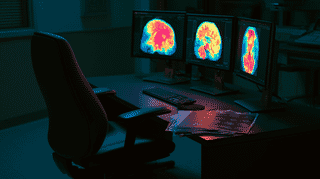
PET scans of 37 patients whose hallucinations began after age 40 found tau, the protein behind Alzheimer's, in 64.9% of them against 14.9% of controls. They split into three near-equal groups.
Japan's 2026 population estimate shows foreign residents up 9.64% to 3.73 million while the total falls. How Japan is quietly becoming an immigration society, compared with Germany and Canada.
In greater Tokyo, families now wait one to two weeks to cremate the dead. As Japan's annual deaths head for a 2040 peak, new crematoriums stall on local opposition while a private near-monopoly drives up prices in the capital's 23 wards. A look at the limits of death-care infrastructure in the world's oldest society.
Japan's Koroyawa floor stays hard when you walk and softens only when you fall. Science Tokyo proved it prevents elderly hip fractures using a world-first simulation built from a real patient's CT data.
Japan's 2025 census preliminary count puts the population at 123 million, down 3.1 million in five years, the steepest drop since records began. The country fell from 11th to 12th in the world, overtaken by Ethiopia. We translate that number into cities you can picture, then compare how South Korea, Italy, and China face the same cliff, and ask whether Japan's immigration, birth-support, and regional-revival policies are working.
At a major Japanese pet expo, a homegrown technology called Livnight grows a sparkling gem from a dog's ashes. It costs far less than an ash-diamond, actually out-sparkles one, and never leaves Japan. A clear look at why Livnight, plus the country's pet farewell culture.
Kyoto University spinout Toregem Biopharma will begin Phase 2 trials of TRG035, the world's first tooth-regeneration drug, in summer 2026, dosing 24 children with congenital tooth agenesis. A pre-Series C round of ¥850 million brings cumulative funding, grants included, past ¥4.6 billion. A look at how Japan's university-biotech funding stack works, and why a super-aged society may produce this kind of innovation first.
PETOKOTO and three partner organizations launched the Pet Guardianship Lab to tackle Japan's emerging 'pet refugee' crisis. As single households hit 40% and the population ages rapidly, a uniquely Japanese law-insurance-NGO consortium is building a safety net for pets whose owners die, are hospitalized, or develop dementia.