JAL launches Japan's first humanoid robot trial at Haneda Airport in May 2026. Chinese-made Unitree G1 and UBTECH Walker E will handle cargo loading and cabin cleaning, Japan's bipedal answer to its aging workforce and aviation labor crisis.
Suntory Holdings is acquiring Daiichi Sankyo Healthcare, maker of Loxonin, Lulu, and Minon, for $1.55 billion. As Japan's youth abandon alcohol and the population ages rapidly, the beverage giant pivots to self-care. We analyze the deal, the booming OTC market, and what it means for global healthcare trends.
Kyoto University's AI-powered robot monk Buddharoid now offers spiritual guidance at a Kyoto temple, trained on ancient Buddhist scriptures. With 30% of Japan's 77,000 temples projected to vanish by 2040, can artificial intelligence save Buddhism? From the $1M Mindar android to BuddhaBot chatbots reaching Bhutan, we explore where faith meets technology.
Japan's government has approved a plan to make standard childbirth costs free by 2026. But the Japan Association of Obstetricians warns of a looming collapse in maternity care, delivery facilities have halved since 1996, and rural 'maternity deserts' are spreading. How does Japan's birth system compare to France and Sweden?
Japan's FY2026 budget of ¥122.3 trillion ($766B) passed on April 7, the largest ever. With defense spending at $56B, social security at $245B, and debt servicing costs exceeding $196B for the first time, can Japan sustain its finances with a 230% debt-to-GDP ratio as interest rates rise? We compare with G7 peers.
Japan's Children and Families Agency, launched in 2023 with great fanfare, faces growing calls for abolition just three years in. With a $50 billion annual budget under fire as 'wasteful spending' and births hitting a record low of 671,236 in 2025, we examine why Japan's 'unprecedented' measures against the declining birthrate have failed, and how other countries are tackling the same crisis.
A takeout tea cafe staffed by seniors averaging 73 years old has opened in Tokyo's Shibuya. 'G-CHA & Ba-CHA' reimagines how the elderly can stay active and connected — with creative tea drinks, seated service, and flexible work rules. A heartwarming look at Japan's approach to aging.
Japan's Forum for the Future We Choose has published its first-ever Population Problem White Paper. A nationwide survey reveals 70% of people over 50 feel a sense of crisis about population decline, while 2025 births fell to a record low of 705,809 for the tenth consecutive year. We explore Japan's dual strategy of adapting to population decline while trying to reverse the birthrate trend, with comparisons to South Korea, China, and Europe.
About 31% of Japanese people now prefer solo cherry blossom viewing over traditional group parties. We explore how rising single-person households, the 'ohitorisama' economy, and solo activities like solo camping are reshaping one of Japan's most iconic spring traditions.
Japan's sickness benefits topped $4 billion in FY2023, up 60% in five years, driven by surging mental health claims. Explore Japan's structural workplace issues, insurance impacts, and how reforms compare globally.
Australian data center giant AirTrunk has expanded its Japan investment to over $8 billion. We analyze the paradox of how Japan's population decline is creating prime opportunities for AI infrastructure, examine the 'Data Center Ginza' cluster in Inzai, and compare Japan's position with Singapore and Southeast Asia.
A 58-year-old mother who cared for her severely disabled daughter alone for 29 years was arrested after an attempted murder-suicide in Chiba, Japan. With approximately 40 caregiver-related killings reported annually, this article examines landmark cases and asks the world: is this a crime society should bear?
Japan's permanent residency fee goes from 10,000 yen to 200,000 under the draft ordinance published July 3, 2026, applying to applications from October 1. From April 2027, permanent residency can be revoked for deliberate non-payment of taxes or social insurance. Foreign workers hit a record 2,571,037 in October 2025, but growth slowed to 11.7%.
The Mirai Human Washing Machine, tried by 1,277 people at the 2025 Osaka Expo with 98.3% satisfaction, is now sold at Yamada Denki. The 60-million-yen ($370,000) flagship is limited to 40-50 hand-built units, alongside a 1.45-million-yen ($9,000) model aimed at care homes.
Japan's health ministry adds "Sleep Disorder" as a new medical specialty for the first time since 2008. With the shortest sleep duration among OECD nations and $100 billion in annual economic losses, Japan is officially confronting its sleep crisis.
Morinaga released seven snacks on March 3, 2026 that owners and their dogs can eat together, a first in the confectioner's 126-year history. A joint study with Tokyo University of Agriculture tested what sharing food actually does, and a veterinarian supervised the recipes. Japan's pet market hit 1.91 trillion yen in fiscal 2024.
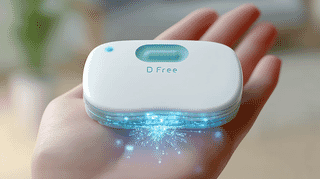
Japan-born IoT wearable "DFree" uses ultrasound to predict urination timing and has won the Grand Prize for Developmental Support Tools at BabyTech Awards 2025-26. How the 20-gram device works, why the judges picked it, how it came to be covered by Japan's long-term care insurance, and what it means for elderly care and children with disabilities.
A new survey reveals 76.3% of unmarried Japanese adults have no romantic partner, up from 72% in 2023. Only 36.8% want to marry, women see no need for it, men worry about losing financial freedom. With Gen Z turning to AI for love advice and virtual relationships on the rise, Japan's demographic crisis deepens. How does your country compare?
Japan's cat-driven economy "Nekonomics" has reached approximately $19 billion in 2026, rivaling the Osaka World Expo. Explore the booming cat cafés, cat islands, feline health tech startups, and the unique cultural forces powering Japan's extraordinary cat business ecosystem.
Japan's transport ministry has issued its first-ever guidelines requiring more women's toilet fixtures than men's in public facilities. From highway rest stops with reversible layouts to real-time occupancy displays, here's how Japan is finally addressing the gender gap in restrooms.