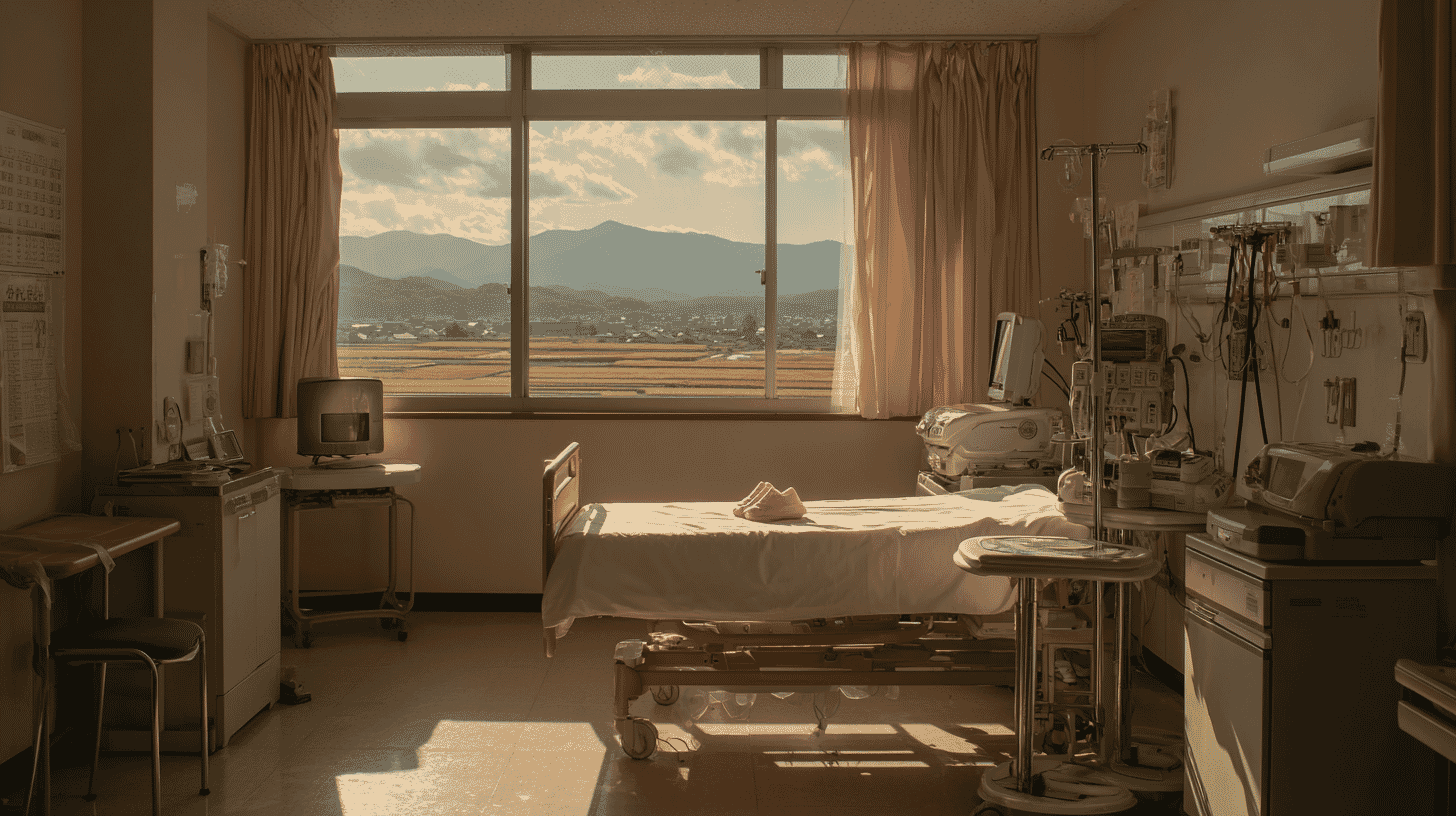
Japan just announced that having a baby will be free. But there's a catch: maternity wards are vanishing. The number of delivery facilities has halved in 30 years, and rural communities are becoming "maternity deserts." The country's biggest weapon against its population crisis may be undermined by the very healthcare system meant to support it.
What Is Japan's "Zero Birth Cost" Policy?
Japan's government has approved a plan to eliminate out-of-pocket costs for standard childbirth by fiscal year 2026. The policy was formally included in the 2025 Basic Policy on Economic and Fiscal Management (known as Honebuto no Hoshin, or "big-boned policy"), and legislation is expected to be submitted to parliament in 2026.
Here's why this matters: in Japan, normal vaginal delivery has traditionally been treated as a non-medical event, meaning it isn't covered by the national health insurance system. Instead, families receive a lump-sum "childbirth and childcare allowance" of ¥500,000 (about $3,150). But the average cost of a standard delivery nationwide reached approximately ¥518,000 ($3,260) in 2024, and 45% of births now cost more than the allowance covers.
Regional disparities are stark. In Tokyo, the average delivery costs around ¥648,000 ($4,075), while in Kumamoto Prefecture it's about ¥404,000 ($2,540), a 1.6-fold difference. The cost has jumped roughly 20% over the past decade, partly due to inflation and partly because facilities have historically been free to set their own prices, with some bundling luxury services like celebration meals (oiwai-zen) and spa treatments into the base fee.
Under the new policy, childbirth would be brought under the public insurance system with standardized reimbursement rates. Optional services like private rooms, celebration meals, and photo shoots would be separated and remain self-pay. The goal is twofold: make childbirth affordable everywhere, and bring transparency to a pricing system that has long been opaque.
The Warning: "Rush This, and the System Collapses"
The Japan Association of Obstetricians and Gynecologists (JAOG) has sounded a sharp alarm. JAOG President Isamu Ishiwata told the government's Social Security Council in December 2025 that implementing the policy too quickly could trigger a collapse of the maternity care system.
His argument is straightforward: if the government sets reimbursement rates too low, smaller clinics and hospitals will find it financially impossible to continue offering delivery services. Many will simply stop.
In May 2025, four major obstetric organizations, including the Japan Society of Obstetrics and Gynecology, JAOG, and the Japan Society of Perinatal and Neonatal Medicine, jointly submitted a formal request to the Ministry of Health asking for an urgent new forum to discuss sustainable maternity care infrastructure. Their concern is specific: if primary clinics stop handling deliveries in a short timeframe, low-risk pregnant women will flood higher-level facilities, overwhelming the entire system.
The Numbers: Delivery Facilities Are Disappearing
The decline has been underway for decades, but the scale is staggering.
In 1996, Japan had 3,991 facilities handling deliveries, 1,720 hospitals and 2,271 clinics. By 2021, that number had fallen to just 1,945, hospitals down to 946, clinics to 999. Looking at hospitals alone, only 886 were handling births by 2023. That's roughly half of what existed just a generation ago.
Private obstetric clinics currently handle about 45% of all deliveries in Japan. But their operators are aging rapidly, and significant closures over the next decade are considered inevitable. A JAOG survey found that 86 medical districts reported difficulty continuing delivery services. Combined with the 84 districts that already lack obstetric clinics entirely, more than half of all medical districts in Japan could lose their last private maternity clinic.
While the total number of obstetricians has edged up slightly over recent years, the gains are concentrated in perinatal medical centers, large, specialized facilities in urban areas. General hospitals in smaller cities and rural areas are losing their OB/GYN departments. Adding to the concern: over 60% of new obstetricians are women, and temporary workforce exits due to pregnancy, childbirth, and childcare are expected to intensify future staffing shortages.
How France and Sweden Do It Differently
Japan's move toward free childbirth would bring it closer to a model that many European nations have operated for decades, but with very different underlying infrastructure.
In France, maternity care is covered under a dedicated "maternity insurance" branch within the national health system. Prenatal checkups, delivery, and postnatal care are essentially free. Crucially, epidural pain relief is also covered by insurance at no additional cost. France has concentrated births in large public hospitals where obstetricians, anesthesiologists, and midwives work as integrated teams. The average postpartum hospital stay is 3.7 days, shorter than Japan's 5.3 days, but France compensates with robust home-visit midwife programs after discharge.
In Sweden, healthcare is funded through regional taxation, and out-of-pocket birth costs are essentially zero. Sweden's comprehensive parental leave and childcare support systems mean that pregnancy and delivery exist within a broader social safety net.
What both countries share is centralization. By concentrating births in fewer but better-staffed facilities, they can afford round-the-clock anesthesiologist coverage, something virtually impossible in Japan's fragmented landscape of small clinics.
The Epidural Gap: Why Only 1 in 10 Japanese Births Use Pain Relief
One of the most striking differences between Japan and Western nations is the epidural rate.
According to the Japan Society of Obstetric Anesthesia, epidural analgesia rates are 82.2% in France, 89% in Finland, 73.1% in the United States, and 66.1% in Sweden. Japan's rate? Approximately 8.6% overall, though it has been rising and reached about 13.8% in 2023.
The reasons are multifaceted. Japan faces a critical shortage of anesthesiologists, and unlike Western systems where anesthesiologists are dedicated to labor wards, Japanese obstetricians often administer anesthesia themselves, raising safety concerns. Most delivery facilities in Japan are small clinics that simply cannot afford a dedicated anesthesiologist.
There's also a cultural dimension. The Japanese expression "onaka wo itamete unda ko", literally "the child born through stomach pain", reflects a deep-rooted belief that enduring the pain of labor is part of becoming a mother. While this attitude has been weakening in younger generations, social pressure against epidurals still exists.
Tokyo became the first prefecture to offer epidural subsidies in October 2025, providing up to ¥100,000 ($630) per birth. The national government has also included "creating an environment where women can safely choose epidural delivery" in its official policy framework, but detailed implementation plans remain under development.
Can Japan Have Both: Free Birth AND Functioning Maternity Wards?
Japan's total fertility rate hit a record low of 1.15 in 2024, and the population decline continues to accelerate. Making childbirth free is an important first step in removing financial barriers to having children, but it means nothing if there's nowhere to give birth.
The maternity care community's core demand is simple: don't discuss cost elimination in isolation from healthcare infrastructure. If reimbursement rates are set too low, economically marginal clinics will close in a domino effect. If rates are set high enough to sustain clinics, insurance premiums for working-age adults rise, potentially creating resentment among the very generation the policy aims to help.
Some degree of facility consolidation is inevitable as births decline. The critical question is whether that consolidation happens in a planned, orderly way, with transport support, telemedicine for prenatal checkups, and semi-open systems linking local clinics to delivery centers, or whether it happens chaotically through economic attrition.
Reducing the financial burden on expectant parents while preserving local access to maternity care, resolving this dilemma will determine whether Japan's declining birth rate can ever be reversed.
What does childbirth cost in your country? Is access to maternity care an issue where you live? We'd love to hear how your country handles this.
References
- https://gemmed.ghc-j.com/?p=66838
- https://www.nikkei.com/article/DGXZQOUA133UN0T10C25A5000000/
- https://www.nikkei.com/article/DGXZQOUA03BDD0T01C25A2000000/
- https://www.mhlw.go.jp/content/001585669.pdf
- https://www.jsoap.com/general/painless/q19
- https://www.cfa.go.jp/assets/contents/node/basic_page/field_ref_resources/8ac4f39f-727c-4603-8326-db4b755377fd/20c59eb2/20251114_councils_shingikai_seiiku_iryou_8ac4f39f_10.pdf









Global Discussion
15 comments