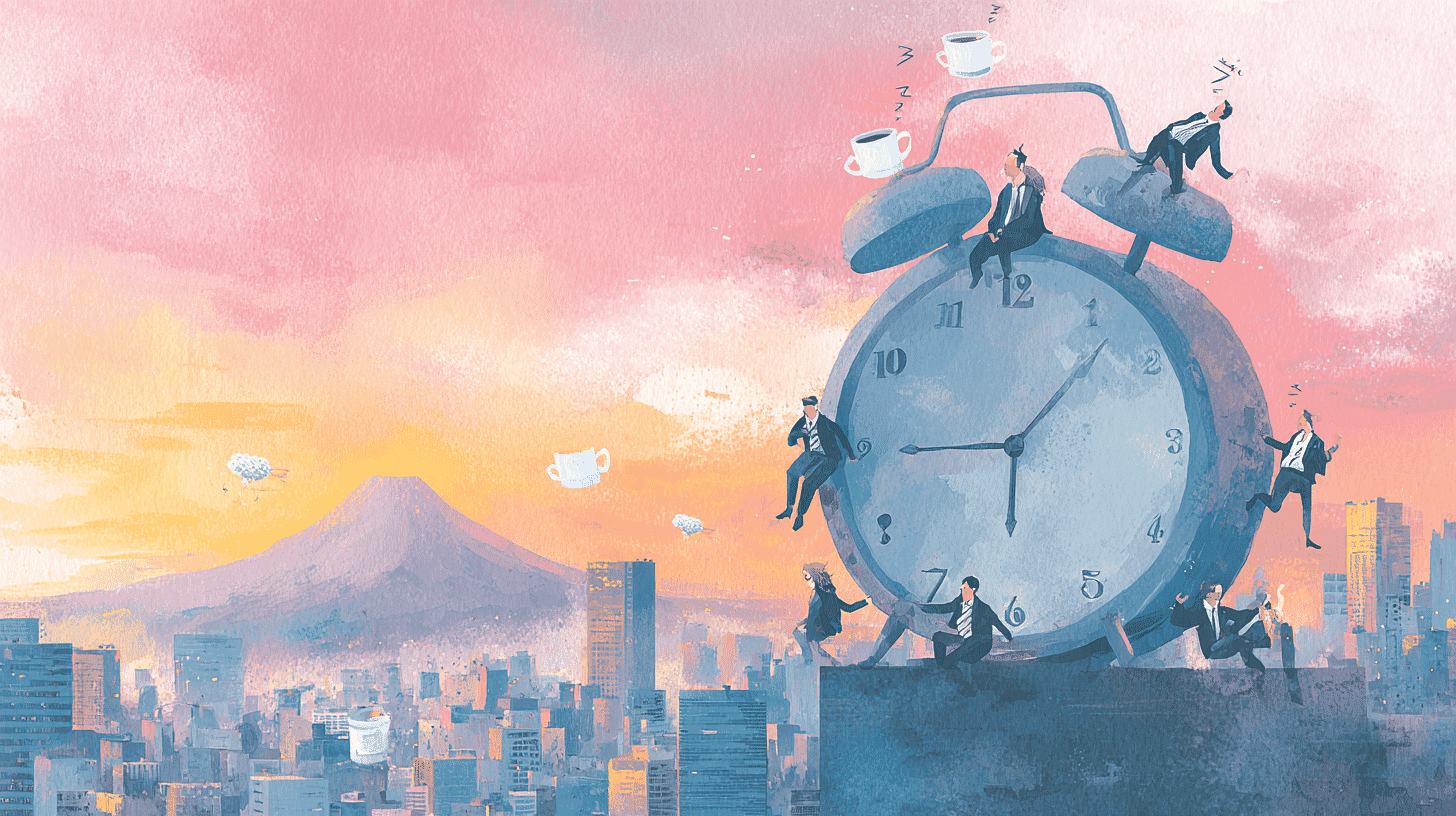
On March 6, 2026, the Medical Specialty Naming Subcommittee of Japan's Medical Ethics Council approved adding "sleep disorder" to the list of specialty names medical institutions may display on signage and in advertising. It was the first addition since the system was reformed in 2008, 18 years ago. After public comment and consultation with academic bodies, Cabinet Order No. 186 was promulgated on May 29 and took effect June 1. The change is already live.
Here is how it works. Under the Medical Care Act enforcement order, four diseases and conditions could be combined with a base specialty like internal medicine for advertising purposes: infectious disease, tumors, diabetes, and allergic disease. Sleep disorder makes five. So by the same logic that produces "diabetes internal medicine," a clinic can now call itself "sleep disorder internal medicine," "sleep disorder psychiatry," or "psychiatry (sleep disorders)." A clinic already registered for internal medicine can add it to its sign with a single filing at the public health center.
The trigger was a petition the Japanese Society of Sleep Research submitted to the health ministry on April 30, 2025, focused on a single problem: patients cannot find where to go. Naohisa Uchimura, the society's chairman, has long argued that the biggest issue in Japan's sleep medicine system is that nobody knows which door to knock on. Depending on symptoms, sleep problems route to respiratory medicine, psychiatry, otolaryngology, or pediatrics. From the patient's side, it is close to guesswork.
The numbers show the cost of that confusion. In a 2023 survey of 3,600 men and women by the Japanese Society of Sleep Research, 60 percent said they had sleep problems, but only 14 percent of those had consulted a doctor.
Japan by the Numbers: A Nation Running on Empty
The data speaks for itself.
According to the OECD Gender Data Portal (2021), Japanese people aged 15 to 64 sleep an average of 7 hours 22 minutes (442 minutes), the shortest among 33 countries surveyed. That is more than an hour below the OECD average of 8 hours 28 minutes (508 minutes). Health ministry data shows roughly 40 percent of people in their twenties and older get less than six hours.
Chronic sleep loss hits the economy. RAND Corporation's 2016 report "Why Sleep Matters" put Japan's annual economic loss from insufficient sleep at up to $138 billion, roughly 15 trillion yen at exchange rates of the time. That is 2.92 percent of GDP, the worst of the five countries studied: Japan, the US, the UK, Germany, and Canada. The US lost $411.1 billion (2.28 percent of GDP), Germany $60 billion (1.56 percent), the UK $50 billion (1.86 percent), and Canada $21.4 billion (1.35 percent). The US number is bigger in absolute terms, but relative to the size of the economy, Japan stands alone. RAND also calculated that people sleeping under six hours face a 13 percent higher mortality risk than those getting seven or more.
A Pokémon Sleep analysis of user data across seven countries, from July 2023 to October 2024, found Japanese users had the shortest weekday sleep of the seven. Even a game cannot hide it.
Why Japan Can't Sleep
The causes stack.
Start with long working hours. Japan has a word, karoshi, for death from overwork. The idea that overtime is virtuous has faded, but plenty of workplaces still run on an unspoken rule that you do not leave before your boss.
Then commuting. In the greater Tokyo area, an hour each way is unremarkable, and two to three hours round trip on a packed train is common.
Then the culture of endurance. Keep working when sleepy. Do not complain when tired. That mentality has helped devalue sleep. The inversion where sleep deprivation reads as evidence of effort runs deep in the competitive societies of East Asia, Japan and South Korea included.
Add revenge bedtime procrastination, driven by smartphones and social media. People who get no free time during the day sacrifice bedtime to keep scrolling. It is a global pattern, but it bites hardest where working hours are longest.
Corporate Japan Fights Back, from Nap Rooms to Standing Sleep Boxes
Companies, not just the government, have started taking sleep seriously.
Mitsubishi Estate, the major property developer, installed nap rooms at its head office in 2018 and introduced a power nap policy capped at 30 minutes. In its trial, about two-thirds of employees who used it reported higher afternoon productivity.
The bedding maker Nishikawa sells corporate clients a dedicated power nap space called Chotto Ne Room. Working with Panasonic's control technology, it tunes light and sound for a 15-minute nap.
Stranger still is giraffenap, a standing nap box developed by Koyoju Plywood in Asahikawa, Hokkaido. You nap upright, like a giraffe, in a footprint the size of a phone booth.
NASA research found a 26-minute nap improved alertness by 54 percent and cognitive performance by 34 percent, and Google, Nike, and British Airways have all adopted napping. Japan, trying to shed the title of the world's least-rested country, is pivoting to short daytime sleep as an offensive strategy.
A Global Problem: Japan Isn't Alone
Sleep deprivation is not a Japanese specialty.
South Korea is the other famous non-sleeper, sitting just behind Japan in OECD figures. Korea has a phrase, sadang oh-rak: sleep four hours and you pass the exam, sleep five and you fail. The culture of treating sleep loss as proof of diligence closely mirrors Japan's.
In the United States, the CDC treats insufficient sleep as a public health problem. More than a third of adults get less than the recommended seven hours. But sleep medicine is an established independent specialty there, with accredited sleep centers across the country. It is the opposite of Japan's "which door do I knock on" problem, and closing that gap is exactly what the new specialty name is for.
Spain's siesta is the symbol of napping culture, though it is barely practiced in modern cities. As the economy globalized, the long afternoon break shrank.
The countries that sleep longest, France, South Africa, and China among them, tend to be societies where resting carries less guilt.
When "Get Some Rest" Becomes Treatment
Japan finally recognizing sleep disorders as a specialty is not just a regulatory footnote. It marks a shift in the social message: not sleeping is not a virtue, it is a health risk.
That said, only the entrance has been built. Uchimura himself stresses that quality of care matters, and the society plans to train specialists and revise diagnostic and treatment guidelines. More signs mean nothing without doctors who can read the charts.
Tokyo, the city that never sleeps, has long been told as a story about vitality. But an economic loss worth 3 percent of GDP, and 60 percent of the population reporting sleep problems, cannot be willed away. Sleeping properly is becoming a national project. Slightly funny, entirely serious. That is Japan right now.
So, how many hours do you get? If you want more sleep but cannot manage it, how do people in your country deal with that? Tell us in the comments.





Global Discussion
14 comments