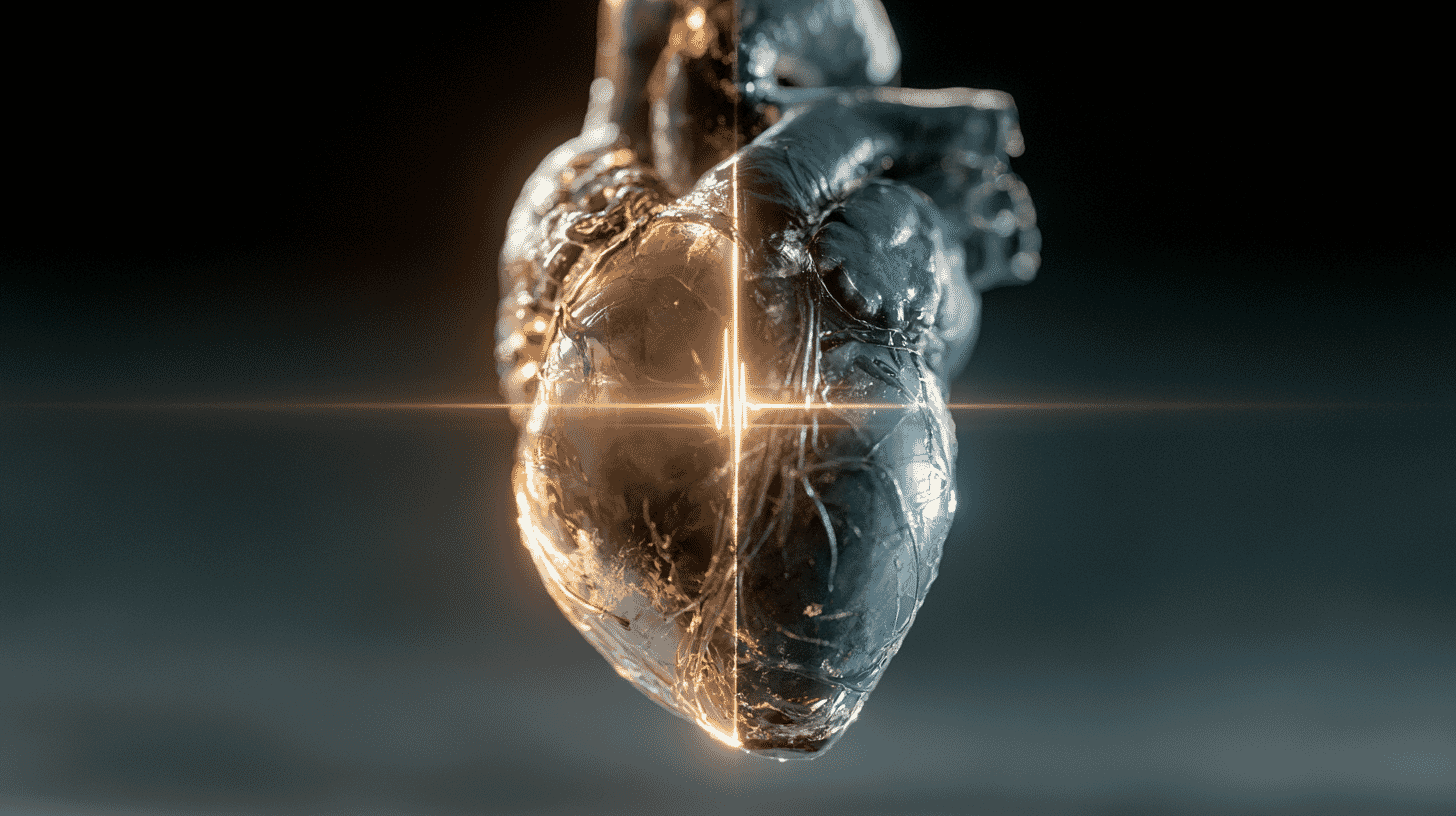
🫀 Japan can build the world's most reliable cars and land a probe on a distant asteroid, yet when it comes to organ donation it sits near the bottom of the global table, donating at roughly one-fortieth the rate of the United States. This week a medical society proposed narrowing part of that gap with a kind of donor Japan has never used for heart transplants. The idea could save lives. It also reopens a question the country has been uneasy about since 1968: when, exactly, is a person dead enough to give?
A heart that has already stopped
On June 20, the Japan Society for Heart Transplantation said it had begun a serious review of heart transplants from donors who die after their heart stops, a practice doctors call donation after circulatory death, or DCD. Right now, every heart transplant in Japan comes from a brain-dead donor whose heart is still beating when the organ is removed. The society wants to publish recommendations on patient criteria and ethical safeguards by early next year, and it says no change to the law is required.
The motivation is a queue that barely moves. As of April, 790 people were waiting for a heart in Japan, with an average wait of about five years. Against that, the country logged just 146 brain-dead donors in all of 2025. Cardiac-death donors were fewer still, and they can give only kidneys, the pancreas and eyes.
For a long time, a heart that had stopped was considered too damaged to transplant. That is changing abroad thanks to machines that can coax a still heart back into beating, either by restarting circulation inside the donor's body with a heart-lung machine, or by removing the heart and running warm, oxygen-rich fluid through it in a portable box. Europe and the United States already perform DCD heart transplants this way.
Why Japan is such an outlier
The numbers make the shortage vivid. Measured per million people, Japan records about 1.1 deceased donors a year, roughly one-fortieth of the American rate and one-eighth of neighboring South Korea's, on the Japan Organ Transplant Network's reading of IRODaT figures for 2024 (2023 for Korea). Spain and the US lead the table, at 49.4 and 48.0 per million in the 2023 count. More than 17,000 people sat on Japan's transplant waiting lists at the end of March 2026, and only about 3% receive an organ in a given year. Some families, out of options, travel abroad and pay for transplants there.
Part of the explanation is structural. Spain, France and the UK run an opt-out system: you are presumed willing to donate unless you have registered otherwise. Japan, like the US and Germany, uses opt-in, where nothing happens without an active yes from the person or the family. Only about one in ten Japanese has recorded a decision either way.
But paperwork alone cannot explain a 40-fold gap. For that, you have to go back to a single operation.
The 1968 surgery that froze a country
On August 8, 1968, a surgeon named Juro Wada carried out Japan's first heart transplant at Sapporo Medical University, the 30th anywhere in the world. The donor was a 21-year-old male university student who had drowned. The recipient, an 18-year-old high school student with valve disease, died 83 days later.
What came next poisoned the field for a generation. The same surgeon had judged the donor brain-dead and then performed the transplant, raising the question of whether the donor had truly been beyond saving. When the recipient's original heart was finally examined, investigators found it cut apart, feeding suspicion that he may not have needed a new heart at all. Wada was reported to prosecutors on suspicion of murder and other charges. The case was dropped in 1970 for insufficient evidence, but public trust had already collapsed. Japan did not perform a second heart transplant until 1999, three decades later, once an organ transplant law was finally on the books.
That law, passed in 1997, made brain-death donation legal but wrapped it in some of the strictest rules in the world. A 2010 revision eased them, allowing donation on a family's consent alone and permitting child donors for the first time. Even so, the numbers never caught up to other wealthy countries. The shadow of 1968, the fear that doctors might declare death too eagerly when organs are waiting, never fully lifted.
The quiet irony of cardiac death
Here is the twist that makes the new proposal worth watching. For many Japanese, the discomfort has always been specifically with brain death. A brain-dead body is still warm, its chest still rising on a ventilator. It does not look dead, and a large share of the public has never been able to accept that it is. Cardiac death is the opposite. When the heart stops and the body cools, death feels unambiguous. Japan's traditional three signs of death, no breath, no pulse, fixed pupils, describe exactly that moment.
In principle, then, a donor whose heart has stopped should sit more easily with the public than a brain-dead one. Japan already accepts cardiac-death donation for kidneys, the pancreas and eyes.
The catch is the technology. To make a stopped heart transplantable, surgeons restart circulation, sometimes by pumping oxygenated blood back through the donor's body minutes after death has been declared. Restarting the very organ whose stoppage defined death: to a public still wary from 1968, that can look like blurring the line between dead and alive. The technique that solves the medical problem walks straight back into the ethical one.
What the West is still arguing about
Japan is not inventing this debate so much as arriving late to one already running abroad. The in-body method, called normothermic regional perfusion or NRP, is now common in Europe and spreading in the US. Studies suggest DCD could lift the supply of transplantable hearts by 15 to 30%.
The dispute is a real one. Critics ask whether a death can be called irreversible if the same team then restarts the circulation, which strikes at what bioethicists call the dead donor rule: the principle that recovering organs must never be the thing that kills the donor. Surgeons who defend NRP clamp the vessels to the brain so it is never reperfused, arguing the person stays dead even as the heart beats again for the organs below. Australia, notably, has not allowed the chest version of the technique. In the US, some donor programs now warn every family that NRP may be used, precisely because the difference carries moral weight.
Will it actually save lives?
Almost certainly some. A donor pool that adds even a fraction of cardiac-death hearts to the 146 brain-dead ones a year would shorten the five-year wait for at least some of the 790 people in line. Yoshiki Sawa, the society's representative director, framed it simply: lives that are being saved overseas are being lost in Japan for lack of donors, and that alone is reason to talk this through carefully.
Whether it amounts to Japan "finally accepting Western standards" is more tangled than it sounds. Cardiac-death donation is not foreign to Japan, which already does it for other organs. What is new is doing it for the heart, with a technology that pokes at the country's oldest anxiety about death and medicine. The medicine has moved on. Whether public trust moves with it is the harder question, and no machine will answer it.
In Japan, the boundary between life and death has never been a purely medical line. Where is that line drawn in your country, and have you ever told anyone where you would want it drawn for you?
References
- https://news.yahoo.co.jp/articles/e161441739c63830aabbc94297888a64e6636e60
- https://www.nikkei.com/article/DGXZQOUD2021I0Q6A620C2000000/
- https://news.yahoo.co.jp/articles/4e3de3afb46fe4a1d5ebdae6a8a2992ab850b163
- https://www.nippon.com/ja/japan-data/h02754/
- https://www.jotnw.or.jp/ishokujijou/current-status/comparison.html
- https://www.nikkei.com/article/DGXNASDG15021_V10C11A2CC0000/
- https://pmc.ncbi.nlm.nih.gov/articles/PMC11927451/




Global Discussion
4 comments