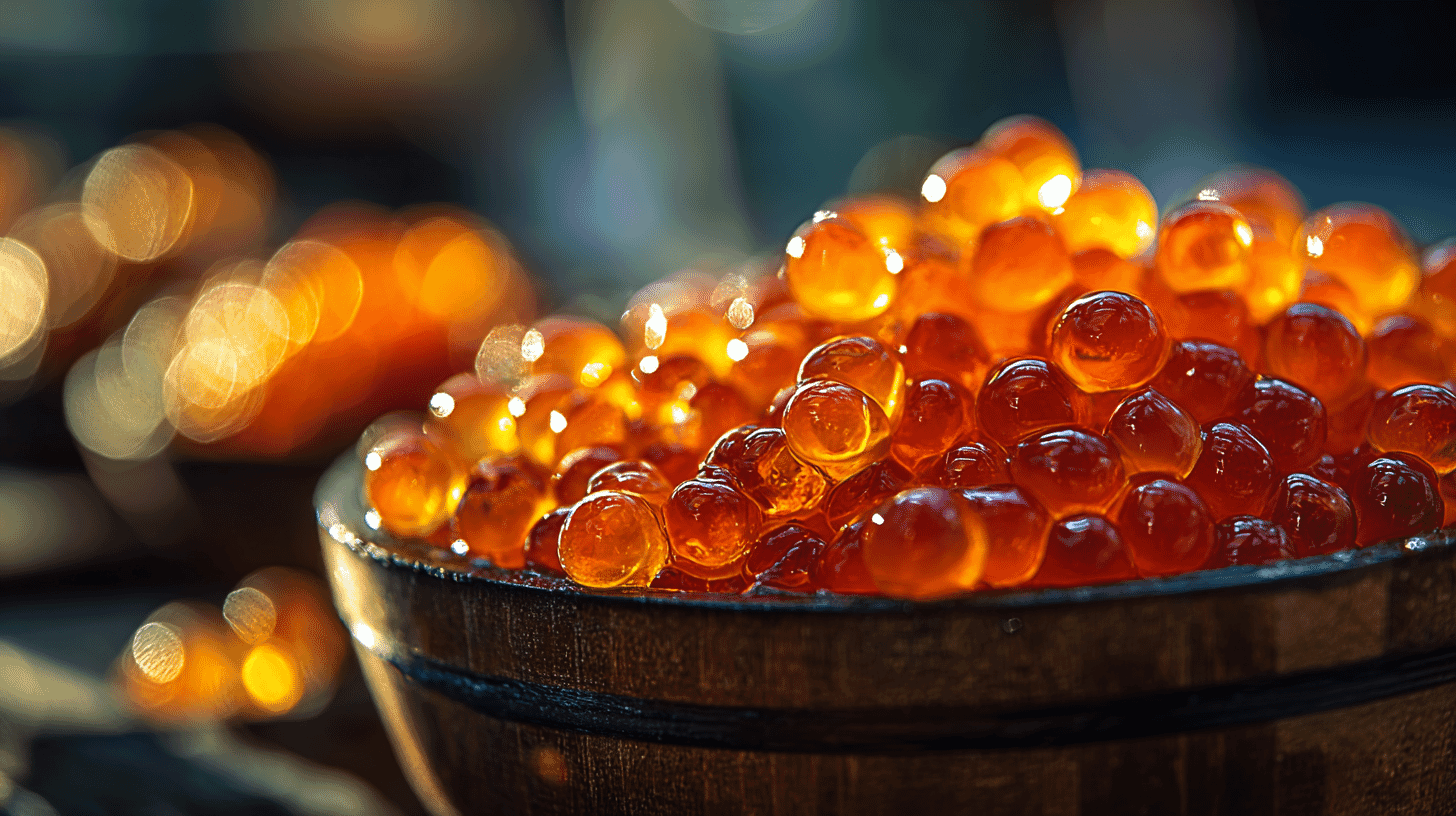
Two decades ago Japan landed 200,000 to 300,000 tonnes of salmon a year. In 2025 the figure was about 15,000. Fewer fish means fewer eggs, and wholesale ikura climbed to 20,000-30,000 yen a kilo, more than double the previous year and the highest since the Heisei era began. Rising sea temperatures do not explain all of it, which is where this story gets interesting.
Salmon Shortages Drive Ikura Prices to Historic Highs
Ikura, the salmon roe beloved by Japanese diners for generations, reached record prices in 2025. Salmon catches in Hokkaido have collapsed to the lowest level since record-keeping began, and the ikura market has taken the hit.
Two decades ago, Japan landed 200,000 to 300,000 tons of salmon a year. In 2025 the figure fell to roughly 15,000 tons. Hokkaido reported a preliminary catch of about 5.61 million fish for the 2025 season, down 64.1 percent from the previous year and the lowest since 1989. It was the first time the count dropped below 10 million, and it amounts to about one-tenth of the 2003 peak of some 56.47 million fish. According to the Hokkaido Federation of Fisheries Cooperative Associations, set-net landings totaled 14,500 tons, 67 percent below the previous year and the lowest on record.
Fewer adult fish means fewer eggs. Hokkaido ikura output came to roughly 440 tons, a 70 percent drop, and wholesale prices jumped to 20,000 to 30,000 yen per kilogram, more than double the year-earlier level and the highest since 1989. Raw sujiko, the roe skeins ikura is made from, tell the same story: the average September trading price rose from 2,058 yen per kilogram in 2010 to 9,183 yen in 2025.
Environmental Changes Behind the Shortage
Rising ocean temperatures are the cause most often cited. The Salmon and Freshwater Fisheries Research Institute of the Hokkaido Research Organization believes warm water in early summer 2022 pushed juvenile salmon offshore before they had grown large enough, leaving them exposed to predators. Salmon are cold-water fish, and warming seas around Japan are widely thought to be shifting their habitat and migration routes.
Temperature alone does not explain everything, though. In that same 2025 season, Alaska's salmon catch rose about 20 percent, and Russian catches climbed 10 to 60 percent depending on the region. Stocks in both countries have held steady over the long run. Japan is the outlier, which has led some analysts to point instead at a resource-management model built almost entirely on hatchery releases. Whatever the cause, the shift toward imports has pushed up the price of imported roe as well, keeping both domestic and foreign supply expensive.
Impact on Japanese Food Culture
Ikura is essential to New Year's cooking and a fixture on sushi and seafood rice bowls. Its orange pearls have long been called gems of the sea.
The price surge is hitting households directly. Supermarket prices have more than doubled in many cases. The average price for 100 grams reached a record 2,243 yen in June 2026, 877 yen above the low of 1,366 yen in August 2020 and roughly 50 percent above pre-pandemic levels. More families are cutting back on ikura in their New Year's osechi dishes or substituting something else.
Conveyor belt sushi chains have raised prices, and some locations have dropped ikura altogether. In the tourist city of Otaru, some restaurants added 1,000 yen to their ikura rice bowls. High-end sushi restaurants have little choice but to pass the cost on.
Substitutes and a Turn Toward Imports
More restaurants are using tobiko (flying fish roe) or masuko (trout roe) in place of ikura, and consumers are gradually accepting the swap. Imports have surged. Japan brought in 7,302 tons of American fish roe between July and October 2025, 2.7 times the 2,698 tons of a year earlier. Alaska's pink salmon catch tripled in 2025 to 170,000 tons from 56,000 tons, yet strong Japanese demand still pushed the price to 4,236 yen per kilogram, up 50 percent.
Juvenile release programs and catch limits aimed at rebuilding stocks continue. Results, however, take years to show up in the numbers.
How Long Will Prices Stay High
Hokkaido Research Organization projects the 2026 autumn salmon run at about 3.65 million fish, roughly half the 2025 figure that had already fallen below ten million. Retailers expect deliveries at about 40 percent of a normal year.
Management measures have become more concrete. In parts of the Okhotsk coast, anglers are now limited to three autumn salmon per person per day, with penalties for breaking the rule, and there have been calls to refrain from fishing altogether. Some in the industry see signs of a rebound among three-year-olds and argue the bottom may already be here. Either way, elevated prices look likely to persist.
A food that was once relatively easy to enjoy is turning into a luxury.
Has any ingredient in your country seen prices spike because of resource depletion or a changing environment? Did it end up out of reach?
References
- https://www.htb.co.jp/news/archives_39228.html - HTB Hokkaido News on the 2026 run forecast
- https://wedge.ismedia.jp/articles/-/39963 - Wedge Online on Japanese versus US stock management
- https://price.w3g.jp/ikura - price history for 100g of ikura
- https://www.jfa.maff.go.jp/ - Japan Fisheries Agency
- https://www.hro.or.jp/ - Hokkaido Research Organization







Global Discussion
15 comments