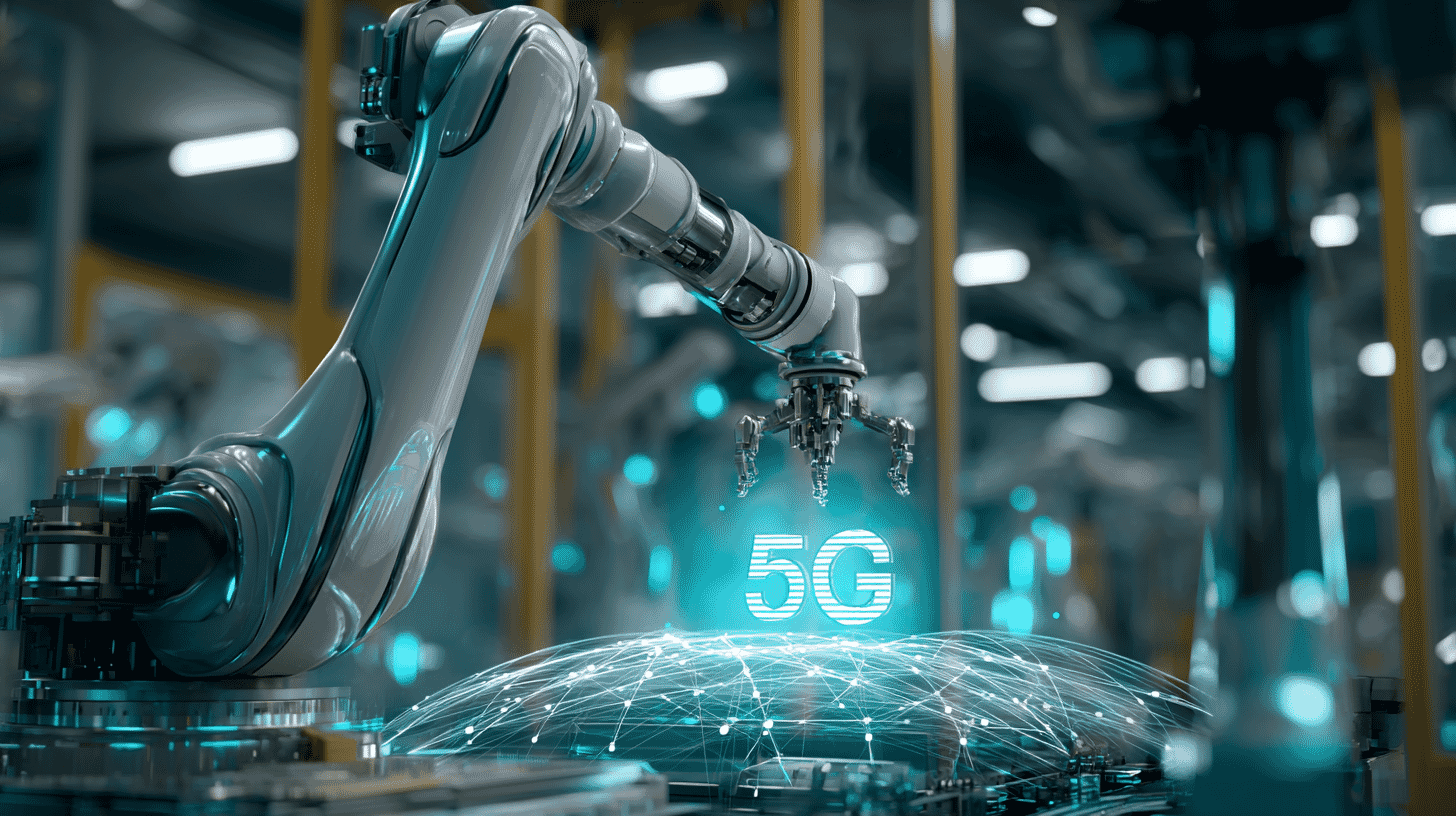
For a robot to "think and move" in real time, it needs blazing-fast connectivity. SoftBank Group has acquired the robotics division of Swiss industrial giant ABB for $5.4 billion, and is now combining its telecom empire, Arm's chip designs, and NVIDIA's AI platforms to dominate an emerging market called "Physical AI." Could a telecom carrier become the backbone of the robotics industry?
What Is "Physical AI"?: When AI Steps Out of the Screen
Generative AI tools like ChatGPT produce text and images within the digital realm. Physical AI takes it further: robots and autonomous machines analyze sensor and camera data in real time, make their own decisions, and act on them in the physical world.
Unlike traditional factory robots that repeat pre-programmed motions, Physical AI robots understand their surroundings and adapt to unexpected situations. NVIDIA CEO Jensen Huang has called this "the next frontier of AI," and every major tech company is pouring money into the space.
Now, Japan's telecom and investment giant SoftBank Group has entered the ring, with a strategy no one else can replicate.
Masayoshi Son's Power Move: The $5.4 Billion ABB Acquisition
In October 2025, SoftBank Group (SBG) announced the acquisition of ABB's robotics division for $5.375 billion. ABB Robotics operates in over 50 countries, employs approximately 7,000 people, and has more than 500,000 robots installed worldwide.
SBG Chairman and CEO Masayoshi Son declared at the announcement: "SoftBank's next frontier is Physical AI." This wasn't just another deal, it was SBG securing the "body" for its vision of Artificial Super Intelligence (ASI).
SBG had previously invested in logistics robotics (Berkshire Grey), warehouse automation (AutoStore), and AI motion control (Skild AI). But it lacked a general-purpose industrial robot platform. The ABB acquisition fills that gap, aiming for vertical integration from hardware to software. The deal is expected to close in the second half of 2026, pending regulatory approval.
Telecom Meets Robotics: SoftBank's "AI-RAN" Concept
The most distinctive element of SoftBank's Physical AI strategy is its plan to use telecom infrastructure as a robot's "brain."
Traditionally, robots needing advanced AI processing had two options: embed expensive high-performance chips onboard, or send data to the cloud for processing. The first approach is costly and generates heat; the second introduces latency, a critical flaw when a robot needs to grasp an object or dodge a person in milliseconds.
SoftBank's AI-RAN (AI Radio Access Network) offers a third path. It places AI computing infrastructure (MEC, Multi-access Edge Computing) right next to 5G base stations, processing robot sensor data with near-zero latency. Not as far away as the cloud, not as constrained as onboard chips, AI at "just the right distance."
At the International Robot Exhibition (iREX2025) in Tokyo in December 2025, SoftBank and Yaskawa Electric demonstrated this in action. A robot connected to a building management system successfully retrieved a specific smartphone from a shelf, identifying the correct device among multiple objects, maintaining accuracy despite changing lighting, and gripping the thin device without damage. This "multi-skilled" operation was impossible for conventional industrial robots.
The system uses three coordinated AIs: a building management AI monitoring environmental conditions, a MEC AI (based on VLM, Vision-Language Model) analyzing visual data and generating tasks, and a robot AI (based on VLA, Vision-Language Action) controlling physical movements.
Ericsson Partnership: Proving Low-Latency Networks Work
In February 2026, SoftBank and Sweden's Ericsson announced a successful proof-of-concept for a low-latency, high-reliability network designed for Physical AI.
The test demonstrated dynamic offloading, lightweight AI decisions are processed on the robot itself, while complex judgments are offloaded to the MEC platform in real time. Network slicing technology allowed different applications to receive optimized connectivity based on their specific latency and throughput requirements.
The NVIDIA Connection: Powering the AI Brain
SoftBank's Physical AI strategy is deeply intertwined with NVIDIA.
In an outdoor field trial in Fujisawa City, Kanagawa Prefecture, SoftBank achieved the world's first live 5G AI-RAN operation, built on NVIDIA AI Aerial software and GH200 superchips. The system delivered carrier-grade 5G performance while simultaneously running AI inference workloads on spare capacity.
NVIDIA and SoftBank estimate that for every $1 invested in AI-RAN infrastructure, operators can earn approximately $5 in AI inference revenue. This means base stations, traditionally cost centers, could become revenue-generating AI assets.
SoftBank plans to commercially launch its AI-RAN solution in 2026 for deployment by telecom operators worldwide.
Arm: The Chip Designer in SoftBank's Arsenal
Arm, the SoftBank-owned semiconductor design company whose processor architectures power the vast majority of the world's smartphones, plays a key role in the Physical AI vision.
Arm excels at low-power, high-performance processor design, ideal for edge AI chips in robots and autonomous devices. SBG is reportedly developing its own AI chip (codenamed "Izanagi") based on Arm architecture, to complement NVIDIA's high-end offerings like Jetson Thor. The strategy: NVIDIA for cutting-edge R&D and humanoids, Arm-based chips for mass-market robots.
Japan's Big Three Telcos All Jump In
SoftBank isn't alone. Japan's other major telcos have also entered the Physical AI arena.
NTT Docomo Business partnered with Kawasaki Heavy Industries in October 2025 to use NTT's next-generation IOWN infrastructure and 5G for robot control. KDDI teamed up with AVITA to apply AI processing to remote-controlled humanoid robots for customer service.
The driving force behind this industry-wide shift is Japan's acute labor shortage caused by an aging population. Automating tasks in hospitals, schools, department stores, and office buildings, environments where people move unpredictably, has been beyond the reach of conventional robots. The fusion of telecom and AI is seen as the key to breaking through this barrier.
The US-China Physical AI Race: Where Does Japan Stand?
The Physical AI market is dominated by fierce US-China competition. NVIDIA offers robotics AI platforms like Isaac and GR00T. Tesla is accelerating its Optimus humanoid. Chinese startups like Unitree and AgiBot are mass-producing affordable humanoids.
Japan occupies a unique position. Companies like Yaskawa, FANUC, and Kawasaki Heavy Industries dominate global industrial robot market share, and Japan's precision control technology is world-class. However, the country trails the US and China in AI software and platform development.
SoftBank's strategy connects Japan's hardware strengths and telecom infrastructure through AI. ABB's industrial robots, Yaskawa's control technology, Arm's chip designs, NVIDIA's AI platforms, and SoftBank's own 5G/6G network, integrated together, this creates a "telecom-infrastructure-led" approach distinct from America's platform-driven model and China's cost-competition model.
When Telecom Becomes a Robot's Nervous System
SoftBank Group's Physical AI strategy paints a picture where telecom carriers become central players in the robotics industry. The robot's "body" is ABB, its "brain" is NVIDIA and Arm, and its "nervous system" is SoftBank's communications network, a unique vertical integration.
Challenges remain: integration risks from the $5.4 billion ABB acquisition, AI-RAN commercialization timelines, and the technology gap with competitors. But Japan's attempt to carve out a unique space in Physical AI through its telecom-robotics fusion is drawing global attention.
In Japan, a new idea is taking shape: telecom networks making robots smarter. In your country, which industry do you think will lead the robot revolution? We'd love to hear your thoughts.
References
- https://www.softbank.jp/corp/news/press/sbkk/2025/20251201_02/
- https://www.softbank.jp/corp/news/press/sbkk/2026/20260227_01/
- https://group.softbank/news/press/20251008
- https://nvidianews.nvidia.com/news/nvidia-and-softbank-accelerate-japans-journey-to-global-ai-powerhouse
- https://developer.nvidia.com/blog/ai-ran-goes-live-and-unlocks-a-new-ai-opportunity-for-telcos/







Global Discussion
14 comments