Did you know your old smartphone contains a treasure trove of over 10 different rare metals?
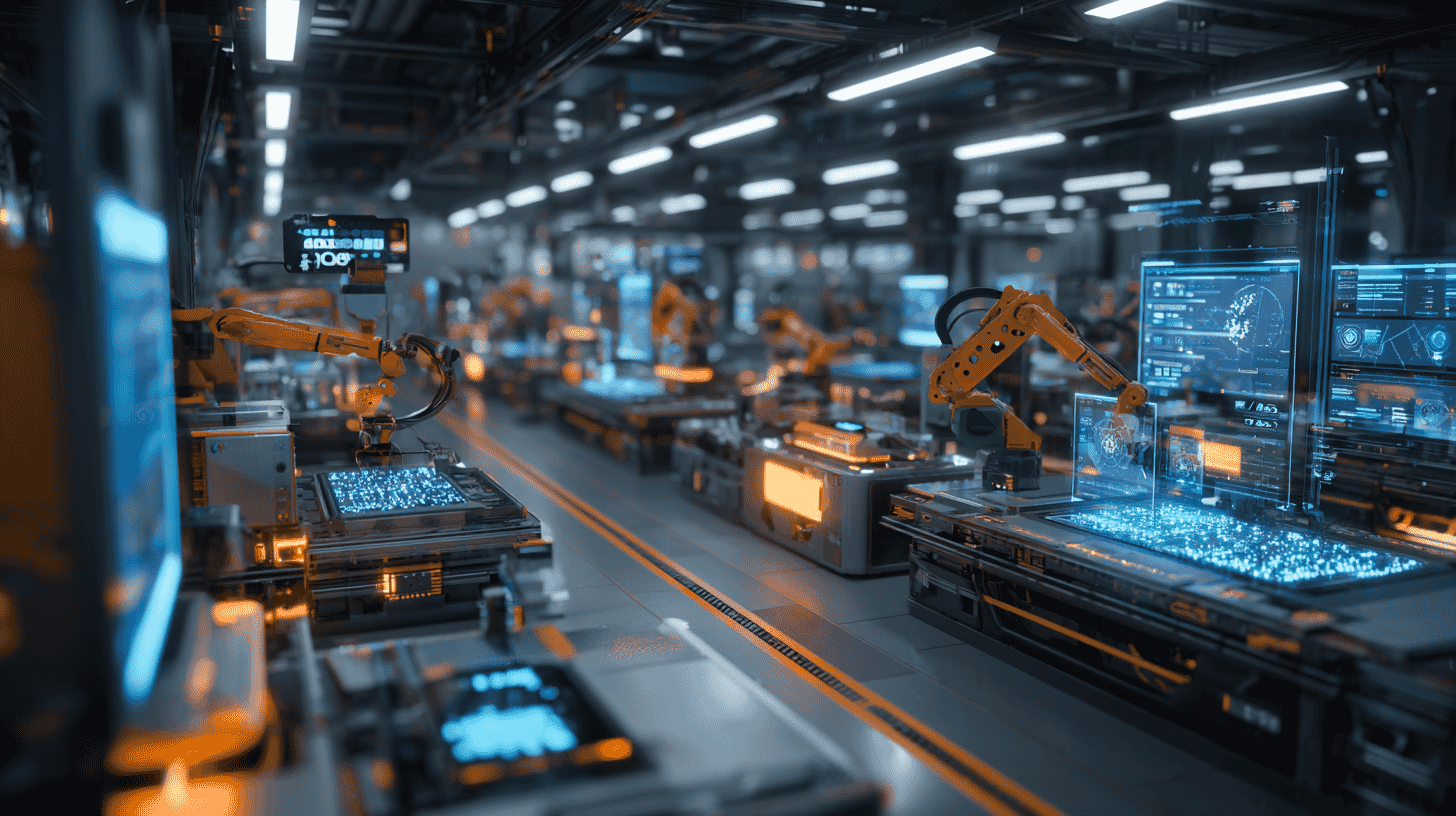
For decades, extracting these precious materials required painstaking manual labor. Now, AI and robotics are changing everything. After 30+ years of research, Japan has unveiled a fully automated rare metal recovery system that began operations in Osaka in September 2025. This technology could transform Japan from a resource-poor nation into a self-sufficient powerhouse.
What is Urban Mining? Japan's Hidden Resource Wealth
The concept of "urban mining" was coined in the 1980s by Professor Michio Nanjyo of Tohoku University. It refers to treating discarded electronic devices, smartphones, computers, game consoles, as mineral deposits waiting to be extracted.
Japan's urban mine is remarkably rich. According to the National Institute for Materials Science, the country holds approximately 6,800 tons of gold (16% of global reserves) and 60,000 tons of silver (22%) in discarded electronics. Other critical materials include indium (61% of global reserves) and tantalum (10%).
Yet until now, this "above-ground mine" remained largely untapped. The culprit? Economics.
Why Traditional Recycling Failed
The rare metals in a single smartphone are worth roughly $0.70. Extracting them required skilled workers to manually disassemble each device, component by component, screw by screw. The labor costs made the economics impossible.
Beyond cost, technical challenges abound. Electronic circuit boards contain hundreds of tiny components in complex arrangements. Tantalum capacitors look identical to niobium capacitors to the human eye. Contamination between these materials degrades the quality of recycled products, forcing recyclers to be extremely conservative.
30 Years of Research: Dr. Tatsuya Oki's Mission
Enter Dr. Tatsuya Oki, Chief Research Scientist at Japan's National Institute of Advanced Industrial Science and Technology (AIST). For over three decades, he has pursued a singular goal: automating urban mining.
In 2012, Dr. Oki introduced the concept of "Strategic Urban Mining", a proactive approach where manufacturing (arterial industry) and recycling (venous industry) work together to systematically circulate resources. The following year, he established SURE (Strategic Urban mining REsearch base) at AIST.
The breakthrough came through physical separation technologies. Rather than using chemical processes, Dr. Oki's methods leverage air currents, density differences, and magnetic properties to sort materials. This approach minimizes environmental impact while achieving high-purity recovery.
September 2025: The System Goes Live
Dr. Oki's decades of research culminated in a fully automated recovery unit, assembled in September 2025 at DINS Kansai, part of the Daiei Environment Group in Sakai City, Osaka.
The system processes six categories of small electronics end-to-end:
- Smartphones
- Tablets
- Feature phones
- Digital cameras
- Video cameras
- Portable gaming devices
A database of approximately 2,000 device models enables AI-powered identification. The system analyzes 3D images and weight data to determine each device's make and model, then selects the optimal processing pathway.
For smartphones and tablets with fire-prone lithium batteries, X-ray imaging first locates the battery position before careful dismantling. Other devices proceed to a shredder-type disassembler, with final separation achieved through air-based sorting technology.
The system recovers up to 10 different rare metals in a single pass: tantalum, cobalt, nickel, lithium, and others essential for high-tech manufacturing.
Targeting Commercial Operations by 2028
The project, a collaboration between Daiei Environment, AIST, Sato Tekko, and others under NEDO's commission, aims to establish continuous operation technology by 2027 and begin commercial operations from 2028.
Current testing focuses on validating sorting accuracy, preventing equipment jams, and identifying other practical challenges before scale-up.
A Trump Card for Economic Security
The technology's significance extends beyond environmental benefits. It's increasingly viewed as a strategic asset for economic security.
China dominates global rare metal production, particularly rare earth elements. In 2010, during the Senkaku Islands dispute, China restricted rare earth exports to Japan, causing prices to skyrocket and disrupting Japanese manufacturing. As of 2025, amid intensifying US-China tensions, China has further tightened export controls.
Japan imports virtually 100% of its rare metals. Increasing self-sufficiency through urban mining addresses a critical vulnerability. If this automated recovery technology achieves commercial viability, it could fundamentally reshape Japan's position in resource diplomacy.
Government Policy Catches Up
The Japanese government is accelerating rare metal recycling initiatives.
The Ministry of Economy, Trade and Industry has been working since 2024 to mandate rare metal recovery and reuse through amendments to the Act on Promotion of Effective Utilization of Resources. Initial targets include manufacturing scraps from battery production, with eventual expansion to cover used EV batteries.
The government has committed 30 billion yen over three years starting in 2024 to support domestic e-waste recycling infrastructure.
Global Recognition of Japan's Leadership
Japan's urban mining expertise has earned international recognition. The International Institute for Strategic Studies (IISS) noted in an August 2025 report that Japan has led the global urban mining field for nearly two decades, playing a crucial role in countering China's resource dominance and securing supply chain security for itself and partner nations.
What About Your Country?
In Japan, discarded smartphones and game consoles are being transformed into "urban mines." AI and robotics are replacing human hands, efficiently recovering resources that have long lain dormant. Perhaps this innovation emerged precisely because Japan, a resource-poor island nation, had no choice but to think creatively.
How does your country handle electronic waste collection and recycling? Is the concept of urban mining widely known? What happens to discarded electronics where you live?







Global Discussion
15 comments