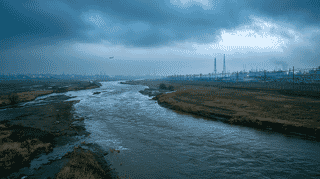
Kubota says its existing waste-melting furnaces destroyed three regulated PFAS at over 99.999 percent, with greenhouse-gas markers below detection. We check whether 'destroying forever chemicals' is really the breakthrough it sounds like.
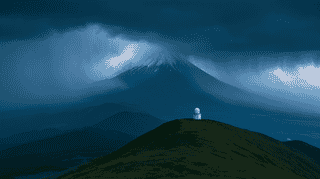
When typhoons soak Mount Fuji, its summit rises a few centimeters and its base sinks. Hokkaido University researchers found this in satellite-positioning data, and it changes how Japan reads the volcano's eruption warning signs.
Eleven days, 44 countries, 400 delegates. We score the five expectations from our pre-meeting article against the MOFA outcome communique: emperor penguin protection blocked, tourism rules deferred, Annex VI stalled, only the transparency resolution delivered.
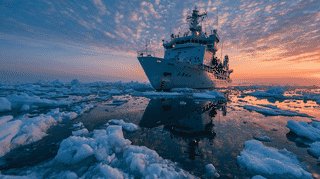
A Japanese research team — University of Tokyo, JAMSTEC, and the National Institute of Polar Research — has produced the first direct observational evidence that warm-water microbes carried into the Arctic Ocean are altering its nitrogen and phosphorus cycles. Aboard the R/V Mirai between 2015 and 2020, they tracked how UCYN-A2, a nitrogen-fixing organism normally associated with subtropical seas, surged into the Arctic basin during the early ice-melt year of 2017 — and why that matters for the world's most rapidly warming ocean.
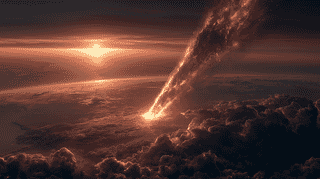
A black clay layer in a remote Hokkaido stream — more than 10,000 km from the Yucatan impact crater — holds chemical fingerprints of the asteroid that ended the age of dinosaurs. Tohoku University researchers are re-analyzing East Asia's only known K-Pg boundary outcrop.
Japan's Environment Ministry confirmed PFAS contamination above national limits at 629 sites across 26 prefectures in fiscal 2024 — including locations near U.S. military bases, factories, and Self-Defense Force facilities. A UN special rapporteur has voiced 'most serious concern,' while Japan's standards lag far behind those of the U.S. and EU.
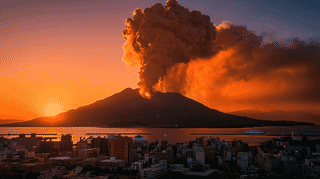
Two Japanese volcanoes are on heightened alert at the same time. Sakurajima produced its first pyroclastic flow since 2018 on May 8, while Mount Meakan in Hokkaido recorded 254 volcanic quakes in 24 hours. Here's what tourists need to know about nearby destinations, alert levels, and trustworthy sources
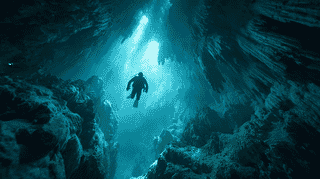
At Inazumi Underwater Cave in Oita Prefecture, professional diver Yuji Ohama (60) and his team reached 97.4m depth on March 20, 2026—likely a Japanese national record for underwater limestone caves. Formed 300 million years ago and submerged by an Aso volcanic eruption 85,000 years ago, the cave's deepest section revealed primordial stalactites and geological strata never seen above ground. We compare this discovery with Mexico's cenotes and Florida's cave systems, and explore Japan's only commercially diveable underwater limestone cave.
Tourist numbers up from 5,000 to 120,000 a year, sea ice at record lows, emperor penguins now Endangered. What ATCM48 in Hiroshima and Japan's Antarctic protection law amendment must confront.
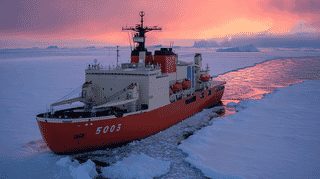
Japan plans to transfer operation of its next Antarctic icebreaker from the Maritime Self-Defense Force to research agency JAMSTEC after the current Shirase retires around 2034. A look at Japan's 70-year Antarctic legacy and what the shift means.
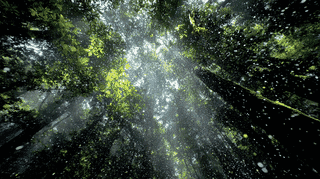
Microplastic pollution isn't limited to oceans — it's now raining down on forests too. A TU Darmstadt study first proved that airborne plastics settle on tree canopies and accumulate in forest soil. With 67% of Japan covered in forests, the implications are enormous. Japanese researchers have also pioneered breakthroughs in understanding how trees trap airborne microplastics.