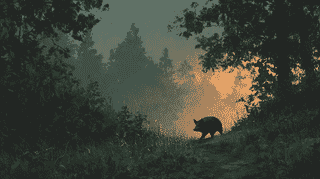
Modern wild boars still carry traces of domestic pigs brought from the Asian mainland over 2,000 years ago. Nagoya University read that story off 93 jawbones from Shimane's Nishikawazu site: escaped pigs going feral and breeding with native boars. The same thing is happening today from Texas to Brazil.
For forty years a black clay layer in a remote Hokkaido stream was East Asia's only K-Pg boundary. In May 2026, a Tohoku University-led team reported it isn't the boundary at all, and that the real record lies about four kilometers northeast.
Italian engineer Alberto Donini's "Relative Erosion Method" suggests the Great Pyramid of Giza may have been built around 25,000 years ago — far older than the accepted 4,600-year timeline. Was Pharaoh Khufu merely a renovator? We explore the controversial findings, mainstream archaeological pushback, and what this means for ancient history.
Japan's Jomon-era lacquerware dates back 9,000 years—the world's oldest. Its pottery reaches 16,000 years. The Sannai-Maruyama site's six-pillar structure reveals precision measurement at 4.2m intervals, while Tatara ironmaking produced ultra-pure steel still unmatched today. Discover how DNA analysis, LiDAR, and cutting-edge science are decoding ancient Japan's astonishing lost technologies.
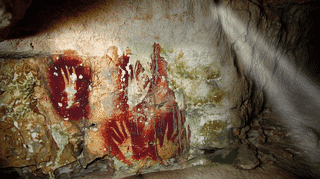
A hand stencil in a cave on Indonesia's Muna Island has been confirmed as the world's oldest cave art at 67,800+ years old, using laser-ablation uranium-series dating. Surpassing Spain's cave art by over 1,000 years, this discovery reshapes our understanding of early human artistic culture and migration routes to Australia.
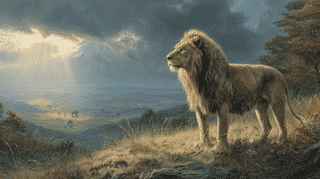
A joint research team from SOKENDAI and Peking University has revealed that cave lions (Panthera spelaea) roamed widely across the Japanese archipelago tens of thousands of years ago. DNA analysis of fossils previously thought to be tigers confirmed their true identity, unveiling a lost ecosystem where lions coexisted with Naumann's elephants and giant deer.
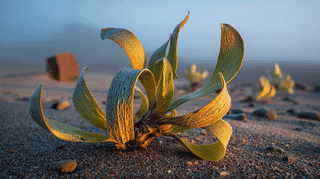
Japan's Tsukuba Botanical Garden has achieved artificial pollination of Welwitschia mirabilis (Kisoutengai), a "living fossil" from Namibia's desert, and collected seeds. Discover the extraordinary biology of a plant that grows only two leaves over a lifespan said to exceed 2,000 years, and why ex-situ conservation matters as climate change threatens its range.