🦁 Lions once roamed Japan—yes, you read that right. While we typically associate lions with the African savanna, new DNA analysis has revealed that tens of thousands of years ago, these apex predators prowled the Japanese archipelago, possibly hunting in the shadow of Mount Fuji.
A Groundbreaking Discovery That Rewrites History
On January 30, 2026, an international research team from the Graduate University for Advanced Studies (SOKENDAI) in Japan and Peking University published their findings in the Proceedings of the National Academy of Sciences (PNAS), marking a paradigm shift in our understanding of Japan's prehistoric fauna.
For decades, fossils of large feline species discovered across Japan were assumed to be tigers. However, when researchers applied cutting-edge DNA analysis and protein extraction techniques to examine 26 subfossil specimens, they uncovered a stunning truth. The mitochondrial DNA and proteins recovered from five specimens found in Aomori, Shizuoka, and Yamaguchi prefectures matched not tigers, but cave lions (Panthera spelaea).
"This is an important finding for understanding the interaction between lions and tigers and their impact on the ecosystem," said Dr. Takumi Tsutaya, assistant professor at SOKENDAI, who led the research.
Meet the Cave Lion
The cave lion was an extinct subspecies of the modern lion that roamed Eurasia from approximately 600,000 to 10,000 years ago. Also known as the "steppe lion" or "Eurasian cave lion," it was one of the largest cat species to ever exist, with a range spanning from Spain across Siberia to North America.
At their peak, cave lions could reach an estimated body weight of 400-500 kilograms—roughly twice the size of modern African lions. However, they progressively decreased in size during and after the Last Glacial Maximum, with the final populations measuring only 70-90 kilograms before their extinction.
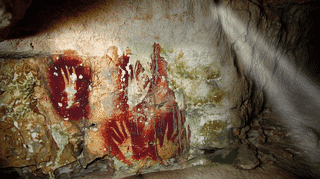
Interestingly, cave paintings from Chauvet Cave in France and other prehistoric sites depict cave lions with sparse or no manes, suggesting they looked quite different from their modern African relatives.
Why Were Lions in Japan?
During the Pleistocene epoch, Eurasia was divided between two apex feline predators: cave lions dominated the northern regions while tigers inhabited the south. Between them lay a "transition zone" where both species competed for territory. Japan sat precisely at the eastern edge of this contested region.
During glacial periods, sea levels dropped by as much as 120 meters, creating land bridges that connected the Japanese islands to the Asian mainland. This allowed numerous large mammals to migrate into what is now Japan. By re-examining fossils that had long been classified as tigers, researchers were finally able to confirm the presence of lions.
Japan's Lost Megafauna
The Japanese archipelago of tens of thousands of years ago was home to a vastly different ecosystem than today. The temperate regions of Honshu hosted herds of Naumann's elephants and Yabe's giant deer (with antlers spanning up to 1.8 meters), while Hokkaido was home to woolly mammoths, moose, and steppe bison.
The presence of these large herbivores naturally implies the existence of predators to hunt them. Previous research had identified tigers and leopards as Japan's primary large carnivores during this period. Now, cave lions have been added to this list of apex predators that once shaped Japan's ancient ecosystem.
According to the research team, the mid-to-late Pleistocene Japanese archipelago may have supported a diverse array of wild cats, including cave lions, lions, tigers, leopards, lynx, and leopard cats.
The Great Extinction
Between approximately 23,000 and 15,000 years ago, Japan's megafauna vanished. Naumann's elephants and giant deer succumbed to the harsh conditions as the Last Glacial Maximum approached, while northern species like mammoths couldn't adapt to the rapid warming that followed.
Cave lions likely disappeared during this "Quaternary extinction event" as well. Contributing factors may have included dramatic climate change, the decline of their large herbivore prey, and increasing pressure from expanding human populations.
Remarkably, several juvenile cave lion specimens have been discovered frozen in Siberian permafrost, preserving their fur and flesh. These remarkable finds continue to provide invaluable insights into the lives of these ancient predators.
Looking Ahead
This discovery fundamentally transforms our understanding of Japan's ancient ecosystems. Dr. Tsutaya notes that the findings are "crucial for examining the interactions between lions and tigers and their respective ecological impacts."
Future research, particularly nuclear genome DNA analysis, may reveal when and how cave lions arrived in Japan, and what genetic relationships they shared with continental populations.
The revelation that lions once walked the lands of Japan dramatically reshapes our image of "Japanese nature." Has your country or region made surprising discoveries about animals that once lived there but are now extinct? Share your thoughts and stories in the comments!

References
Reactions in Japan
Whoaaaa! There were lions in Japan!? I've loved dinosaurs and prehistoric animals since I was a kid, but I never learned this in school. Time to rewrite the textbooks!
So fossils were found in Yamaguchi... Just imagining lions walking where I walk everyday gives me chills. There must be more discoveries waiting in places like Akiyoshido cave.
What they thought were tigers turned out to be lions—DNA analysis is incredible. It means you couldn't tell just by looking, right? Technology is advancing like crazy.
Read the paper. They could only extract DNA from 5 out of 26 specimens—Japan's climate makes organic preservation much harder than places like Siberia. Still amazing they got results.
So cave lions were bigger than modern lions... Even today's zoo lions are intimidating, but 400kg? That's insane. No way anyone could fight that.
But wait, lions and tigers were competing in Japan tens of thousands of years ago? I wonder which was stronger. A new perspective on the eternal debate.
Lions lived in Japan just before the Jomon period. Definitely using this in class next year. Should capture the students' interest.
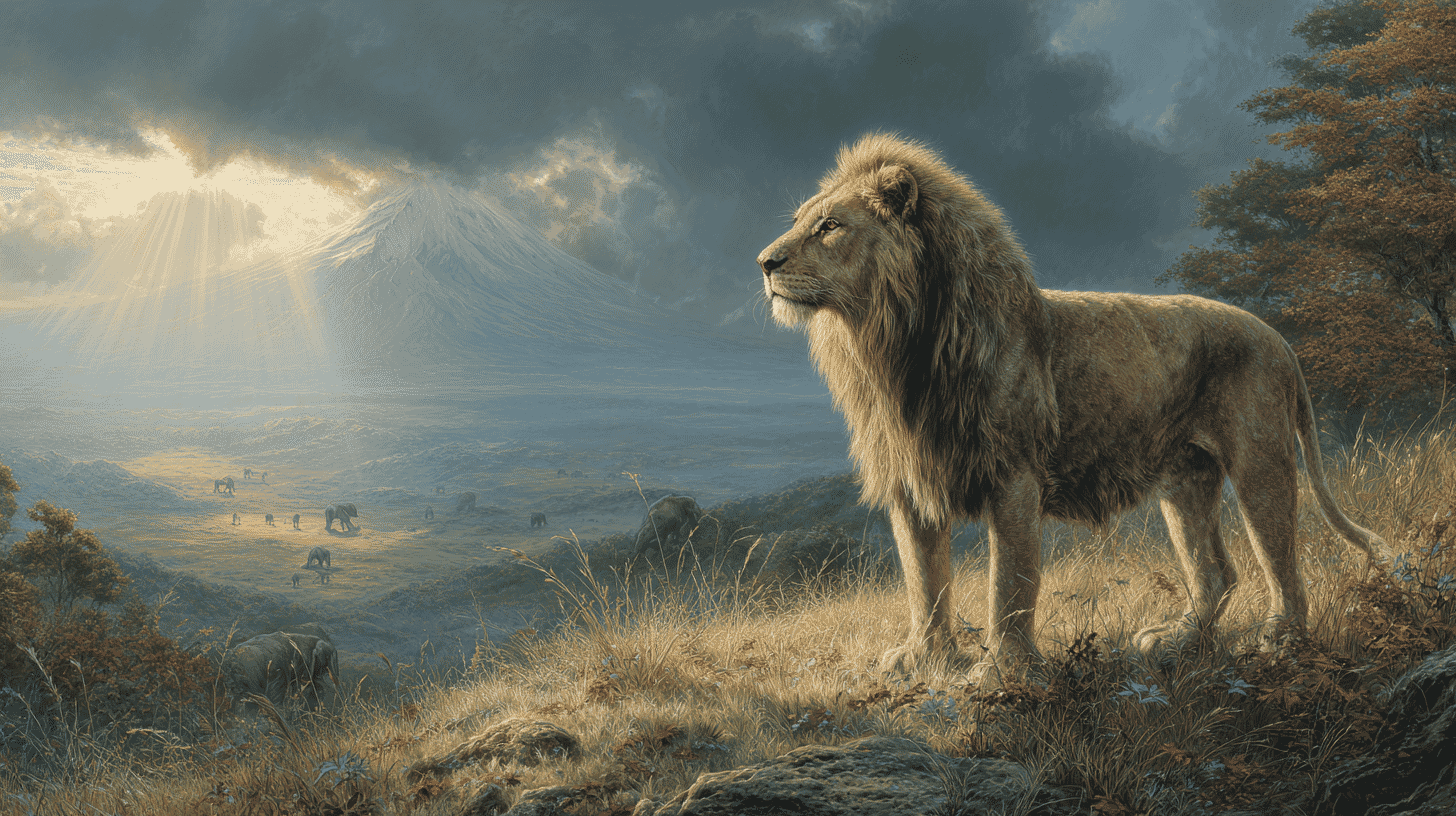
The illustration of a cave lion gazing at Mt. Fuji is pure romance. I want to see more reconstructions like this.
The perspective that Japan was at the 'eastern edge of the transition zone' is fascinating. Being an island nation, it was influenced by continental ecosystems while developing its own unique evolution.
I've seen photos of frozen cave lion cubs found in Siberia—they looked adorable, just like cats. Hard to believe they grow up to be 400kg...
The 'tiger' fossils at our museum... could they actually be lions if re-examined? Museums nationwide might start reviewing their collections.
Naumann's elephants and lions in the same era—that's basically a Japanese savanna. Our Jomon ancestors survived in an incredibly harsh environment.
Fossils found in Shizuoka too. Lions at the foot of Mt. Fuji... local history is way more epic than I thought.
Nice that it's a Japan-China joint research project. Paleontology is a field where international cooperation works regardless of borders. Fossils don't care about politics.
Interesting that they may have had sparse manes. Was it cold climate adaptation, or another reason? I hope ecological research advances too.
Distributed from Aomori to Yamaguchi means they really lived all across Japan—north to south. Incredible adaptability.
If they hadn't gone extinct, would we have 'Japanese lions' as an endemic species now? In a parallel universe, maybe we could see wild lions instead of just zoo ones.
Wait, Japan also had leopards and lynx? It was a paradise for wild cats. Now we only have stray cats and Tsushima leopard cats...
America once had the American lion, closely related to cave lions. Lions lived worldwide during the Ice Age. This discovery in Japan shows their range extended even further east. Fantastic research.
The Chauvet Cave paintings in France depict many cave lions. Knowing the same species lived in Japan opens possibilities for comparative studies on their ecology and behavior across Eurasia.
Proud to see Peking University involved in this joint research. I hope China-Japan cooperation in paleontology deepens. The prehistoric ecosystems of East Asia still hold many mysteries.
The frozen cave lion specimens from Siberian permafrost preserved even their fur. Combined with Japanese fossils, we can learn much more about this species.
Exciting to consider cave lions may have lived on the Korean Peninsula too. Since it was connected to Japan once, similar fossils might be found in Korea.
India still has Asiatic lions. I'm curious about their relationship with cave lions. Genetic research might reveal the full picture of lion evolution and distribution.
Many cave lion fossils have been found in Germany too. But the discovery in Japan was unexpected. It shows how widely this species adapted across different environments.
Ireland and Britain had lions during the Ice Age too. But finding them in an island nation like Japan is surprising. Shows how important land bridges were for large animal migration.
Altamira Cave in Spain also has cave lion paintings. Comparative studies of sites worldwide might reveal how Paleolithic humans coexisted with these animals.
Australia once had the marsupial lion (thylacoleo). Having 'lion-like' predators on every continent is a great example of convergent evolution in ecosystems.
Japanese-Canadian here. Cave lion fossils have been found in northern Canada too—they crossed the Bering Strait during the Ice Age. Moved to discover this unexpected connection between Japan and Canada.
Ice Age fauna research is thriving in Sweden. The Japanese discovery fills an important piece in understanding the ecosystem network across northern Eurasia.
As a Japanese-American, I find this news fascinating. If they hadn't gone extinct, there might have been a uniquely Japanese lion subspecies. It's somewhat melancholic to think about.
The advancement in DNA analysis technology is truly remarkable. Extracting genetic information from fossils tens of thousands of years old! Similar research is progressing in the Netherlands too.
Northern Italy also has cave lion fossil records. The ecology of this species that covered all of Eurasia deserves more research. Grateful for Japan's contribution.
Many cave lion bones have been found in Britain too. Interesting that Japanese fossils were misidentified as tigers. This suggests similar reassessments might be needed in other regions.