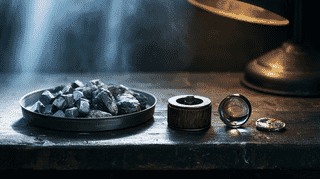
Hong Kong's SCMP reports that Trump asked Xi to lift China's export curbs on Japan, citing a threat to US industry. In July, China's magnet exports to Japan fell 52.2% while US shipments rose 4.6%.
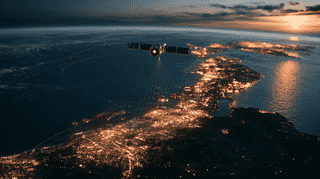
NEC plans several hundred laser-linked satellites, the Yomiuri reports. Japan's Kirari made a two-way laser link in 2005, but Starlink now has about 11,100. Why Japan still wants its own.
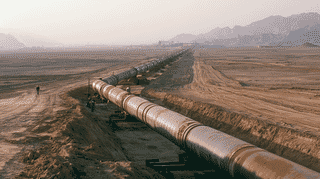
Transits through the Strait of Hormuz have fallen from 21.6 to 4.9 million barrels a day, and Gulf producers are building seven bypass pipelines. Japan restored procurement, but July brought a 634.5 billion yen deficit.
Hafnium keeps advanced chips and jet engines running, yet the world makes about 71 tonnes a year, nearly all of it in France and the United States. An Osaka chemical maker now wants a share of it by 2028.
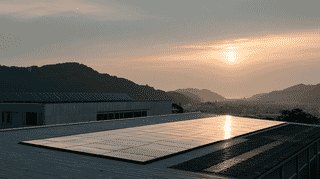
Japan's Environment Ministry will stop subsidising the purchase of conventional solar panels for new projects from fiscal 2027. The stated reason was not carbon but industry: the money was benefiting factories abroad.
China's rare earth magnet shipments to Japan fell 52.2% in July 2026 while US-bound shipments rose 4.6%. Japan tells itself pressure breeds breakthroughs. Optical glass and neodymium magnets agree; aluminium does not.
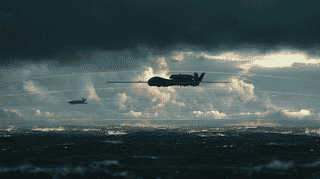
Japan signed a mass-production contract for the Terra B1 interceptor drone on August 25, 2026, three months after opening the tender. Three foreign entries were tested too; only the Japanese aircraft got a contract.
On August 24 Takaichi pledged continued aid to Ukraine and sanctions on Russia at the Kyiv summit. Japan also draws 8.9% of its LNG from Russia, and a US Senate bill counts it among the top five buyers of Russian gas.
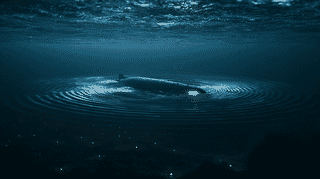
Underwater, only sound carries far, so the ocean is still read by a handful of specialists. NEC has a Japanese defence contract to build a self-supervised underwater acoustic foundation model by fiscal 2027.
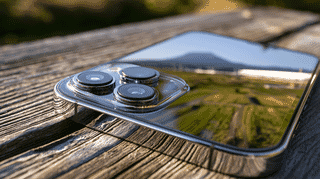
Sony and TSMC signed a binding deal on August 11 to build smartphone image sensors in Kumamoto, contributing about 747 billion yen ($4.7 billion) toward production in 2029. TSMC takes only 38% and lets Sony lead.
Japan's H3 Rocket No. 9 put the Michibiki No. 7 satellite into orbit on August 11, 2026, the first operational payload since the No. 8 failure. The seven-satellite goal now waits on fiscal 2031.
ZEALS opened orders for D1, a 129.3 cm Japanese humanoid, from 5 million yen (about $32,000). Why the company calls it semi-domestic rather than fully Japanese, and why 100 units and 10,000 hours is a modest goal.
The July 28, 2026 Kumamoto earthquake hit shindo 7 and stopped chip plants run by Renesas, Sony, Mitsubishi Electric, TSMC's JASM and Tokyo Electron. The fab the world watched was not the real chokepoint: a coater/developer plant with roughly 90 percent of the world market was.
Loss-making mobile-game studio KLab has signed an MOU to bring an undisclosed partner's counter-drone system to the UAE. Inside a game company's pivot, UAE royal money, and Japan's neutral-broker play.
Japan set targets to rebuild its reactors even as its utilities keep getting caught faking data and fixing prices. How the US, France and Korea arrange nuclear oversight, and why no model is scandal-proof.
PMs Takaichi and Modi agreed on July 2, 2026 to turn cow dung into vehicle fuel and build a 2.5-million CNG-car market in India, a clean-energy deal that doubles as a hedge against China's grip on electric cars.
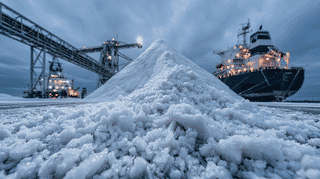
An island nation surrounded by ocean buys most of its salt from the far side of the world. Starting at a white island off Hiroshima, here is why Japan imports its salt from Mexico and Australia.
First Rheinmetall, then Anduril: in a single month, foreign arms makers signaled they want to build in Japan. We map the three routes they are taking, the April export-rule change that opened the door, and the identity shift Japan is now choosing.
Japan's government just promised over 370 trillion yen ($2.3 trillion) across 17 strategic sectors by 2040. We unpack the suspicious arithmetic: a 6.5x return promised on chips, an undisclosed public-private split, and a deadline conveniently 14 years away.
Germany's largest arms maker, Rheinmetall, is eyeing its first production base in Japan. Who is the company behind the guns on the Leopard 2 and Japan's Type 90 tank, how did the Ukraine war transform it, and why does it now want to export from Japan?