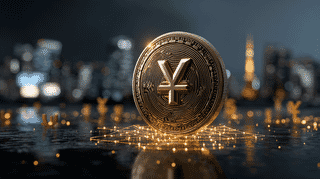
SBI Holdings booked record crypto-segment revenue of 89.6 billion yen for the year to March 2026, though segment pre-tax profit stayed flat at 21.2 billion. Inside the JPYSC yen stablecoin, the crypto-collateral lending license, and the bitbank bid, set against the US GENIUS Act, EU MiCA and Hong Kong's bank-led model.
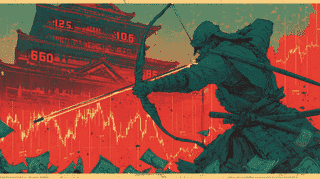
Chinese G.657.A2 optical fiber went from 32 yuan to 240 yuan per fiber-kilometer in a year, a 650% jump. The visible driver is AI data centers; the hidden one is disposable fiber-optic drones on the Ukraine front. China holds 60% of preform capacity, Japan leads on 13,824-core cables, and the US holds the hyperscaler demand.
JPX CEO Hiromi Yamaji says listing crypto ETFs on the Tokyo Stock Exchange is something the exchange can do anytime once the law and tax treatment are settled, with 2027 the earliest window. How Japan compares with the US, Hong Kong and the EU, the shift from a 55% top rate to a flat 20.315%, and the TOPIX rule that shows how cautiously Tokyo is still moving.
JBIC and Japan's three megabanks signed $2.221 billion in loans for the first three projects of a $550 billion US investment ceiling, the price Tokyo paid to bring Trump's tariffs down to 15%. The deal, the dollar-funding crunch, and what changed when the Supreme Court ruled IEEPA tariffs unlawful in February 2026.
The day after Japan's April 30 intervention, Vice Finance Minister Atsushi Mimura hinted at more with a single line: Golden Week is just getting started. The campaign eventually totalled a record 11.7 trillion yen. But against a fifth straight year of trade deficits, an oil bill inflated by the Iran conflict, yen weakness against every major currency, and a 40-trillion-yen carry trade, intervention only buys time. Even the June hike to 1.0 percent did not turn it.
On April 30, Japan intervened to buy yen for the first time in 21 months. Hours after Finance Minister Satsuki Katayama warned of 'decisive action' and Vice Minister Atsushi Mimura issued a 'final evacuation warning,' the dollar fell about 5 yen from the high 160s to 155.50, its steepest one-day drop since December 2022. The campaign continued through Golden Week and totalled a record 11.73 trillion yen. The yen kept falling anyway.
An in-depth look at Japan's Hydrogen Arterial Plan (Suiso Daidomyaku Koso), unveiled by METI in April 2026. Six priority regions connected by arterial highways will receive concentrated investment of 15 trillion yen by 2040, with Toyota and Chiyoda starting mass production of electrolyzers in 2029. How Japan's strategy compares with the US IRA and the EU Hydrogen Bank.
After 62 days stranded in the Persian Gulf, Japan's VLCC Idemitsu Maru passed through the Strait of Hormuz on April 28, without paying Iran's transit toll. The story echoes the 1953 Nissho Maru incident that forged a unique bond between Japan and Iran.
Japan's MAFF and U.S. Wheat Associates held the first meeting under their Memorandum of Cooperation on April 22 to stabilize wheat supply. With only 15% self-sufficiency and 40% of imports from the US, this article unpacks the food diplomacy at stake amid climate and logistics risks.
Fujitsu is doubling down on its sovereign AI strategy with the FUJITSU-MONAKA CPU series, choosing Rapidus as a manufacturing partner and 'coexisting' with NVIDIA's GPUs rather than competing. We compare Japan's hybrid approach to China's fully autonomous Loongson (LoongArch) and Europe's Arm-based SiPearl, revealing how Japan's pragmatic balance defines a third path in global chip sovereignty.
Submarine cables carry 99% of international data traffic, and roughly 90% of new construction is controlled by just three companies: SubCom (US), Alcatel Submarine Networks (France), and NEC (Japan). Japan now wants 35% of that market by 2030, and NEC's CEO is targeting 40%. We unpack the AI-era infrastructure race, the Taiwan Strait cable cuts, the exclusion of China's HMN, and why undersea cables have become the new front line of geopolitics.