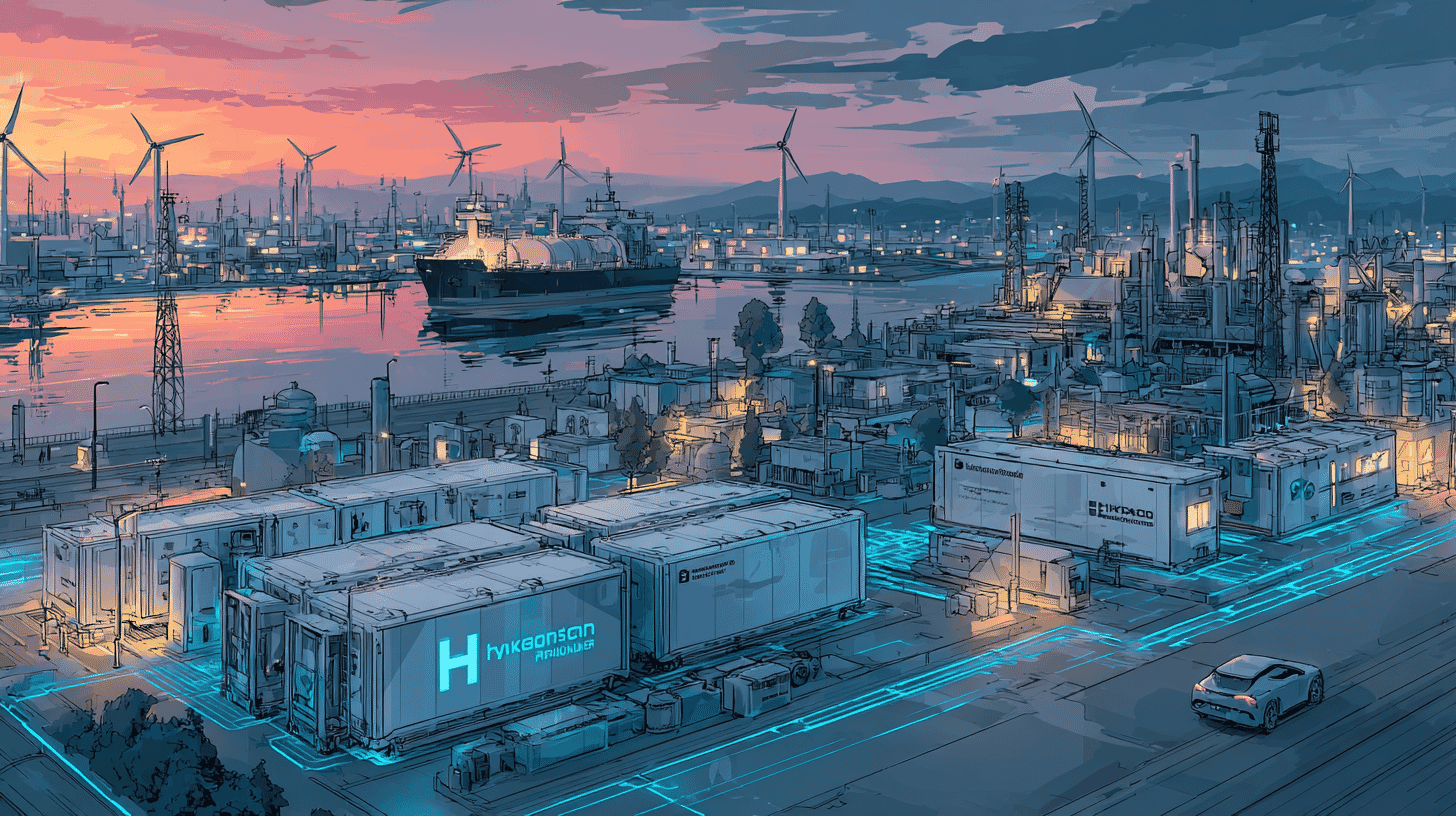
Fukushima, Tokyo, Kanagawa, Aichi, Hyogo, Fukuoka: these six prefectures, connected by major arterial highways, will form Japan's first "hydrogen mobility artery."
On April 21, 2026, Japan's Ministry of Economy, Trade and Industry (METI) and the Agency for Natural Resources and Energy unveiled the Hydrogen Arterial Plan (Suiso Daidomyaku Koso), a concentrated investment roadmap designed to accelerate Japan's transition to a hydrogen society. Over the next 15 years, the plan calls for more than 15 trillion yen (about $95 billion) of combined public and private investment to be channeled into this "artery."
That same month, Toyota Motor Corporation and Chiyoda Corporation officially announced that mass production of their jointly developed large-scale water electrolyzers will begin in fiscal year 2029. The lineup includes a 5MW unit (~100 kg/h of hydrogen) for the domestic market and a 20MW unit (~400 kg/h) for international large-scale projects, putting Japanese-made electrolyzers onto the world stage.
Japan was the first country in the world to publish a national hydrogen strategy back in 2017. But progress has been slow: fuel cell vehicle sales have lagged, and hydrogen station rollout fell far short of original targets. Now, the country is making its next big move.
What is the Hydrogen Arterial Plan?
According to METI's documents, the Hydrogen Arterial Plan refers to a set of priority initiatives to advance the social implementation of hydrogen and ammonia, with industry making a full commitment alongside government support. Its defining feature: rather than spreading investment thinly across the country, Japan is concentrating resources on six priority regions and the major highways connecting them.
The selected regions: Fukushima (post-disaster reconstruction and renewable energy testbed), Tokyo and Kanagawa (capital region demand), Aichi (Toyota's home turf and central Japan mobility hub), Hyogo (Kansai industrial belt and Kobe Port), and Fukuoka (Kyushu industry and international logistics gateway). Each already has its own strengths in hydrogen demand, supply, or industrial concentration.
The plan starts with mobility, the area where technology is most mature and demand is most visible. Fuel cell trucks, fuel cell buses, and hydrogen refueling stations will be deployed simultaneously in each region to break what Japanese officials call the "three-way standoff" (sansukumi jōtai): producers won't supply hydrogen because there are no vehicles; vehicles won't sell because there are no stations; stations can't be profitable because there are no vehicles. By concentrating all three at once in one region, the plan aims to break this deadlock locally before scaling out.
From the 2017 Strategy to the 2026 "Arterial Plan": Nine Years of Lessons
In December 2017, Japan released what is generally considered the world's first national hydrogen strategy. At the time, "hydrogen society" was still a fringe concept, and the world watched Japan's move with curiosity. But by the early 2020s, the US and Europe had launched major counter-offensives.
The United States rolled out the Inflation Reduction Act (IRA) in 2022, which included the 45V production tax credit offering up to $3 per kilogram of low-carbon hydrogen for 10 years. (Note: the 2025 "One Big Beautiful Bill Act" tightened the timeline, requiring construction to begin by January 1, 2028, but the credit itself remains in place for qualifying projects.)
The European Union announced the European Hydrogen Bank concept in 2022, launching auctions that pay successful bidders a fixed premium per kilogram of hydrogen produced. The third auction (IF25), opened in December 2025 with a budget of up to €1.3 billion, requires that at least 75% of electrolyzer units come from outside China, and that electrolyzer stacks themselves contain no Chinese components. This is essentially a geopolitical hedge against China's roughly 50%+ share of global electrolyzer manufacturing.
The United Kingdom launched a 15-year contract-for-difference style support scheme in 2024, with an initial budget of about £2.7 billion ($3.4 billion).
South Korea targets 5.26 million tons of annual hydrogen supply by 2040 at 3,000 won per kilogram (~$2/kg). Hyundai is building a fuel cell factory in Ulsan with capacity for 30,000 units per year, and its "HTWO" hydrogen brand spans passenger cars, trucks, and ships.
In June 2023, Japan revised its 2017 strategy for the first time. New targets: 3 million tons/year by 2030, 12 million tons/year by 2040 (six times current levels), and 20 million tons/year by 2050. Cost targets: ¥30/Nm³ ($2.13/kg) by 2030, ¥20/Nm³ ($1.42/kg) by 2050. Total committed investment: 15 trillion yen ($95 billion) over 15 years from public and private sources combined.
The 2026 Hydrogen Arterial Plan is the "when, where, and how" roadmap for actually implementing this strategy on the ground. Three pillars frame the effort: research and development, social implementation (the Arterial Plan itself), and international expansion.
Toyota × Chiyoda: Auto Mass-Production Know-How Meets Plant Engineering
The single biggest barrier to a hydrogen society remains production cost. Gray hydrogen (from fossil fuels without carbon capture) costs $1–2 per kg; green hydrogen (from renewables) runs $3–8 per kg. Closing this gap is the make-or-break challenge.
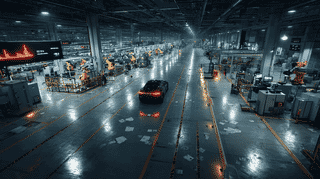
Enter Toyota, a company that produces roughly 10 million cars per year and is now applying that mass-production discipline to hydrogen equipment.
On March 17, 2026, at the H2 & FC EXPO in Tokyo, Toyota Hydrogen Factory President Mitsumasa Yamagata announced that mass production of the company's jointly developed water electrolyzers (with Chiyoda) will begin in fiscal year 2029.
The product strategy is two-tiered: a 5MW domestic unit (footprint of just 2.5m × 6m, producing ~100 kg/h of hydrogen) for medium-scale Japanese customers, and a 20MW international unit (~400 kg/h) for large-scale overseas projects. The 5MW model fits in roughly half the footprint of comparable systems, simplifying transport, on-site construction, and civil engineering costs.
A 5MW demonstration unit has already been installed inside Toyota's headquarters factory in Toyota City, Aichi Prefecture. It enters full operation in May 2026, producing 96 kg/h, equivalent to fueling about 18 Mirai sedans every hour. A 15MW unit for Aichi Steel is also planned for 2030.
Toyota's hidden ace: the company essentially "ran the Mirai backward." A fuel cell stack normally combines hydrogen and oxygen to produce water and electricity; Toyota took the same architecture and reversed it, using electricity to split water into hydrogen and oxygen. Chiyoda Corporation contributes plant engineering expertise honed on global LNG and gas projects, including modular construction know-how. The two companies signed a basic cooperation agreement in February 2024 and reached the demonstration-unit stage in roughly two years.
Unsplash
How Japan's Strategy Compares Internationally
Where does Japan's Hydrogen Arterial Plan fit among the world's major hydrogen strategies? A side-by-side look reveals a distinctive Japanese approach.
The US strategy uses production-side tax credits to reward low-emission output. The EU uses fixed-premium auctions combined with strong industrial policy (the anti-China clauses) to de-risk investments. The UK uses contracts for difference to bridge the price gap with fossil alternatives. South Korea is going vertical, building both fuel cell factories and the entire downstream HTWO ecosystem.
Japan is taking a hybrid approach: export the manufacturing equipment, import the hydrogen and ammonia. Toyota-Chiyoda electrolyzers will be sold to Australia, the Middle East, and elsewhere; the resulting liquefied hydrogen, methylcyclohexane (MCH), and ammonia will be shipped back to Japan. Domestically, demand will be seeded in the six mobility-priority regions. Kawasaki Heavy Industries' world-first liquefied hydrogen carrier Suiso Frontier is part of the same supply-chain logic, Japan plans to dominate the transport infrastructure layer that no one else has built yet.
What's Not Working Yet
Nine years on from the world's first national hydrogen strategy, the gap between ambition and reality remains stark.
FCV adoption has lagged. The 2017 strategy targeted 1,000 hydrogen stations and 800,000 FCVs by 2030. As of 2022, there were only about 164 stations, and Mirai cumulative sales fell well short of plan.
Hydrogen still costs too much. At roughly 5–7x the price of natural gas, commercial economics remain elusive without subsidy.
Infrastructure is uneven. On the main Tokyo–Osaka corridor, hydrogen stations can be counted on one hand. Many logistics operators have already pivoted toward EVs or LNG for medium-duty trucks.
Geopolitics keeps shifting. In 2026, Middle East tensions have re-introduced oil and LNG supply anxieties. With energy self-sufficiency hovering around 10%, hydrogen could be Japan's energy security trump card, but imported hydrogen still carries geopolitical risk.
Despite all this, Tokyo's policy framework continues to position hydrogen as the decarbonization tool for hard-to-abate sectors: steel (replacing coke in blast furnaces), chemicals, long-distance shipping, heavy trucks, and backup power for data centers. These are areas where electrification alone cannot solve the carbon problem.
Mobility First, Industry Next
The mobility focus of the Hydrogen Arterial Plan is just the entry point. The bigger long-term targets are heavy industry and shipping, the sectors where hydrogen has the strongest theoretical case.
Global hydrogen and ammonia markets are forecast to grow rapidly. Fortune Business Insights projects the green hydrogen market will expand from $2.8 billion in 2025 to $74.8 billion by 2032 (a 60% CAGR). Deloitte projects a $1.4 trillion annual market by 2050. If Japan secures the projected 10% share of global electrolyzer capacity (15 GW), it could create an export industry on a scale comparable to automobiles.
Whether that pans out depends on three things happening at once over the next 5–10 years: technology improvement, cost reduction, and demand creation. The Hydrogen Arterial Plan is Tokyo's bet that concentrated investment in six regions can catalyze all three. Whether this becomes a true artery for Japan's decarbonization, or a vein of stagnant blood flow, will become clear in the global market of the early 2030s.
Hydrogen: real deal, or expensive bubble? The US is offering big tax credits via the IRA, the EU is shutting out Chinese electrolyzers, South Korea is mass-producing fuel cells, and Japan is concentrating its bets on six regions while preparing to export equipment from 2029. How does your country see hydrogen? Is it the climate solution your government is taking seriously, or an expensive distraction from cheaper renewables? Share your perspective in the comments, we'd love to hear how this looks from where you live.
References
- https://www.meti.go.jp/shingikai/enecho/shoene_shinene/suiso_seisaku/pdf/017_02_00.pdf
- https://www.itmedia.co.jp/smartjapan/articles/2604/28/news023.html
- https://global.toyota/jp/newsroom/corporate/40388570.html
- https://car.watch.impress.co.jp/docs/news/2094070.html
- https://www.nikkei.com/article/DGXZQOFD171B70X10C26A3000000/
- https://www.jetro.go.jp/biznews/2023/06/f75cfdbdc0d9500b.html
- https://strategicenergy.eu/european-comission-launches-third-hydrogen-auction-with-e1-1-billion-budget/


Global Discussion
14 comments