🐉 On August 24, France announced three theme parks near Paris, backed by €6 billion of Saudi money. Within hours, the head of the Paris region said one of them would be Dragon Ball, and concept art of a 70-metre Shenron travelled around the world. A week later, the Japanese company that holds the anime rights said it had authorised nothing and had heard nothing about it. Four days after that, a French minister in Tokyo said the government had never put that name forward.
What happened between August 24 and August 31
Monday, August 24, 2026. Saudi Crown Prince Mohammed bin Salman was in Paris. Emmanuel Macron posted on X that France and Saudi Arabia had signed a memorandum of understanding for three theme parks at Cergy-Pontoise, about 35 kilometres northwest of the capital: €6 billion across the development, roughly $7 billion or ¥1.1 trillion, and 22,000 direct jobs. He mentioned his own interest in manga. He did not name a franchise. An adviser to the president told reporters the idea grew out of a conversation in which the two leaders discovered a shared enthusiasm for manga, and Dragon Ball Z in particular.
Valérie Pécresse, president of the Île-de-France region, was less careful. In a post and video the same day she said Dragon Ball was coming to Île-de-France and that Son Goku would have his own park a short hop from Paris.
The joint France–Saudi declaration went up on the Élysée website the next day. It describes Qiddiya Investment Company's ambition to build a mixed-use, multi-park destination at Cergy-Pontoise, with up to three major entertainment anchors and hotels, for around €6 billion over the development lifecycle. No title is named anywhere in it. Also on August 25, Le Monde reported that Qiddiya had not obtained the Japanese rights holders' agreement to use the Dragon Ball name and characters on French soil.
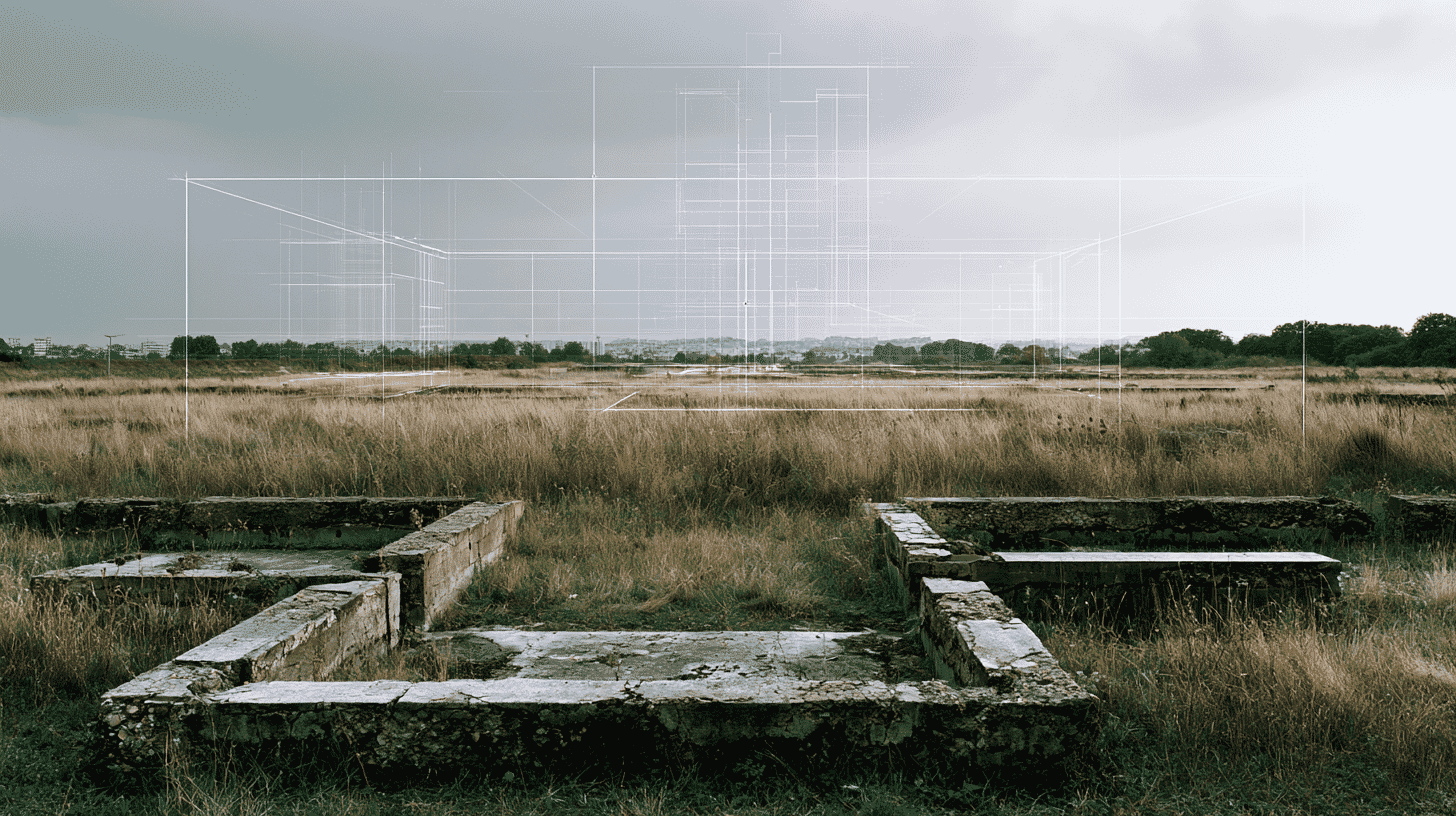
On August 31 the region published a press release built around the phrase "a Dragon Ball park," placing it at Courdimanche in the Val-d'Oise, on the site of Mirapolis, a French theme park that opened in 1987 and closed in 1991. The land has sat empty ever since. Pécresse described something on the scale of Disney and said her region had been working on the project for 18 months.
That same day, Toei Animation posted a short statement on its corporate site.
The concept art was real. The country was wrong.
Toei's statement says the company and the other rights holders "have not granted any licenses" for the project being reported, and that it is not aware of any such facts.
Every piece of concept art and video circulating in the coverage, it adds, came from a joint announcement Toei made with Qiddiya on March 22, 2024, for a park in Qiddiya City, Saudi Arabia.
That Saudi park is real and it is licensed. It covers more than 500,000 square metres with seven themed zones and over 30 attractions, and at its centre stands a Shenron roughly 70 metres tall with a roller coaster running through it. It was announced as the world's first Dragon Ball theme park, weeks after Akira Toriyama's death was made public in March 2024.
They showed a plan that exists, for a site 4,700 kilometres from Cergy-Pontoise, commissioned by the same Saudi investor.
What a license actually is
Toei did not accuse anyone of building anything illegally. Nothing has been built. What it said is that no agreement exists and that it had not heard about one.
Dragon Ball is not owned by a single company. Rights sit with Toriyama's Bird Studio, the publisher Shueisha, Toei Animation for the anime, and Bandai Namco for games and much of the merchandise. Julien Bouvard, who teaches Japanese studies at Jean Moulin Lyon 3 University, told France 24 that launching a new Dragon Ball project means getting consent from each of them, and that Japanese companies are particular about how their characters are handled abroad. French manga publishers, he said, send their editions back to Japan for checking, and when the colour balance drifts slightly in printing, the Japanese side notices and objects.
Licenses are also granted for a territory. Qiddiya's agreement covers a park near Riyadh. It does not travel to the Val-d'Oise on its own.
On September 4, AFP went to the other rights holders. Bandai Namco Entertainment declined to comment. A spokesperson for Shueisha said the publisher has nothing to do with the project.
In Japan, a blunter question
Two days after the announcement, on August 26, Kazuhiko Torishima posted on X. He is the editor who found Toriyama in the late 1970s, later ran Weekly Shonen Jump as its sixth editor-in-chief, and put the first chapter of Dragon Ball into the magazine in 1984. Sharing a Mainichi Shimbun story about the France–Saudi agreement, he wrote: "Why is there no Japanese person here?"
Two more lines followed, objecting to Dragon Ball being handled as a unit of IP rather than as a work.
He was not improvising a position. In an interview published by Diamond Online in August 2025, he came out against the Saudi park, on the grounds that Jump titles were raised by Japanese children spending their own pocket money on the magazine, and that those children would never be able to visit a park in Saudi Arabia. In the same interview he said he has no involvement in it. But when the editor who put Dragon Ball into print asks in public who is sitting at the table, it reads differently from a fan complaint.
Toriyama's hometown hit the same wall
Kiyosu, a city of about 69,000 in Aichi Prefecture, is where Toriyama was born. It is bidding to host a farm-team ballpark for the Chunichi Dragons, and a local councillor, Tetsuo Takahashi, proposed calling it Kiyosu Dragon Ball Park, a pun that happens to work in both languages. In June the city emailed a Tokyo rights management company to ask whether the name could be used. On August 19 the reply came back: no answer can be given at this stage.
On August 28, in a city assembly session, Mayor Sumio Nagata said the copyright hurdles would be extremely difficult to clear, according to the Mainichi Shimbun. Asked about the French announcement, he called its scale remarkable, then said his own city was still negotiating with the parties involved and that what mattered most was keeping them willing to keep talking.
A town in the artist's birthplace sent an email and was told to wait. That is what licensing usually looks like, and most people never see it, because it happens in email threads instead of on a presidential account.
On September 4, Paris answered
Eleven days after the announcement, at a press briefing in Tokyo, France's minister delegate for francophonie and international partnerships, Éléonore Caroit, was asked about the licensing question by AFP. The name that had been circulating, she said, was "not a name that the President, the Élysée or the government put forward." From what she had in front of her, the plan was for a manga park, not necessarily a park built around one particular manga. On what it meant for Japan, she said more precise announcements would have to come, including from the investors.
The same day, on BFMTV, Pécresse called the project excellent news and said the Japanese denials had no impact on it. Negotiating rights with rights holders, she added, is the job of the people carrying the project, and they will get on with it.
So the region that named the title and the government that did not are now some distance apart. It is a fine distinction, and it did not survive the coverage: on the day of the announcement an adviser to the president had told reporters the idea began with a shared enthusiasm for Dragon Ball Z. Naming a franchise as the origin of a conversation is not the same as naming it as a license.
As of September 5, Qiddiya has said only that it is in discussions with major international brands that hold licenses, and has not published a detailed response to Toei's statement. One industry figure told AFP that Qiddiya has a solid relationship with Toei and no interest in forcing a deal in France, and that whatever anchors the Paris site will be built for a French audience. Why the region moved ahead of all this, nobody has explained, and guessing would be inventing.
The memorandum still stands. Three parks, €6 billion, no opening date, and French coverage now floating a horizon somewhere around 2032. What lacks authorization is the specific use of Dragon Ball.
Nobody has said the project is dead. Nobody has said Dragon Ball is confirmed. Both are true at the same time.
France is the second-largest manga market in the world after Japan, and Japan Expo in Paris draws more than 200,000 people a year. The appetite was never in question. The paperwork was.
Where you live, how often does the announcement arrive before the contract does?
References
- https://corp.toei-anim.co.jp/ja/press/press8150009092261787591.html
- https://www.iledefrance.fr/presse/la-region-ile-de-france-accueillera-trois-nouveaux-parcs-theme-dont-un-parc-dragon-ball-un-investissement-majeur-pour-lemploi-et-lattractivite-du-territoire
- https://www.dhnet.be/actu/monde/2026/09/04/bientot-un-parc-dattractions-dragon-ball-pres-de-paris-le-dossier-coince-toujours-UGFN3ENVTNFMTI2OXFD5UB2DP4/
- https://www.lemonde.fr/pixels/article/2026/08/25/le-projet-de-parc-d-attractions-dragon-ball-en-ile-de-france-n-a-pas-encore-l-accord-des-ayants-droit-japonais_6756609_4408996.html
- https://kai-you.net/article/96437
- https://www.modernghana.com/news/1524467/french-saudi-dragon-ball-theme-park-puzzles-japa.html
- https://news.yahoo.co.jp/articles/a6df06d65dc29dd51d3d53669838244a26237ede
- https://x.com/botsu250522
- https://diamond.jp/articles/-/369518




Global Discussion
4 comments