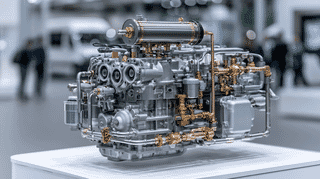
Ammonia burns slowly and needs about 500 times more ignition energy than iso-octane. Daihatsu turns part of it into hydrogen on the car. Why it starts with kei cars, and which problems it still lists as open.
At a July 28, 2026 briefing, Kawasaki said its four-legged CORLEO has no steering or brakes planned. Force sensors in the stirrups become the controls, NVIDIA physics engines build a virtual off-road course, and the rider becomes part of the machine.
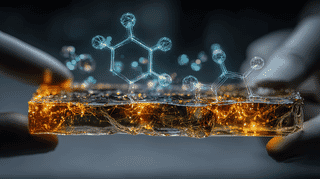
Researchers at the Institute of Science Tokyo have created a surface electrene: a crystal whose outermost layer is a sheet of loose electrons, with a work function lower than cesium. It survives open air because nitrogen caps it, then leaves as ammonia. Here is what it means for green fertilizer, and how it compares with the electrochemical routes pursued in China, Europe and the US.
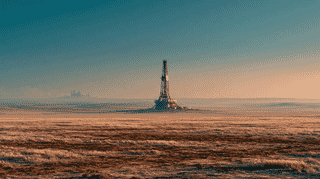
Mitsubishi Gas Chemical has signed an MOU with Australia's Gold Hydrogen to study green methanol made from natural hydrogen in South Australia. Here is why a Tokyo chemical maker is going to the wellhead abroad, what the Toyota-ENEOS consortium is really buying, and how the global race for natural hydrogen is splitting along national lines.
The University of Tokyo's Kono Lab, with Aisin and ARM Technologies, ran the world's first end-to-end demo storing green hydrogen in a room-temperature, non-flammable liquid, moving it between cities in a simple container, and generating power directly. We unpack the efficiency claims against ammonia and MCH, and how it diverges from US, European and Chinese hydrogen-carrier strategy.
Hoku Energy K.K., the Japanese subsidiary of UK-based Hoku Infrastructure, will build Japan's first new-build 100% hydrogen mono-firing thermal power plant in Aomori Prefecture. The 106.6MW Daiichi Plant, awarded under Japan's 3rd Long-Term Decarbonized Power Source Auction, is scheduled to start operations in the early-to-mid 2030s. We compare it with hydrogen power efforts by Plug Power, MHI in Utah, Linde, Air Liquide, and South Korea's Doosan, and explain what it means for Japan's GX strategy.
Kawasaki Heavy Industries has begun pitching a technology that produces naphtha, the building block of plastics, from hydrogen instead of crude oil. Built on its commercial gas-to-gasoline plant in Turkmenistan, the proposal lands in the middle of a Japanese petrochemical crisis triggered by the Strait of Hormuz disruption.
Japan's Resonac (formerly Showa Denko) will switch its Kawasaki ammonia plant to 100% waste-plastic-derived hydrogen by April 2030, ending its reliance on natural gas reforming. The world's only long-running commercial gasification chemical recycling plant processes 70,000 tons of plastic waste annually to produce 120,000 tons of ammonia, with 80%+ CO2 reduction. Now backed by Japan's first CCfD-style price-gap subsidy. A circular alternative to urban mining.
An in-depth look at Japan's Hydrogen Arterial Plan (Suiso Daidomyaku Koso), unveiled by METI in April 2026. Six priority regions connected by arterial highways will receive concentrated investment of 15 trillion yen by 2040, with Toyota and Chiyoda starting mass production of electrolyzers in 2029. How Japan's strategy compares with the US IRA and the EU Hydrogen Bank.
Toshiba Energy Systems, Airbus, and Toyota are racing to commercialize superconducting motors that promise 10x the power density of conventional motors. Dubbed the 'ultimate motor,' the technology enables hydrogen aircraft and hydrogen-engine cars while leveraging Japan's decades of niche superconductor expertise. As eVTOL startups falter, why is Japan's aviation motor technology suddenly central to the global decarbonization race?
Japan's steel industry accounts for about 40% of the country's industrial CO2 emissions. The government now aims to create a green steel market exceeding 3 million tons annually by the early 2030s, combining hydrogen reduction, electric arc furnaces, and CCUS. Here's how Japan plans to standardize carbon footprint metrics and respond to the EU's CBAM.
Toyota announces mass production of water electrolysis systems by 2029, developed with Chiyoda Corporation. With 5MW domestic and 20MW international units, Toyota bets on hydrogen alongside EVs and hybrids. How Japan's multi-pathway strategy compares to the global EV-first approach.
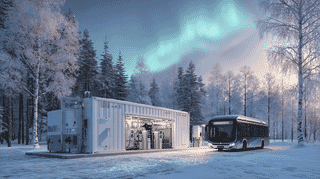
Asahi Kasei has begun installing its Aqualyzer C3 containerized alkaline water electrolyzer in Jyväskylä, Finland — the country's first commercial hydrogen station. Backed by a Toyota-linked foundation, this marks a significant entry for Japanese electrolyzer technology into the Nordic green hydrogen market dominated by European giants like Siemens Energy and Nel ASA.
Japan, where 99.6% of trade moves by sea, is trying to rebuild its shipbuilding industry. The Takaichi government is putting $6.5 billion of public and private money into doubling capacity by 2035. From Mitsui E&S's world-first ammonia-fueled engine to Furuno Electric's 43% global share in marine radar, and the frigate export to Australia that was formally contracted in April 2026, here is where Japanese shipbuilding stands against China and South Korea.
Tohoku University and the University of Tokyo have developed DIVE, a multi-agent AI workflow that automatically reads and structures experimental data from scientific paper figures. By extracting over 30,000 data points from 4,000+ papers, the system proposed new hydrogen storage materials in just 2 minutes. Here's how this AI reading team is unlocking data trapped inside research charts.
A joint research team from the University of Yamanashi, Waseda University, and Shinshu University has developed a completely fluorine-free electrolyte membrane for polymer electrolyte fuel cells. Achieving over 100,000 durability cycles—1.3 times that of conventional fluorine-based membranes—this PFAS-free breakthrough could accelerate the global hydrogen economy while addressing environmental regulations.
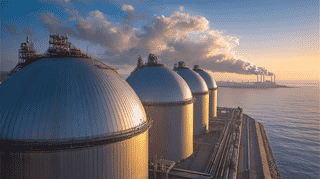
Four massive ammonia tanks—each 40 meters tall and 60 meters wide—are under construction at Japan's Hekinan Power Station. The world's first commercial-scale 20% ammonia co-firing begins in 2029, aiming to eventually replace coal entirely. Here's why it's both groundbreaking and controversial.
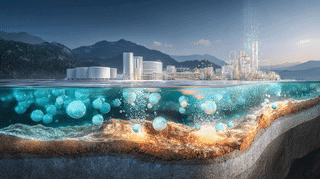
Vema Hydrogen completes the world's first Engineered Mineral Hydrogen pilot wells in Quebec. With potential costs of $0.50/kg—a 90% reduction—and candidate sites identified in Japan's Tohoku and Kyushu regions, this technology could reshape Japan's hydrogen society vision and energy independence.
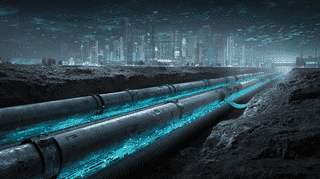
NTT is moving to repurpose its nationwide underground communication conduits for hydrogen transport. Using 600,000km of existing infrastructure could cut initial costs to under half of new pipeline construction. Commercialization is targeted for 2028, with transport trials in Tokyo set for fiscal 2026.