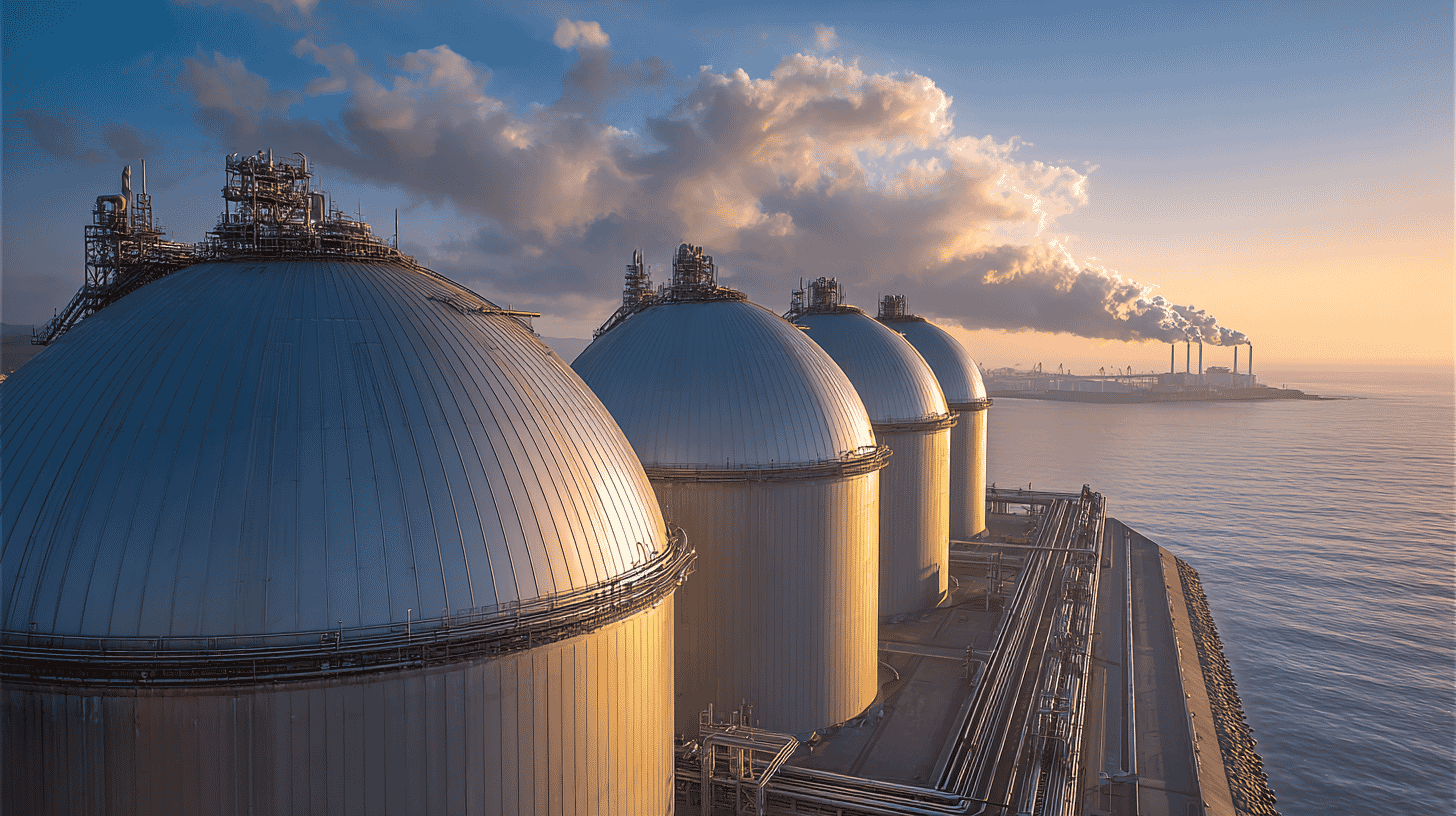
What if you could burn ammonia instead of coal and cut CO2 in the process? In a coastal city south of Nagoya, four colossal tanks are rising from the grounds of Japan's largest coal power station. Each stands 40 meters tall and 60 meters wide, designed to store a fuel that produces zero CO2 when burned. Here's why Japan is betting big on ammonia power generation, and why the rest of the world isn't sure what to make of it.
Why Ammonia? The Logic Behind a Surprising Fuel
About 40% of Japan's CO2 emissions come from the power sector, and coal-fired generation is the single largest contributor. As an island nation with limited domestic energy resources, Japan can't simply shut off coal overnight; it needs stable, baseload power to keep its massive manufacturing economy running.
Enter ammonia (NH3). When burned, ammonia breaks down into nitrogen and water, releasing no CO2. It can be transported and stored as a liquid, using technology that's been refined for over a century in the fertilizer industry. And here's the critical advantage: existing coal power plants can start burning ammonia by simply modifying their burners, without tearing down and rebuilding the entire facility. That means lower upfront investment and a faster path to emissions reduction.
What Is the Hekinan Power Plant?
JERA's Hekinan Thermal Power Station, on the waterfront of Hekinan City in Aichi Prefecture, is Japan's largest coal-fired power plant, with five units and a total capacity of 4.1 million kW (about 4,100 megawatts). JERA, formed by merging the thermal power businesses of TEPCO and Chubu Electric Power, is Japan's largest power generator and supplies about 30% of the country's electricity.
As well as being Japan's largest, Hekinan was once counted among the coal plants with the highest CO2 emissions in the world. That is exactly why decarbonizing it would have such an impact.
A World-First Demonstration: Promising Results
From April to June 2024, JERA and engineering firm IHI conducted a groundbreaking trial at Hekinan's Unit 4 (1,000 MW capacity). They replaced 20% of the coal fuel with ammonia by heat value, the first test of this scale at a commercial coal power plant anywhere in the world.
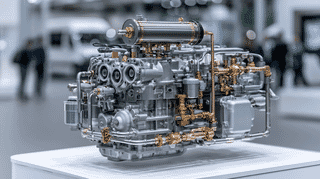
The trial was funded by NEDO (Japan's New Energy and Industrial Technology Development Organization). IHI developed specialized ammonia burners that were integrated into the existing coal burner system, with ammonia supplied through orange-colored pipes running along the boiler ceiling.
The results were encouraging. Nitrogen oxide (NOx) emissions were equal to or lower than coal-only operation. Sulfur oxide (SOx) dropped by about 20%. Nitrous oxide (N2O), a potent greenhouse gas, was below detection limits. And the plant's operational performance was unchanged.
The Giant Tanks That Look Like Mongolian Yurts
In January 2026, JERA showed the press the four ammonia storage tanks under construction at Hekinan. Each is about 40 meters tall and 60 meters in diameter and can hold 40,000 tons of ammonia. Media noted that their domed shape resembles the ger (yurt) of Mongolian nomads, and together with the sea behind them the scene drew attention for its exotic feel.
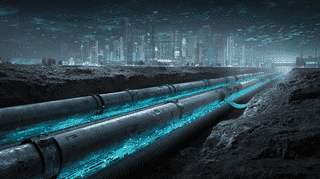
The ammonia is cooled to minus 33°C, liquefied and shipped from overseas on dedicated vessels. A pipeline of about 4 km connects the pier where ships dock to the tanks. For now, supply will come from an ammonia production project in Louisiana in which JERA participates, with plans to secure about 500,000 tons a year.
Commercial Operations Set for 2029
JERA aims to begin 20% ammonia co-firing commercial operations at Hekinan Unit 4 by fiscal year 2029, another world first for a large-scale commercial coal plant.
The roadmap doesn't stop there. JERA plans to raise the co-firing ratio to 50% by the 2030s, with a demonstration at Unit 5. The ultimate goal: 100% ammonia-fired generation, complete "mono-firing" with zero coal, by 2050.
Beyond power generation, the ammonia delivered to Hekinan will also supply fuel to nearby factories operated by Toyota Industries Corporation and NGK Insulators, creating a regional ammonia fuel ecosystem.
Safety Measures: Ammonia Is Also a Hazardous Substance
Ammonia comes with high expectations, but its risks can't be ignored. It is a colorless, pungent substance classified as hazardous in Japan, and inhaling large amounts can cause breathing difficulties.
JERA has therefore put the following safety measures in place.
At Hekinan, the foundations are designed for a massive Nankai Trough earthquake, and the tanks and piping have robust seismic structures. The facilities are also designed to withstand the largest recorded storm surges, floods and tsunamis. Ammonia detectors and surveillance cameras have been installed across the site for 24-hour real-time remote monitoring. In the event of a leak, water will be sprayed to absorb the ammonia gas and contain it within retaining walls. Joint drills with the fire department, police and Japan Coast Guard are also planned. Plant manager Mitsutaka Saka said: "We will be handling large amounts of ammonia. We will add even more safety measures than before."
The Controversy: Lifeline or Lifeline for Coal?
Despite the technical achievements, ammonia co-firing faces significant criticism from multiple directions.
Limited CO2 reduction at 20%. A 20% ammonia mix reduces emissions by roughly 20%, meaningful but modest. Worse, most commercially available ammonia today is "grey ammonia," produced from natural gas via the Haber-Bosch process. Manufacturing one ton of ammonia emits approximately 1.6 tons of CO2. When lifecycle emissions are factored in, the net climate benefit shrinks dramatically.
Higher costs. Japan's government estimates that 20% co-firing raises the cost of generation by about 20%, to roughly 12.9 yen per kWh (about $0.09/kWh). Transitioning to "green ammonia" produced with renewable energy would solve the lifecycle emissions problem but could push costs even higher.
"Prolonging coal's life." Japan is the only G7 nation that has not joined the Powering Past Coal Alliance. While other G7 countries have pledged to phase out coal by around 2030, Japan's strategy of co-firing ammonia is seen by European critics as a way to keep coal plants running indefinitely. The RE100 international corporate initiative has announced that from 2026, electricity from coal-ammonia co-firing plants will not count toward renewable energy targets.
Japan's Energy Situation and a "Realistic Solution"
When weighing these criticisms, however, Japan's particular circumstances must be taken into account.
About 70% of Japan is mountainous, limiting suitable sites for large onshore wind farms. Offshore wind is promising, but many waters around Japan are deep, making fixed-bottom turbines difficult in many places. Japan is one of the world's leading adopters of solar power, but installations per unit of flat land are already among the highest in the world, limiting further large-scale expansion.
Japan is also a manufacturing powerhouse, and a stable power supply is directly tied to industrial competitiveness. Weather-dependent renewables alone can struggle to deliver stable supply. Nuclear restarts are progressing, but memories of the Fukushima Daiichi accident mean building social consensus takes time.
In this context, ammonia co-firing, which cuts CO2 step by step while making use of existing coal infrastructure, is positioned as "not perfect, but a realistic move." The key point is that co-firing is not the goal but the first step in a process leading to 100% ammonia firing.
Ambitions Beyond Japan
JERA sees Hekinan as a proving ground for technology it hopes to export across Asia. Countries like Vietnam, Thailand, the Philippines, Malaysia, and Singapore have numerous young coal plants that are economically impractical to shut down immediately. For these nations, ammonia co-firing could serve as a realistic transition tool.
However, organizations like IEEFA (Institute for Energy Economics and Financial Analysis) warn that this strategy risks delaying renewable energy adoption in the region, potentially locking countries into fossil fuel infrastructure for decades longer than necessary.
Japan is choosing not to abandon coal but to transform it, a path that's both pragmatic and controversial. It may not be the perfect solution, but it reflects the real-world tension between energy security and climate action. How is your country tackling the decarbonization of thermal power? Should we keep coal plants running while reducing their emissions, or is a full shift to renewables the only way forward?
References
- https://www.jera.co.jp/corporate/business/thermal-power/list/hekinan/ammonia_safety
- https://www.jera.co.jp/news/information/20240401_1863
- https://www.jera.co.jp/news/notice/20240626_1954
- https://www.nedo.go.jp/news/press/AA5_101733.html
- https://www.nature.com/articles/d42473-024-00441-4
- https://ammoniaenergy.org/articles/jera-targets-50-ammonia-coal-co-firing-by-2030/

Global Discussion
15 comments