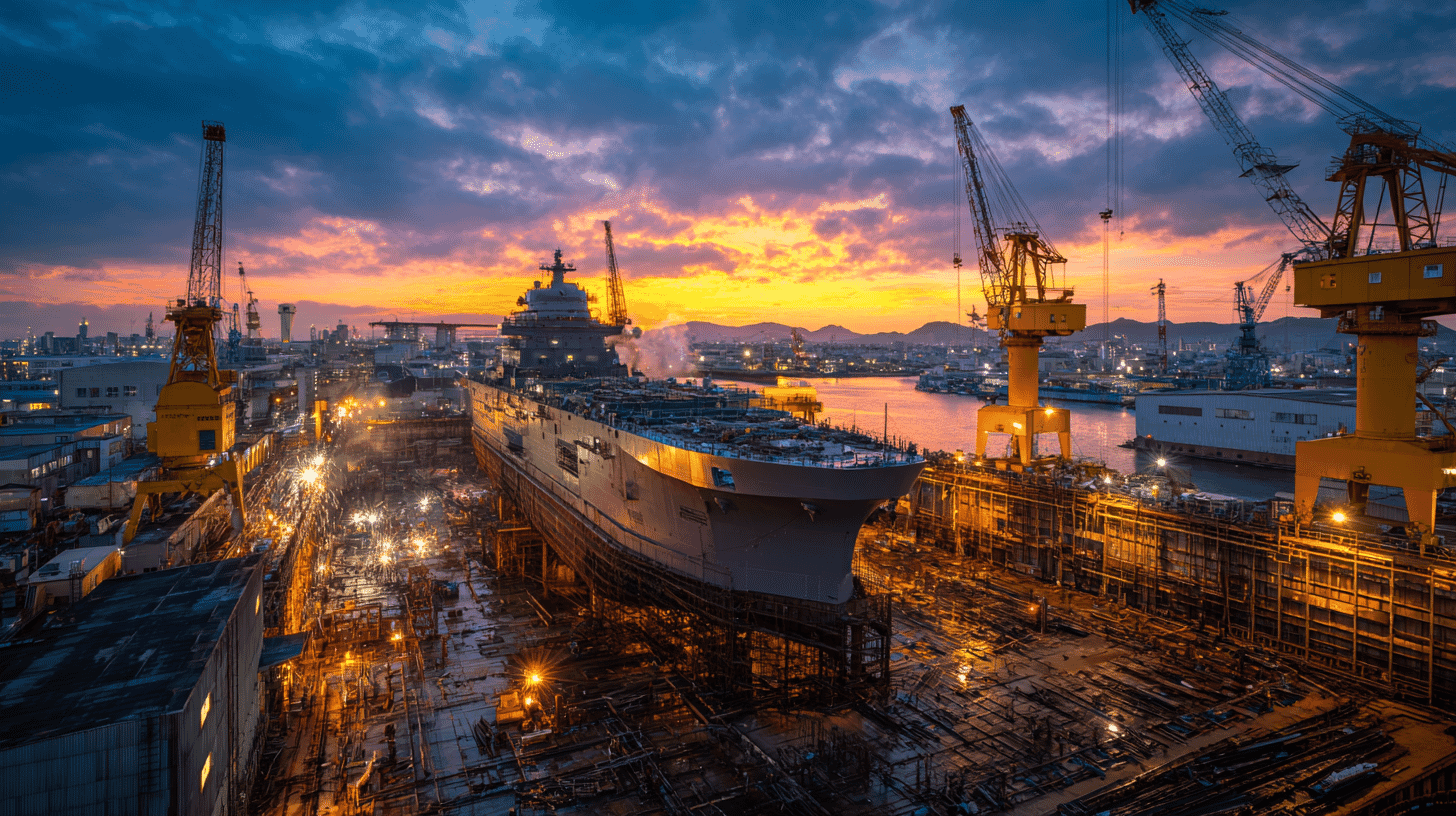
About 99.6% of Japan's trade travels by sea. The nation that once built 40% of the world's ships has fallen to just 13% as China and South Korea surged ahead. Now, Prime Minister Takaichi's government is betting $6.5 billion on a national plan to double shipbuilding capacity by 2035. With the world's first commercial ammonia-fueled engine, a leading global share in marine electronics, and its first-ever warship export, Japan's shipbuilding industry is charting a dramatic new course.
Why Shipbuilding Is a Matter of National Security for an Island Nation
Japan depends on maritime shipping for 99.6% of its imports and exports. The food on supermarket shelves, gasoline at filling stations, raw materials for factories, virtually all of it arrives by ship. If Japan loses the ability to build its own vessels, it faces the risk of supply chain paralysis in a crisis.
Under PM Sanae Takaichi, the government formally designated "shipbuilding revival" as a pillar of economic security policy in November 2025. Ship hulls were added to the list of "specified critical materials" under Japan's Economic Security Promotion Act, placing shipbuilding alongside semiconductors and rare earth metals as vital to national security.
The urgency is clear. Japan commanded roughly 40% of global shipbuilding in the 1980s, but has steadily lost ground to China's state-driven mass-production strategy and South Korea's generous government-backed financing. By 2024, Japan's share had slipped to about 13%, while China held 55% and South Korea 28%, together accounting for over 80% of global output.
The Shipbuilding Revival Roadmap: Doubling Capacity in a Decade
On December 26, 2025, Japan's Ministry of Land, Infrastructure, Transport and Tourism (MLIT) officially released its "Shipbuilding Revival Roadmap." The target is straightforward: double annual shipbuilding capacity from 9 million gross tons to 18 million gross tons by 2035.
The plan unfolds in three phases.
Phase 1 (2026–2028) focuses on automation and labor-saving equipment, particularly welding robots. Around $1 billion (¥150 billion) from the Cabinet Office is earmarked for AI-powered next-generation shipbuilding robots to address critical labor shortages.
Phase 2 (2029–2031) expands into new facility construction and significant upgrades to existing shipyards, including new dry docks and expanded production lines.
Phase 3 (2032–2034) sees the expanded docks and newly installed heavy-lift cranes reach full operational capacity, achieving the doubled output target.
Total investment reaches approximately $6.5 billion (¥1 trillion) across public and private sectors. Dollar figures in this article are converted at ¥155 to the dollar. The shipbuilding industry will invest roughly $2.3 billion (¥350 billion) of its own capital, while the government commits around $2.5 billion (¥380 billion) through a decade-long fund and various subsidy programs. An initial $800 million (¥120 billion) was allocated in the FY2025 supplementary budget.
The roadmap also calls for industry consolidation, aiming to reorganize Japan's numerous shipbuilders into just one to three major groups by around 2028. Imabari Shipbuilding, the nation's largest, has already moved to make Japan Marine United (JMU) a subsidiary. Mitsubishi Heavy Industries and Imabari have relaunched their joint design and sales company as "MILES," a sign that the era of fragmented Japanese shipbuilding is ending.
Mitsui E&S: From Shipbuilding Exit to World-First Ammonia Engine
No company better illustrates Japan's shipbuilding ingenuity than Mitsui E&S. Originally founded in 1917 as Mitsui Shipbuilding, the company was forced to completely exit shipbuilding in 2023 after years of industry downturn. But by concentrating on port cranes and marine engines, it achieved a remarkable turnaround, now holding the top domestic market share in both fields.
The company's current focus is on developing ammonia-fueled marine engines. Ammonia produces zero CO2 when burned, making it the leading candidate for decarbonizing international shipping. The International Maritime Organization (IMO) has set a target of achieving net-zero greenhouse gas emissions from international shipping by around 2050, and practical ammonia-fueled vessels are essential to meeting that goal.
In February 2025, Mitsui E&S launched the world's first ammonia fuel test operation of a commercial large, low-speed two-stroke engine at its Tamano plant in Okayama Prefecture. The engine produces 23,700 horsepower and uses a "dual-fuel" system that can switch between ammonia and conventional heavy fuel oil. After completion, it will be installed on a bulk carrier built by Japan Shipyard.
Mitsui E&S's competitive advantage lies in three decades of accumulated expertise. Since pioneering the world's first LNG-fueled engine in 1994, the company has developed dual-fuel engines for LPG, methanol, ethane, and other alternative fuels, with cumulative orders reaching 124 units (as of December 2025). This depth of experience cannot be replicated overnight.
The company is doubling down with a $40 million (¥6.1 billion) expansion at its Tamano plant, scheduled to begin construction in March 2026 and become operational by April 2029. Okayama Prefecture has committed $1.8 million (¥280 million) in subsidies to support the project.
Meanwhile, Japan Engine Corporation (J-ENG) completed its own ammonia-fueled engine prototype in September 2025, set for installation on an ammonia transport vessel launching in November 2026. Japan's leadership in ammonia marine propulsion is unambiguous.
Furuno Electric: The Invisible Technology China Can't Copy
Japan's maritime edge extends beyond hulls and engines to the electronic "brain" of every ship. The crown jewel is Furuno Electric, headquartered in Nishinomiya, Hyogo Prefecture.
In 1948, Furuno became the first company in the world to commercialize a fish finder, a device that uses sonar to detect fish schools underwater. Today, it stands as the world's largest manufacturer of integrated marine electronics. It commands a 43% global share in commercial ship radar and 49% in fishing vessel electronics, with sales and service networks spanning over 90 countries.
Furuno's products are essentially the navigation system of the sea. Their radars detect nearby vessels and obstacles. Their Electronic Chart Display and Information Systems (ECDIS) overlay digital nautical charts with real-time data. Satellite communication systems pull in weather forecasts and track other ships' positions. All of this is integrated on the bridge (the ship's control room), enabling safe and efficient navigation.
What makes Furuno particularly noteworthy is its push into augmented reality (AR) navigation and autonomous vessel technology. The company is developing systems that overlay route information onto live camera feeds, a stepping stone toward fully autonomous ships. For Japan's chronically understaffed domestic cargo fleet, this technology addresses an urgent need.
Why can't China simply replicate this? Furuno's dominance rests not just on hardware but on what the industry calls "hama eigyo" (roughly "dockside sales"), a hands-on service model where technicians are stationed at ports worldwide, ready to repair or maintain equipment wherever a ship docks. This global service infrastructure, built over 75 years, combined with proprietary expertise in ultrasonic and electromagnetic wave sensing, creates a competitive moat that no Chinese rival has been able to cross.
Furuno also plays a significant role in defense. The company supplies sonar systems for patrol aircraft and submarines to Japan's Ministry of Defense, and the country's expanding defense budget represents a growing tailwind.
Shipbuilding as Defense: Japan's Historic Frigate Export to Australia
On August 5, 2025, a turning point arrived for Japan's defense policy. Australia announced it had selected an upgraded version of the Japan Maritime Self-Defense Force's Mogami-class frigate as its next-generation general-purpose warship. It marked Japan's first-ever warship export and its largest postwar defense deal.
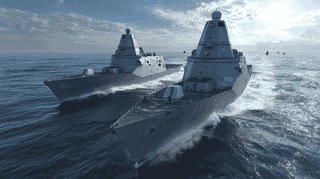
The Mogami-class frigate, built by Mitsubishi Heavy Industries, represents a new generation of multi-mission naval vessel. Its smooth, angular hull design and specialized coatings give it stealth characteristics. An integrated combat management system allows a crew of just 90, roughly half that of conventional warships, to operate all onboard systems. It can handle anti-air missile defense and mine warfare simultaneously.
Several factors tipped the scales in Japan's favor over Germany's competing MEKO A-200 proposal. Japan had a proven track record of continuously building 12 Mogami-class ships on schedule. Using the same platform as Australia would create high interoperability between the two navies. And critically, the Japanese design supports American-made missiles, enabling ammunition sharing with the US Navy, something the German option couldn't offer.
The joint development and production of 11 frigates is a project valued at approximately A$10 billion (about US$6.5 billion), with final contract signing targeted for early 2026. The first three ships will be built in Japan, with the remaining eight constructed at Henderson Shipyard near Perth, Australia. Meeting the ambitious target of delivering the first vessel by 2029 will put Japan's production management capabilities squarely in the spotlight.
[Update, July 31, 2026] The final contract was signed in Melbourne on April 18, 2026. Mitsubishi Heavy Industries signed with the Australian government for the three upgraded frigates to be built in Japan, while Defense Minister Shinjiro Koizumi and Deputy Prime Minister and Defence Minister Richard Marles signed a "Mogami Memorandum" alongside it. The first ship will be built at MHI's Nagasaki shipyard for delivery in December 2029. Mitsubishi Electric announced a contract the same day for the onboard systems, and NEC for underwater equipment including the surface-ship sonar and the UNICORN integrated communications mast.
This export creates a potential virtuous cycle between commercial and military shipbuilding. Defense orders can help sustain shipyard utilization rates, while the capital investment in facilities benefits commercial vessel production as well, a two-for-one outcome in industrial policy terms.
Decarbonization and Maritime: Why Shipbuilding Transformation Matters Globally
International shipping accounts for roughly 2% of global CO2 emissions, equivalent to an entire country the size of Germany. Achieving the IMO's "net-zero by 2050" target requires replacing the world's commercial fleet with clean-energy vessels.
This is where Japanese technology comes in. Demand for green vessels, ammonia-fueled, LNG-fueled, hydrogen-powered, and battery-electric ships, is expected to surge in the coming years. Shipbuilding orders have been recovering since late 2024, with green fuel-related vessels already accounting for about 30% of new orders.
The Japanese government is leveraging GX (Green Transformation) Economic Transition Bonds to support next-generation vessel construction, pursuing a strategy of "differentiation through environmental technology" that stands in clear contrast to China's volume-focused approach.
Challenges and Outlook: Can $6.5 Billion Beat China?
The optimism comes with significant caveats. China's annual shipbuilding output exceeds Japan's by more than four times, and its government subsidies dwarf Japan's investment. South Korea also continues heavy state-backed support for its shipbuilding giants. Whether "technology" alone can compete against "volume" remains an open question.
A workforce crisis looms large. Veteran welders are retiring in droves while young workers show little interest in entering the industry. Automation can fill some gaps, but complex curved-surface welding on large vessels still demands human skill that takes years to develop.
Industry consolidation, while logical on paper, faces friction from competing interests and regional politics. Japan's shipyards are scattered along coastlines nationwide, deeply embedded in local economies. Merging them requires careful handling of employment and community concerns.
Yet Japan holds decisive strengths. Mitsui E&S's ammonia engine represents environmental technology leadership. Furuno Electric's marine electronics demonstrate dominance in the ship's "software." And a century-old culture of quality control and schedule adherence provides the foundation. Even if Japan can't win on volume, establishing itself as the builder of the world's most technologically advanced ships could prove a viable survival strategy.
What does shipbuilding, or shipping more broadly, mean where you live? And what do you make of a government putting this much money into an old industry?
References
- https://www.jetro.go.jp/biznews/2026/05/0855e2aed6313832.html
- https://toyokeizai.net/articles/-/935163
- https://www.jmd.co.jp/article.php?no=311307
- https://www.mes.co.jp/press/2025/0212_002576.html
- https://www.spf.org/iina/articles/kawakami_12.html
- https://www.cas.go.jp/jp/seisaku/nipponseichosenryaku/kaigi/dai1/shiryou6.pdf








Global Discussion
15 comments