On September 3, 2024, Japan's Ministry of the Environment officially announced the complete eradication of the invasive small Indian mongoose from Amami Oshima island in Kagoshima Prefecture. This achievement marks a historic milestone in conservation history, representing the world's first successful eradication of mongoose from a large, inhabited island.
How the Mongoose Came to Amami Oshima
The small Indian mongoose (Urva auropunctata) was introduced to Amami Oshima around 1979 as a biological control measure against the habu pit viper, a venomous snake endemic to the region. Roughly 30 animals were released in what was then the city of Naze. This small mammal, native to South Asia, was known for its ability to kill snakes and had already been introduced to Okinawa's main island in 1910 for similar purposes.
However, this plan was based on a critical ecological miscalculation. Mongoose are diurnal creatures, active during the day, while habu snakes are nocturnal, hunting at night. With minimal overlap in their active hours, mongoose rarely encountered, let alone preyed upon, the target snakes.
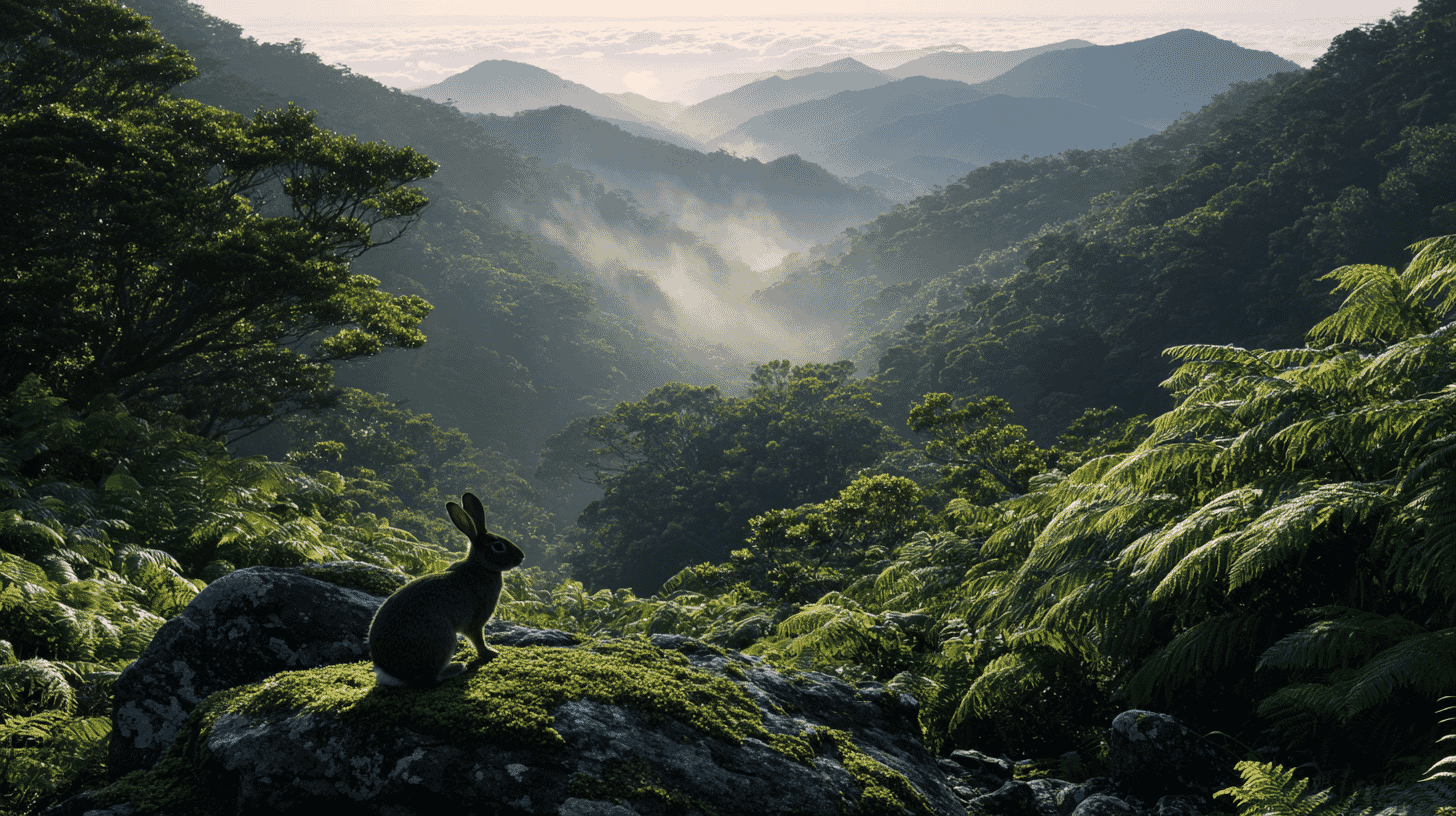
Instead of controlling the habu population, the mongoose turned to the island's vulnerable native species for food. The most severely impacted was the Amami rabbit (Pentalagus furnessi), often called a "living fossil" due to its primitive characteristics. This special natural monument of Japan exists only on Amami Oshima and neighboring Tokunoshima, and became easy prey for the introduced predator.
Other endemic species also suffered dramatic population declines, including the Amami spiny rat, the Ryukyu long-haired rat, and the Lidth's jay. The island's delicately balanced ecosystem faced severe disruption.
The Long Road to Eradication
Damage to crops and poultry pushed local municipalities to begin nuisance-animal culling in fiscal 1993. The Ministry of the Environment launched its full control program in 2000, by which point the population was estimated at roughly 10,000 animals.
The turning point came in 2005, when Japan's Invasive Alien Species Act took effect. Budgets grew sharply and a full-time professional removal team, the Amami Mongoose Busters, was assembled, making it possible to apply capture pressure across the entire range at once. The toolkit combined kill traps, sensor cameras, and detection dogs. Amami used two kinds of dog: live-detection dogs that pursued the animal itself, and scat-detection dogs that searched for droppings to establish whether mongoose were present at all.
The kill traps carried a cost. Native rats and birds were caught by mistake. The program continued on the judgment that mongoose predation was doing more damage than the bycatch, but trap designs were revised and placement and timing adjusted to reduce accidental deaths.
As eradication efforts progressed, annual capture numbers steadily declined. However, this success created its own challenge: the fewer mongoose remained, the harder they became to find. Locating the final individuals represented the program's greatest obstacle.
A single animal caught in fiscal 2018 turned out to be the last. Captures fell to zero the following year. Even so, confirming eradication took several more years of monitoring. Over the life of the program from 2000, more than 30,000 mongoose were captured, at a cumulative cost of roughly 3.6 billion yen through fiscal 2024.
The hard part was proving a negative. Zero captures does not equal zero animals. The ministry therefore applied two probability models: a Harvest-based Model (HBM), which estimates eradication probability by area, and a Rapid Eradication Assessment (REA), which works from individual-level data. Run against confirmed data through the end of fiscal 2023, HBM returned 99.7 percent and REA 98.9 percent. Those figures, plus the judgment of the expert panel, produced the declaration on September 3, 2024.
Global Significance and Future Outlook
Amami Oshima covers 712 square kilometers, larger than all 23 wards of Tokyo combined. Eradications of introduced mammals have been achieved elsewhere, but on a far smaller scale, typically uninhabited islets. Clearing a population that had spread across an inhabited island of this size and held it for decades is regarded as without precedent. The methods and the data behind this 24-year effort now serve as a reference point for island systems facing the same problem.
Amami Oshima was inscribed as a UNESCO World Natural Heritage Site in 2021 as part of "Amami-Oshima Island, Tokunoshima Island, Northern Part of Okinawa Island, and Iriomote Island." The mongoose eradication was a crucial component of conservation efforts leading to this recognition and will continue to support the preservation of the island's natural heritage value.
The results are already measurable. The Amami rabbit, native rats including the Amami spiny rat, birds, and frogs have all shown clear recovery in areas from which they had vanished when mongoose density was highest.
Remaining Challenges
Mongoose remain on the northern part of Okinawa's main island, where removal is proceeding with the same methods. Okinawa Prefecture began control work there in fiscal 2000 and the Ministry of the Environment in fiscal 2001; the current third-phase plan runs from fiscal 2017 to fiscal 2026 and aims to clear everything north of the SF Line, which runs between Shioya in Ogimi and the Fukuji Dam in Higashi.
The numbers show how far that still is. In fiscal 2024, 67 mongoose were caught north of the SF Line, 42 in traps and 25 by detection dogs. Catch per unit effort came to 0.052, up from 58 animals and 0.039 in fiscal 2022 even as the trapping effort was reduced. With the target year now here, Okinawa has not reached the stage Amami did, where catches stayed at zero. Okinawa rails and native rats are recovering, but the work is unfinished. Some of the traps used on Amami were handed over to Okinawa; others are held in reserve against reinvasion from that direction. Eradication is not an end point so much as the start of a watch.
The island's other invasive problems are also unresolved. Predation by feral cats, abandoned by people and gone wild, and road deaths driven by rising tourist traffic remain live threats to the Amami rabbit.
A problem people created in 1979 took people 24 years to undo. That much is fact. What the arithmetic also shows is how little the introduction cost, and how much the reversal did.
How does your country address invasive species challenges? What conservation policies and eradication programs exist where you live? We'd love to hear about the situation in your part of the world; please share your experiences and perspectives.




Global Discussion
16 comments