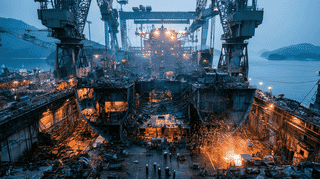
Imabari Shipbuilding posted 600.5 billion yen in fiscal 2025, and with Japan Marine United the group now sits at roughly 1 trillion yen, about $6.1 billion. The bigger news of July 23 was a deleted clause: LNG carriers are back in scope.
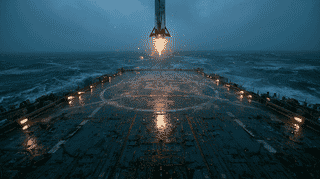
NYK Line, Japan's largest shipping company, is working with Mitsubishi Heavy Industries to catch reusable rocket boosters on a ship at sea. The idea began in an in-house training program, became the first shipping-company project selected for JAXA's Space Strategy Fund, and now faces a question NYK's own engineers raise: will anyone launch often enough to make it pay?
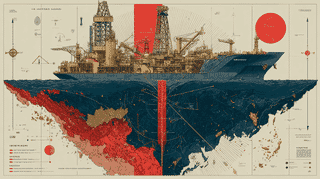
Japan's ruling LDP has asked the government to build a dedicated rare earth mining vessel for ~100 billion yen ($640M) at Minamitorishima, handing the proposal to Prime Minister Takaichi on June 12, 2026. Why JAMSTEC's Chikyu isn't enough, the roadmap from the February 2027 demonstration test to FY2028 industrialization, and how Japan's approach compares with the US, EU and Australia.
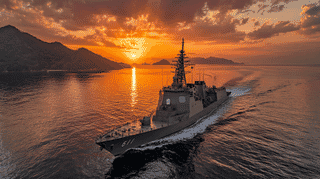
On May 5, 2026, Defense Ministers Koizumi and Teodoro met in Manila to launch a working group for transferring used Abukuma-class destroyer escorts to the Philippines: the first concrete test of Japan's new lethal weapons export rules.
After 62 days stranded in the Persian Gulf, Japan's VLCC Idemitsu Maru passed through the Strait of Hormuz on April 28, without paying Iran's transit toll. The story echoes the 1953 Nissho Maru incident that forged a unique bond between Japan and Iran.
On April 21, 2026, Japan's Takaichi cabinet revised the Three Principles on Defense Equipment Transfer, officially allowing exports of lethal weapons including warships and missiles. A deep dive into what Japan's 'pacifist nation' turning point actually means.
Japan and Australia signed the New FFM joint development contract, worth up to AUD 20 billion. We unpack the quasi-alliance behind this de facto warship export, and the Takaichi government's push to scrap the 'Five Categories' and allow lethal weapon exports.
As drone warfare extends to the seas, Japan leads the world in autonomous ship technology. From the MEGURI 2040 project to combat-support USV development and lessons from Ukraine, explore the future of maritime security.
Trump told nations to 'go get your own oil.' Japan imports 93% of its crude from the Middle East — so what would a serious Japanese oil retrieval fleet actually look like? From helicopter carriers to world-class minesweepers, we assemble a fantasy task force, explore the legal hurdles, and see how the internet reacted to this wild thought experiment.
Japan's shipping giant MOL and tech conglomerate Hitachi have agreed to jointly develop floating data centers by converting used ships. Using seawater cooling to slash power costs, needing no land, and deployable in just one year, these maritime server farms offer a creative answer to the AI era's insatiable appetite for computing power.
As the yen approaches 160 to the dollar, the Hormuz Strait blockade has triggered an oil price surge, delivering a devastating double blow to Japan's energy-import-dependent economy. Analysis of record gasoline prices, structural vulnerabilities, and comparisons with South Korea and Germany.
Elliott Investment Management has taken a significant stake in Japan's Mitsui O.S.K. Lines, demanding $2 billion in buybacks and a subsidiary relisting. We explore how activist investors are reshaping Japan's corporate governance amid TSE reforms and record foreign interest.
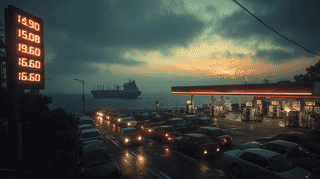
Japan's gasoline hits a record ¥190.8/L ($1.27/L) as the Hormuz Strait blockade chokes off 90%+ of crude imports. With the last Middle East tanker arriving March 22, government subsidies restarting, and Alaska crude on the table at the US-Japan summit, Japan faces its gravest energy crisis in decades.
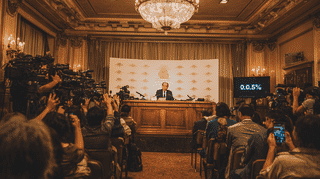
The Bank of Japan held its policy rate at 0.75% on March 19, 2026, as the Middle East conflict and surging oil prices cloud the economic outlook. Governor Ueda maintained a rate-hike bias but warned that rising energy costs could push underlying inflation either way. With spring wage negotiations delivering 5%+ raises for a third straight year and the yen hovering near 160, Japan faces a complex policy dilemma.
With the Strait of Hormuz shut in all but name, the IEA's 32 members unanimously approved a record 400-million-barrel coordinated release on March 11, 2026. Japan carried 80 million of it and began draining national reserves on March 26. Where those 254 days went, and what July's re-escalation means.
A field-by-field breakdown of the 17 strategic sectors PM Takaichi named in her February 20, 2026 policy speech: AI and semiconductors, fusion, content, defense and the rest, with current standing, plans and key players, plus the public-private investment roadmap released in June 2026 that runs to over 370 trillion yen through fiscal 2040.
Japan, where 99.6% of trade moves by sea, is trying to rebuild its shipbuilding industry. The Takaichi government is putting $6.5 billion of public and private money into doubling capacity by 2035. From Mitsui E&S's world-first ammonia-fueled engine to Furuno Electric's 43% global share in marine radar, and the frigate export to Australia that was formally contracted in April 2026, here is where Japanese shipbuilding stands against China and South Korea.
Japan once built 40% of the world's ships and now builds 8%. The government's Shipbuilding Revival Roadmap puts about 1 trillion yen ($6.5 billion) of public and private money behind doubling annual capacity to 18 million gross tons by 2035. Imabari's takeover of JMU, the signed frigate contract with Australia, and US-Japan cooperation, alongside the labor and scale problems that could stall all of it.
Furuno Electric, headquartered in Nishinomiya, Japan, has grown from a small radio repair shop in postwar Nagasaki into the world's dominant marine electronics maker, holding 49% of the fishing vessel electronics market and 43% of commercial ship radar. From inventing the world's first practical fish finder in 1948 to today's AR navigation and autonomous vessel technology, discover how Furuno's "seeing the invisible" philosophy is shaping the future of seafaring. In 2024, their fish finder was recognized as an IEEE Milestone.
Japan's first nuclear-powered ship "Mutsu," launched in 1969, was plagued by a radiation leak incident and fierce public opposition. Yet engineers cut the hull apart, removed the reactor, and spent roughly $1.3 billion (in today's value) transforming it into "Mirai" — one of the world's largest ocean research vessels. Over 28 years, Mirai sailed 2.3 million km (58 trips around Earth), pioneered Arctic research, and even surveyed Fukushima's nuclear contamination. Retired in December 2025, its story of dramatic reinvention now passes the torch to the icebreaking successor "Mirai II."