Since Russia's invasion of Ukraine in February 2022, unmanned aerial vehicles (UAVs) have become the defining weapons of modern warfare. Ukraine alone produces an estimated 200,000 UAVs a month, using them for everything from surveillance to precision strikes.
The same wave has reached the water. Without a conventional navy, Ukraine has used unmanned surface vehicles (USVs) to damage or sink about a third of Russia's Black Sea Fleet, forcing it back from Crimea to Novorossiysk.
On December 31, 2024, off Cape Tarkhankut in occupied Crimea, a Magura V5 USV armed with an R-73 "SeeDragon" missile shot down a Russian Mi-8 helicopter, the first time a sea-based drone destroyed an aircraft. Ukraine initially reported one helicopter destroyed and one damaged, later revising the tally to two destroyed.
Then on May 2, 2025, the upgraded Magura V7, armed with U.S.-supplied AIM-9 Sidewinder missiles, shot down a Russian Su-30SM fighter near Novorossiysk, followed by a second over Crimea the next day, two in 24 hours. Each Su-30SM is worth an estimated $50 million; the V7 costs roughly $265,000. That is a cost ratio of about 190 to 1, and it registered in defense ministries worldwide.
Japan's World-Leading Autonomous Ship Technology
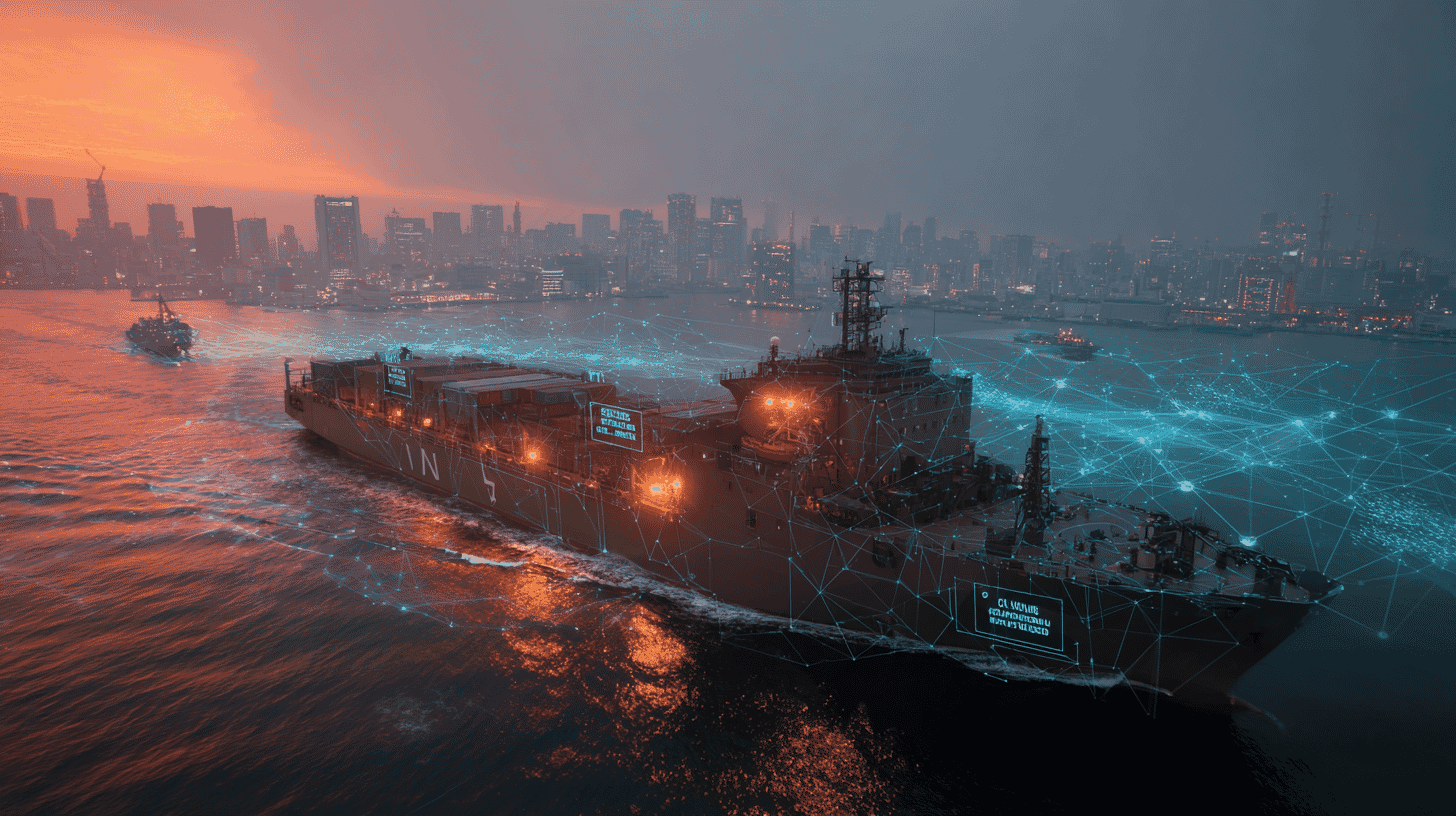
USV capability rests on autonomous navigation and remote vessel operation, and this is where Japan leads.
The Nippon Foundation's "MEGURI 2040" project, launched in 2020, aims to make 50% of Japan's domestic shipping fleet autonomous by 2040. Its first stage ran five competing consortia; the second-stage DFFAS+ consortium brings together 53 domestic companies. Along the way it has logged a run of world firsts.
Record-Breaking Achievements
- January–March 2022: The 749-gross-ton coastal container ship "Suzaku" completed an autonomous round trip of roughly 490 miles through the busy Tokyo–Tsu/Matsusaka route, with a system operational rate of 99.7%
- Same period: The 222-meter ferry "Soleil" performed automated berthing and unberthing at speeds up to 26 knots, a world first for large, high-speed ferries
- December 2025: The passenger ferry "Olympia Dream Seto" began the world's first commercial autonomous operation at Level 4 automation on a regular passenger route, after clearing Japan's first "autonomous vessel" ship inspection on December 5
- March 2026: All four second-stage demonstration vessels passed ship inspection as autonomous vessels and entered commercial service
This is where Japan's strengths in ICT, AI, image recognition, and sensor systems meet. The autonomous navigation and collision-avoidance work done for large commercial vessels transfers directly to smaller military USVs.
Japan's Military USV Development
Building on that civilian base, Japan's Acquisition, Technology & Logistics Agency (ATLA) launched a military USV program in fiscal 2024.
The "stealth combat-support multi-purpose USV" research was funded at ¥24.8 billion (about $165 million) in the fiscal 2024 budget, and the research prototype was contracted to Mitsubishi Heavy Industries on March 31, 2025 at roughly ¥24.8 billion, with the work running through fiscal 2030. It targets four technology areas:
Submersible capability. Unlike conventional USVs, the design envisions a vessel that detects an approaching threat, submerges to evade it, then checks its surroundings and surfaces safely. Few parallels exist.
All-weather autonomous navigation. Hull motion control for stable operation in rough seas and fault-handling logic, plus remote control from a shore-based bridge.
Mission modules. Swappable modules on the aft deck for surveillance, anti-ship missile launch, and other roles.
Multi-USV coordination. AI-driven distributed control for fleet operations with real-time shared situational awareness.
The program targets technology validation by fiscal 2030, with deployment across Japan's vast maritime territory in view.
How Japan Compares to Global USV Powers
The global USV market is expanding rapidly, and major military powers are pursuing distinct strategies.
United States. L3Harris and Liquid Robotics lead development, and the U.S. Navy prioritizes USVs for mine countermeasures, force protection, anti-submarine warfare, and ISR. The Large Unmanned Surface Vessel (LUSV) concept is advancing too.
China. Deploys large USVs for both defense and offshore energy, expanding its presence in the Asia-Pacific.
Turkey. Building on its UAV success with the Bayraktar TB2 to accelerate naval USV programs.
South Korea. The Defense Acquisition Program Administration awarded LIG Nex1 a roughly $274 million contract for reconnaissance USV development in December 2024.
India. Developing autonomous armed boat swarms through its SPRINT initiative.
Ukraine. Unmatched combat experience with USVs, including the Magura family and Sea Baby platforms.
Japan's edge is on the civilian side. No other country has demonstrated autonomous navigation of large commercial vessels at this scale. The challenge is translating that into military applications, and closing the distance to countries with actual combat experience.
Japan's Defense Export Revolution
Turning USV technology into exports requires policy, and Japan has been moving.
In December 2023, Japan revised its "Three Principles on Transfer of Defense Equipment and Technology," enabling export of license-produced finished products to the licensor country. That allowed the export of Patriot PAC-3 missiles to the United States.
In March 2024, the government went further, permitting third-country exports of the GCAP next-generation fighter being jointly developed with the UK and Italy. Guardrails apply, but it was Japan's biggest arms export shift since World War II.
By mid-2025, Japan had reportedly agreed in principle to export Abukuma-class frigates to the Philippines, and Australia selected an upgraded Mogami-class frigate as its next general-purpose warship. In October 2025, the new coalition government signaled plans to scrap the "five categories" restriction on lethal-weapon exports.
USVs are a natural beneficiary. As a platform rather than a weapon in themselves, autonomous maritime systems could be exported to partner nations that need maritime security.
Why USVs Matter for an Island Nation
Japan counts 14,125 islands under a 2023 government recount and claims an exclusive economic zone (EEZ) of roughly 1.7 million square miles, the world's sixth largest. Protecting it falls to the Maritime Self-Defense Force's roughly 45,000 personnel, a number an aging, shrinking population makes hard to sustain.
USVs answer part of that. They can keep watch across wide areas without putting crews at risk, at a fraction of the cost of manned ships. With China's navy expanding and tension persisting around the Senkaku Islands, driving down the unit cost of surveillance has become urgent.
Ukraine has shown, in combat, that a roughly $265,000 USV can down a $50 million fighter. For a defense budget under competing demands, that asymmetry is hard to ignore.
The Dual-Use Advantage
Japan's USV ecosystem extends beyond defense. Enju (based in Iwate Prefecture) builds domestic water drones for hydrographic surveys, environmental monitoring, and infrastructure inspection. In September 2023, the Japan Water Drone Association was set up to advance regulation, safety standards, and workforce development.
Japan's shipbuilding heritage sets up a dual-use loop: civilian autonomous navigation feeds military USV development, which drives exports that sustain the industrial base. Whether that loop actually closes is still unproven.
How does your country view USVs and maritime security? We would like to hear your perspective.
References
- https://diamond.jp/articles/-/387314
- https://www.nippon-foundation.or.jp/what/projects/meguri2040
- https://www.mod.go.jp/atla/research/ats2023/pdf_oral_matl/15_1055.pdf
- https://www.spf.org/opri/newsletter/571_3.html
- https://www.navalnews.com/naval-news/2025/05/first-image-of-ukraines-sidewinder-armed-magura-v7-surface-drone/
- https://www.mofa.go.jp/mofaj/fp/nsp/page1w_000097.html





Global Discussion
15 comments