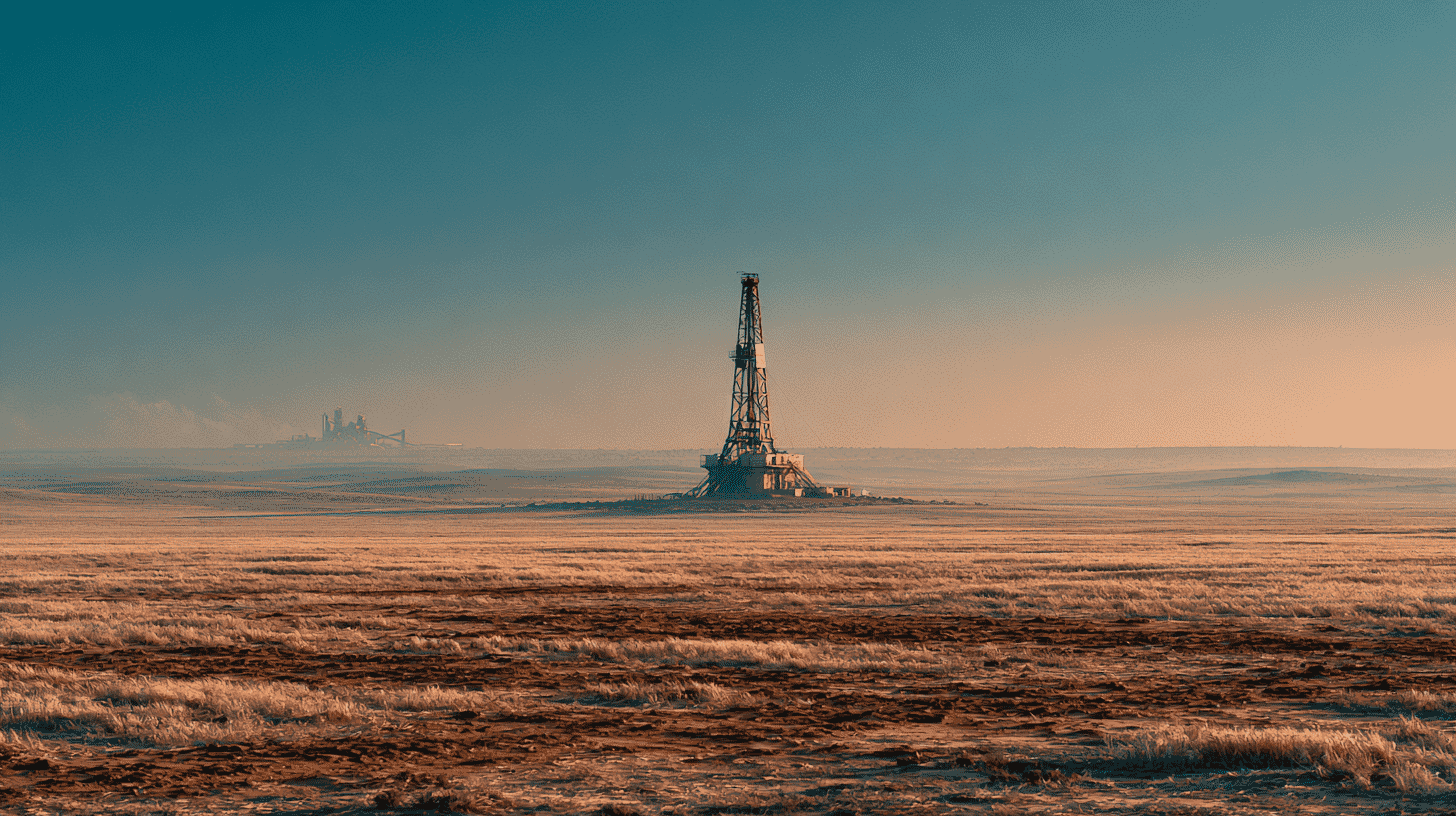
🛢️ A Japanese chemical company has agreed to turn hydrogen that seeps out of the ground in rural South Australia into ship fuel and the raw material for plastics. Not hydrogen made in a factory, but hydrogen that is simply down there, the way oil is. It's one of the odder bets in the energy transition, and Mitsubishi Gas Chemical is making it a long way from Tokyo.
Buying in at the wellhead, not just signing an offtake
On June 29, 2026, Mitsubishi Gas Chemical (MGC) and the Australian firm Gold Hydrogen signed a memorandum of understanding to study, in stages, whether green methanol can be produced on the Yorke Peninsula in South Australia. The plan leans on natural hydrogen from Gold Hydrogen's Ramsay project, combined with local resources and renewable electricity. Production testing at the exploratory well was set to begin in late June, with the preliminary study following in the second half of 2026 as those results come in.
What makes this more than a routine supply deal is what came before it. A year earlier, in July 2025, MGC didn't just line up to buy hydrogen later; it bought a piece of the company drilling for it. Toyota, through its Hydrogen Factory unit, MGC, and an ENEOS subsidiary, ENEOS Xplora, together put in AUD 14.5 million (about USD 9.5 million) for a combined 22% stake. Toyota and MGC each committed AUD 5 million (roughly USD 3.3 million); ENEOS Xplora AUD 4.5 million. For MGC, it was the first time the company had taken a direct position in natural-hydrogen extraction. The point is to swap natural hydrogen in for the hydrogen its methanol process needs, and cut the associated CO2.
The distinction matters. Japanese materials makers usually secure their feedstock by contract. Here, three Japanese names went upstream, all the way to the drill rig, on a resource that has barely been produced anywhere on Earth.
What's actually in the ground at Ramsay
Natural hydrogen, sometimes called "white" or "gold" hydrogen, is hydrogen that forms underground through natural geological reactions and can, in theory, be tapped like natural gas. Because you extract it rather than manufacture it, the production step releases no CO2, and if the geology cooperates it could be cheap.
Gold Hydrogen's story reads like a hundred-year-old footnote that suddenly matters. In the 1920s and 30s, syndicates of local farmers drilled the Yorke Peninsula hunting for oil. One well, the Ramsay Oil Bore, logged hydrogen readings above 80%, a curiosity nobody had any use for at the time. More than ninety years later, the company went back to those old state geologists' reports and drilled again. Its 2024 well tests reported hydrogen purity as high as 95.8% and helium up to 17.5%, among the highest figures reported anywhere, it said. A newer well, Ramsay 3, was drilled in November 2025 and again confirmed both gases.
Two things make the site unusual. The first is that helium. It is rare, impossible to manufacture, and expensive; long-term bulk pricing has been estimated at up to USD 450 per thousand cubic feet. It is also increasingly strategic for chipmaking, MRI scanners and cryogenics. MGC's own announcement noted the Ramsay gas carries high concentrations of helium-3, the isotope prized for fusion research and ultra-low-temperature physics. A hydrogen well that also yields helium has a second income stream, and that is often what makes the whole economics stand up.
The second is that there is almost no precedent. The only natural-hydrogen field known to be in commercial production sits in Mali, where the town of Bourakébougou has run on it for years from wells that reportedly are not depleting. Past that, this is frontier ground.
Why a methanol company wants a hydrogen well
MGC's product isn't hydrogen. It's methanol. The company runs a platform it calls Carbopath, which makes methanol from CO2, waste plastic and biomass and sells it as fuel, chemical feedstock and a way to carry hydrogen. It already produces methanol from captured CO2 and hydrogen at its Niigata plant in Japan.
Methanol has become one of the front-runners to clean up shipping. It stays liquid at ordinary temperatures, existing engines can be adapted to burn it, and the shipping giant Maersk has ordered a fleet of methanol-capable vessels as the International Maritime Organization, the UN body that sets global shipping rules, tightens its emissions limits. Methanol is also a base ingredient for plastics and a long list of industrial chemicals.
But a catch runs through the entire business: green methanol is only as green, and only as cheap, as the hydrogen that goes into it. Making that hydrogen by splitting water with renewable power is clean but expensive. If hydrogen can instead be pulled straight from the ground, with no CO2 and possibly at low cost, the economics of green methanol change. That is the bet. MGC needs hydrogen; Gold Hydrogen might have a great deal of it, cheaply; and the two ends meet on a peninsula in South Australia.
Same molecule, different national strategies
Step back, and this looks like a very Japanese move. The country has spent decades securing energy and raw materials abroad: liquefied natural gas from Australia's north-west since the 1980s, oil and metals through its trading houses. Locking in a frontier resource early, as a consortium, spreading the risk across a carmaker, an oil refiner and a chemical maker, is a familiar playbook pointed at a new molecule.
Others are chasing the same thing differently. In the United States, the Denver startup Koloma has raised more than USD 400 million, backed by funds tied to Bill Gates and Jeff Bezos, to hunt for hydrogen at home across Kansas, Iowa and California. In France, researchers stumbled onto what may be one of the world's largest deposits beneath the old coal basin of Lorraine while looking for something else; estimates there run into tens of millions of tonnes. The Philippines has signed exploration deals to find its own. South Australia, meanwhile, moved early on the rules: in 2021 it became one of the first jurisdictions to formally treat hydrogen as an extractable resource, which is the only reason Gold Hydrogen can hold a licence at all.
So the world is splitting between countries trying to find natural hydrogen under their own soil and companies going abroad to secure someone else's. Japan, with little prospect of large deposits at home, is doing the second.
The honest caveat is that none of this is proven at scale. As Bill Gates has put it, natural hydrogen "could be gigantic or it could be a bust." Getting the gas out of the ground is one problem; moving and storing it without losing a fortune is another, which is why the first real customers will likely sit close to the wellhead. That is exactly the model MGC is testing by proposing to build the methanol plant where the hydrogen comes up.
For now it's a study, not a factory. But the posture is clear enough: go to the source, wherever on the map that source turns out to be.
So where would your country place its bet: on finding these resources at home, or on securing them abroad?


Global Discussion
4 comments