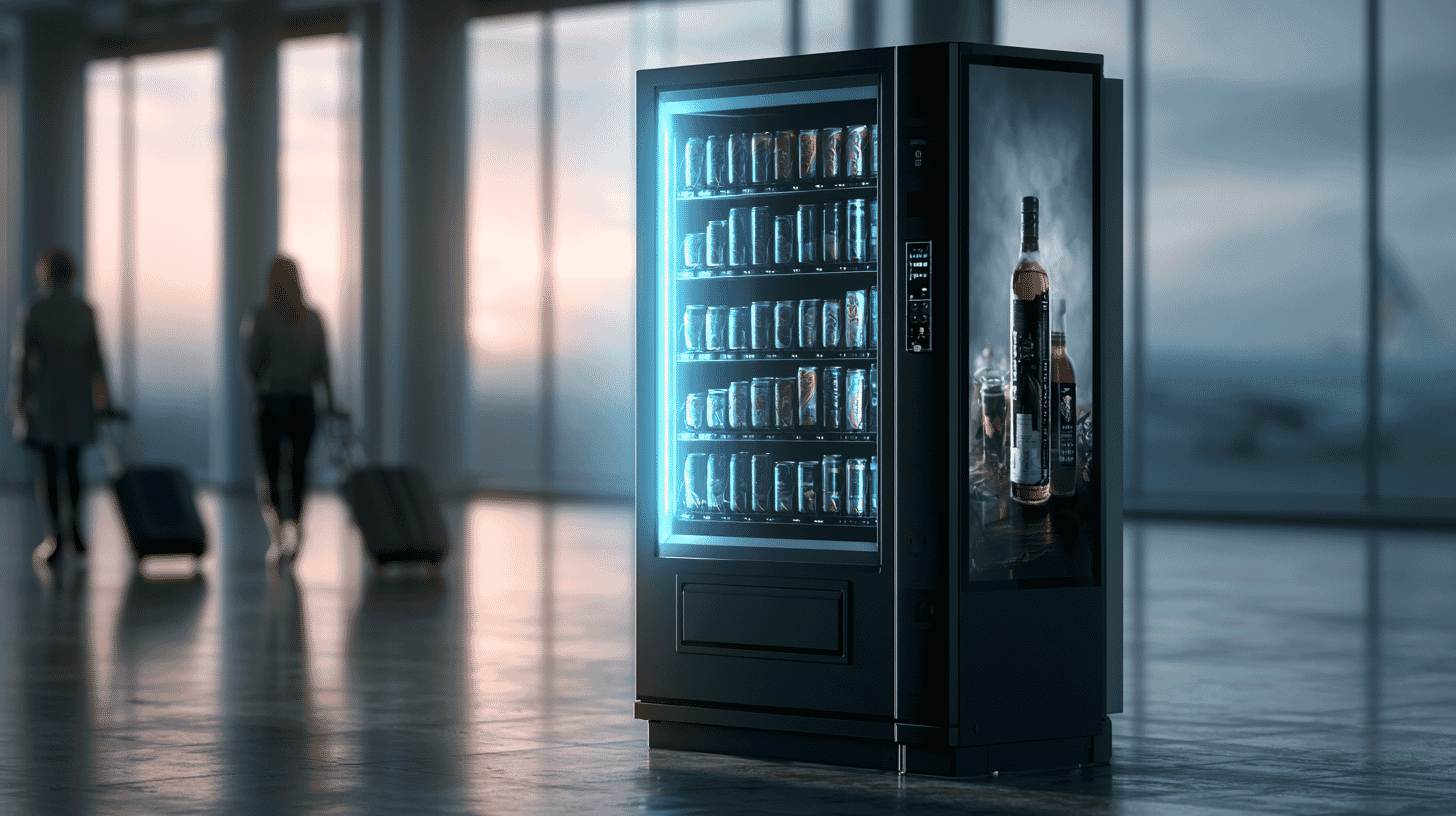
🚉 A railway company that gave up on its futuristic touch-screen vending machines at home is now betting on them 9,000 kilometers away. On June 2, JR East, the company that runs Tokyo's sprawling commuter rail, announced it had bought up a chain of roughly 800 airport vending machines in Britain, pushing its UK fleet to around 1,800. Among the hardware it plans to introduce there: the same touch-panel design it quietly pulled out of Japanese stations. So why did the idea stall at home, and what makes Britain look like the better bet?
From a station experiment to an airport network
JR East's UK arm, JRE Business Development UK (UKBD), and its subsidiary Decorum Vending, which runs vending machines inside British railway stations, have acquired the business of a UK operator called Petrie Gough. Petrie Gough runs about 800 machines across the country's biggest airports, including Heathrow, Gatwick and Luton. With that deal, JR East now operates roughly 1,800 vending machines spanning both stations and airports in the UK.
This didn't happen overnight. The group started its digital vending business in Britain back in 2019. In 2024 it set up UKBD to cover the UK and other European markets, and the same year bought out Decorum, which had already won the rights to run vending machines from around 90% of Britain's train operating companies: roughly 1,000 machines, mostly inside stations. The airport purchase is the piece that ties the two busiest types of travel hub together.
JR East calls the whole thing "smart retail": unmanned operation, contactless and cashless payment, AI, data analysis and remote management, wrapped around vending machines, digital kiosks and cashier-less stores. Decorum's edge, the company says, is the back end, remote stock monitoring and AI-built restocking routes for the staff who refill the machines, plus a sideline in selling ads and promotions on the machines themselves. And here's the line that jumps out for anyone who remembers Tokyo's stations a decade ago: JR East plans to roll out new touch-panel vending machines in Britain.
The black machine that quietly vanished
If you passed through a major Tokyo station in the 2010s, you probably saw them. In August 2010, JR East's beverage arm installed something at Shinagawa Station that looked less like a vending machine than a giant flatscreen TV. There were no physical buttons and no plastic drink samples. A 47-inch touch panel showed the available drinks as photographed images; a motion sensor woke the display when someone stepped up, and a camera tried to guess the shopper's age and gender to suggest up to three products. You paid by tapping a Suica card. The plan was to put 500 of these across the network within two years.
For a while, the numbers backed the hype. About a year in, the machines were reportedly selling around 1.8 times as much as a conventional station vending machine. Their designers framed them as built for "time-spending" demand rather than the "time-saving" morning rush: they kept selling through midday and evening, when people lingered, not just during the commute.
A second wave arrived in 2017. The "Innovation Vending Machine," also touch-panel, was paired with a smartphone app called acure pass that let you pre-buy drinks, gift them to friends and, from 2019, subscribe to a drink a day. About 400 of them went into stations.
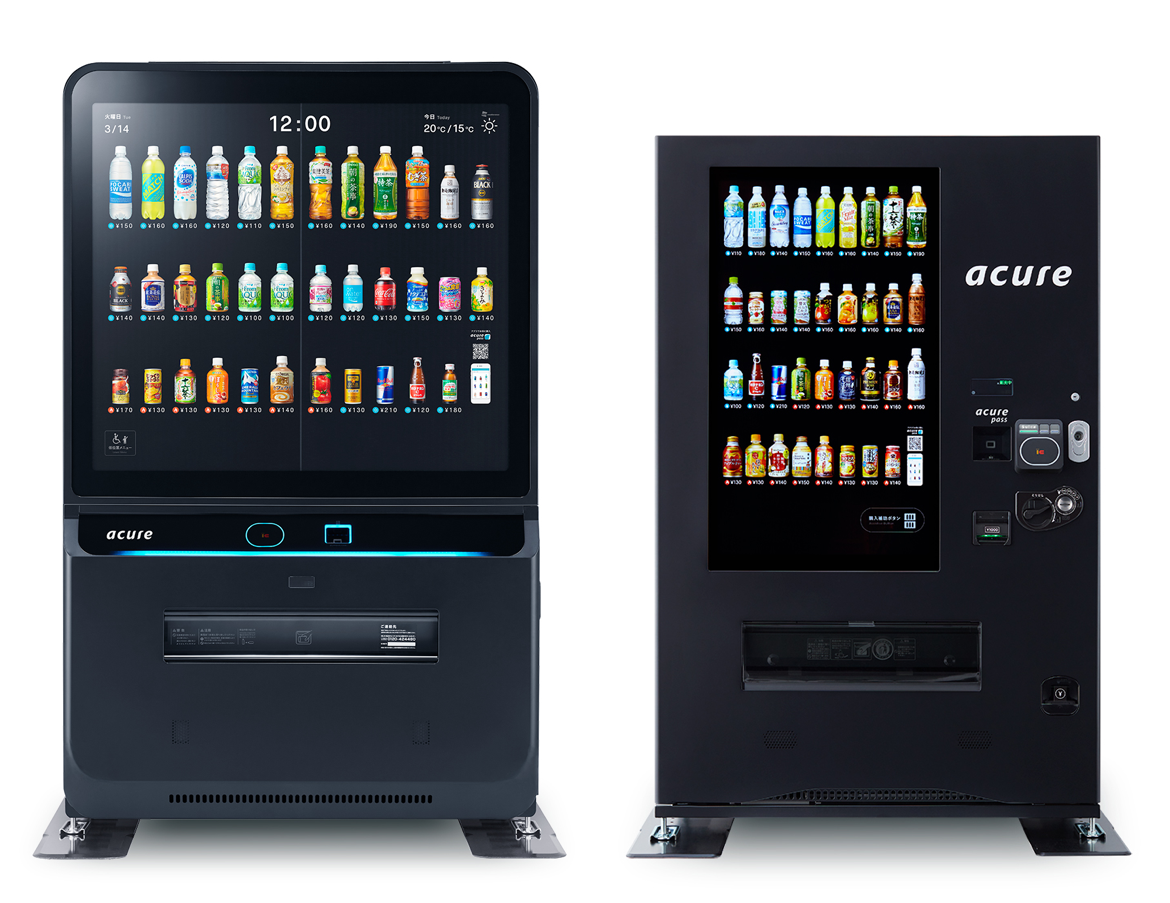
Source: JR East press release / PR TIMES
Then they faded. In late 2023, JR East's retail arm announced it would wind down both the Innovation Vending Machines and acure pass, with the last services ending on March 31, 2024. The official explanation was undramatic: the machines had reached the end of their planned service life and had "fulfilled a certain role," and there were no plans to bring them back. What travelers actually noticed was that the sleek black screens were being swapped not for newer digital models, but for ordinary button-and-can machines.
Why touch screens lost to buttons at home
JR East never framed this as a failure, and strictly speaking it wasn't a flop: the machines sold well and the subscription was oversubscribed. But the decision to retire the format rather than upgrade it tells its own story, and a few practical reasons are worth spelling out.
The first is that Japan's ordinary vending machines are very, very good. The country runs one of the densest, most reliable vending networks on earth, and a plain button machine is fast, cheap to run and familiar to everyone. A 47-inch screen, a camera and a comms module cost far more, and at a packed station during rush hour, tapping through a touch interface is a step slower than the muscle-memory jab at a button. When speed is the whole point, the screen is friction.
The second is data. The camera that guessed your age and gender was a clever 2010 idea, but JR East already sits on something far richer: Suica, the transit card millions of people tap every day. Tied to the company's loyalty program, Suica gives JR East actual, ID-linked purchase records, no guessing required. Since 2021, after merging four of its in-station businesses, the group has leaned hard into Suica-based marketing and "whole-station cashless" machines. The demographic-guessing gimmick had been overtaken by the company's own infrastructure.
And the third is simpler: the smartphone ate the novelty. A big talking screen in a station was striking in 2010. By the 2020s, everyone was already carrying a far better one in their pocket.
Why Britain might be the better fit
Here's the inversion that makes the UK move interesting. The same concept that had thin upside in Japan lands in a market that wants exactly this kind of upgrade.
Britain's vending sector is smaller and less saturated than Japan's, and it's growing: the UK's vending and automated-retail industry was worth about £3.78 billion (roughly $5.1 billion) in 2025, up year on year and now larger than it was before the pandemic. More importantly, the country has gone decisively cashless. Cashless payment is now fitted to about 95% of Britain's pay-vending machines, and on those machines roughly 84% of transactions are already cashless, with 62% done by phone. A digital-first machine that wants you to tap rather than feed in coins isn't a hard sell to a British shopper; it's what they already do. Operators also report that cashless customers spend roughly twice as much per transaction as coin users, exactly the kind of economics that justifies a pricier, smarter machine.
Then there's the setting. Stations and especially airports are "time-spending" environments, places where people wait, browse and kill time, which is precisely the demand pattern where JR East's screen-led machines performed best in Japan. An airport departure lounge is the natural habitat for a machine that shows off products on a big display and nudges an impulse buy, in a way a rush-hour platform never was.
The business model points the same direction. Decorum's strength isn't just selling drinks; it's selling ads and promotions on the machines and optimizing the product mix with foot-traffic and purchase data. A touch panel isn't only a way to pick a soda: it's a screen that can be rented to advertisers and tuned by analytics. In a travel hub full of brands competing for attention, the screen itself becomes part of the product.
None of this guarantees success. Smart machines are capital-intensive, reliability and maintenance will make or break the economics, and "touch-panel" is one element of a broader smart-retail bet rather than the whole thesis. But the logic is coherent in a way it wasn't at home: in Japan the digital machine was a marginal upgrade on an already-excellent system; in Britain it's closer to leapfrogging.
More than drinks
The vending push is really a wedge for something bigger. JR East has folded its overseas retail ambitions into a group management vision called Yusho 2034 and a banner phrase, "Lifestyle Transformation": the idea that a railway company's real asset is its daily contact with millions of travelers, and that those touchpoints can sell far more than train rides.
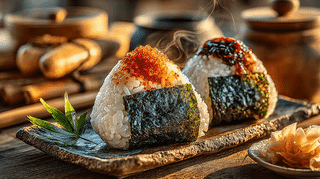
That's why the London rollout isn't only machines. The group has opened a fresh-onigiri shop, TOKYO ONIGIRI, supervised by a Japanese rice-ball specialist, and set up vending machines for Itoen's "Oi Ocha" green tea alongside railway merchandise and craft products from Tsubame-Sanjo, a metalworking region in Niigata. It also plans machines dedicated to regional Japanese specialties. Drinks, snacks, tea, hardware, local crafts. The through-line is that the vending machine is being reimagined as a tiny, screen-fronted storefront for Japan, parked exactly where travelers have time on their hands.
In Japan, the futuristic vending machine turned out to be a solution the country didn't quite need. Whether Britain needs it more is the bet JR East is now making. In your country, station and airport vending is usually an afterthought: a dusty machine and a lukewarm can. Would a tap-to-pay screen offering fresh onigiri and Japanese tea actually win you over, or do you just want a cold drink, fast?
References
- https://news.yahoo.co.jp/articles/45bb79b2eed544e2af6598bc409d338c12c59051
- https://nlab.itmedia.co.jp/nl/articles/2310/06/news159.html
- https://k-tai.watch.impress.co.jp/docs/news/473205.html
- https://www.nikkei.com/article/DGXNASFK1002A_Q0A810C1000000/
- https://bmmagazine.co.uk/in-business/uk-vending-industry-3-78-billion-2025-smart-fridges-cashless/




Global Discussion
4 comments