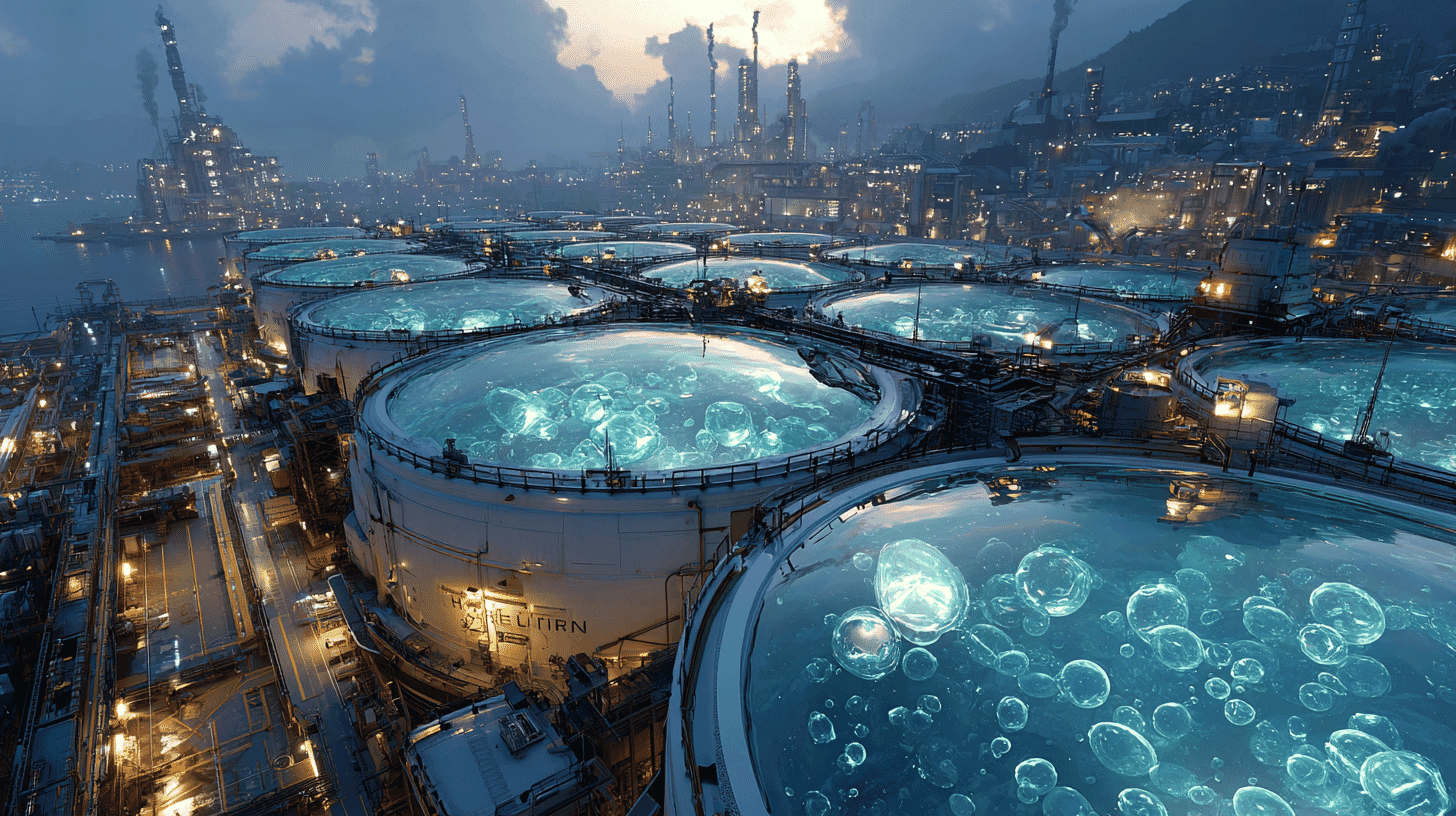
Toyota is moving into the business of making hydrogen, not just burning it. Taking the technology behind the Mirai fuel cell car and running it backwards, the company will mass-produce water electrolysis systems from fiscal 2029. Here is what the "multi-pathway" strategy actually means, and where Japan's hydrogen roadmap stands.
Toyota Enters the Hydrogen Production Business
On March 17, 2026, at the 25th H2&FC EXPO in Tokyo, Toyota announced it will begin mass-producing large-scale water electrolysis systems by fiscal year 2029, systems that split water into hydrogen and oxygen using electricity.
Developed in partnership with Chiyoda Corporation, a major Japanese engineering firm known for building oil and gas plants worldwide, Toyota plans a two-tier product lineup: a 5MW unit producing approximately 100 kg of hydrogen per hour for mid-scale domestic use, and a 20MW unit producing around 400 kg/h for large-scale international projects.
Toyota has already installed a 5MW demonstration system at its headquarters factory in Toyota City, Aichi Prefecture, producing 96 kg/h of hydrogen. This represents a roughly 12.5-fold capacity increase from an earlier 0.4MW prototype installed at DENSO Fukushima. A 15MW facility for Aichi Steel is also planned for 2030.
Mirai Technology in Reverse
The core innovation behind these electrolyzers comes from an unexpected place: the Toyota Mirai, Japan's pioneering hydrogen fuel cell sedan. The Mirai's fuel cell stack generates electricity by combining hydrogen and oxygen. Toyota's engineers essentially ran this process backward, feeding electricity into water to produce hydrogen.
The company's expertise in monitoring and controlling all 330 cells in the Mirai's fuel cell stack in real time translates directly into more stable and longer-lasting electrolyzer performance. Using AI-powered controls across the entire system, Toyota has achieved a roughly 20% reduction in the use of iridium (an expensive precious metal essential to the process) while doubling the projected stack lifespan.
Chiyoda Corporation brings decades of experience in building massive energy plants. By combining Toyota's compact, high-density manufacturing approach with Chiyoda's modular plant engineering, the resulting system occupies about half the footprint of conventional electrolyzers (just 6m × 2.5m) while maintaining high hydrogen production efficiency. It's a marriage of automotive precision and industrial-scale engineering.
Why Toyota Won't Go EV-Only: The Multi-Pathway Strategy
While many global automakers rushed to embrace a battery-EV-only future, Toyota has consistently advocated what it calls a "multi-pathway approach" to decarbonization. This strategy includes hybrids, plug-in hybrids, battery EVs, hydrogen fuel cell vehicles, hydrogen combustion engines, and even e-fuels, offering different solutions depending on regional infrastructure, customer needs, and energy availability.
Toyota Chairman Akio Toyoda has repeatedly stated that switching all new car sales to EVs alone cannot achieve zero emissions by 2050. The real world, he argues, includes developing countries with limited charging infrastructure, industries that need hydrogen for heavy transport, and customers who need flexibility.
This approach, once criticized as overly cautious, is gaining validation. Ford reported billions of dollars in losses from its EV division. GM and other Western automakers have delayed or scaled back their BEV-only commitments. Meanwhile, Toyota's hybrid sales are surging globally, and the company is investing over $1 billion to retool its Canadian plants for the all-hybrid 2026 RAV4.
By entering hydrogen production, Toyota is extending its multi-pathway strategy beyond vehicles and into the energy supply chain itself, covering hydrogen production ("make"), transport ("carry"), storage ("store"), and use ("utilize").
Japan's National Hydrogen Strategy: Ambitious Targets, Mixed Results
Japan was the first country in the world to establish a national hydrogen strategy back in 2017. The strategy was updated in June 2023 with significantly expanded targets:
- Hydrogen supply targets: 3 million tons/year by 2030, 12 million tons by 2040, and 20 million tons by 2050
- Cost reduction goals: From the current approximately $4.50/kg to around $1.35/kg by 2030, and $0.90/kg by 2050
- Electrolyzer deployment: 15 GW installed by Japanese-related companies by 2030
- Investment: Over $100 billion in combined public and private spending over 15 years
Japan has also issued GX (Green Transformation) Transition Bonds, a roughly $130 billion public investment fund designed to catalyze private capital into clean energy infrastructure.
However, reality hasn't matched ambition in all areas. Fuel cell vehicle sales have significantly undershot targets, cumulative FCEV sales reached only about 5,170 units against a target of 40,000 by 2020. Hydrogen stations numbered about 164 as of early 2022, well short of the 2030 goal of 1,000. Hydrogen still costs 5–7 times more than natural gas in Japan.
Global Competitors: Hyundai, BMW, and the Hydrogen Race
Toyota isn't alone in betting on hydrogen. Two other major automakers are pursuing ambitious hydrogen strategies.
Hyundai has been developing fuel cells since 1998 and launched the world's first mass-produced FCEV, the Tucson Fuel Cell, in 2013. In 2024, it unveiled the INITIUM concept, a next-generation FCEV targeting over 650 km of range. In October 2025, Hyundai broke ground on a dedicated hydrogen fuel cell production plant in Ulsan, South Korea, with an annual capacity of 30,000 fuel cell units, scheduled for completion in 2027. Through its HTWO hydrogen brand, Hyundai is expanding fuel cell technology across passenger cars, heavy-duty trucks, buses, ships, and even aviation.
BMW has researched hydrogen since the 1970s but has never sold a production hydrogen vehicle. That will change in 2028 with the planned launch of the iX5 Hydrogen. BMW's CTO Joachim Post has declared that hydrogen will play a "crucial role" in the automotive industry. BMW has also deepened its partnership with Toyota on hydrogen technology, combining German luxury engineering with Japanese fuel cell expertise.
The Green Hydrogen Market: Explosive Growth Ahead
The global green hydrogen market, hydrogen produced using renewable energy, is projected to grow at a staggering rate:
- Fortune Business Insights: From $2.79 billion in 2025 to $74.8 billion by 2032 (60% CAGR)
- Deloitte: Projected to reach $1.4 trillion annually by 2050
- Technavio: Expected to grow by $113.6 billion between 2025–2030 (68.1% CAGR)
Asia-Pacific is emerging as the fastest-growing region, driven by massive projects in India, China, and Australia. The U.S. has committed $7 billion to establish seven regional hydrogen hubs, while the EU's European Hydrogen Backbone initiative aims to build a 28,000 km hydrogen pipeline network by 2030.
The use cases are diversifying too. While transportation initially drove demand, industrial applications, especially steelmaking, ammonia production, and chemical manufacturing, are now the fastest-growing segments.
The Cost Challenge: Hydrogen's Biggest Hurdle
The elephant in the room remains cost. Gray hydrogen (produced from natural gas without carbon capture) costs roughly $1–2 per kilogram. Green hydrogen currently ranges from $3–8/kg, far too expensive to compete without subsidies.
Japan's target of bringing hydrogen costs down to about $1.35/kg by 2030 requires a combination of cheaper renewable electricity and mass-produced electrolyzers. This is exactly where Toyota believes its manufacturing prowess can make a difference. By applying the same mass production expertise that enables it to build 10 million vehicles annually, Toyota aims to drive down electrolyzer costs faster than specialized industrial equipment companies could alone.
The U.S. Inflation Reduction Act offers tax credits of up to $3/kg for clean hydrogen production over 10 years. The EU's European Hydrogen Bank provides premium subsidies for renewable hydrogen. These policy frameworks are essential to bridging the cost gap during the transition period.
EV-Only vs. Multi-Pathway: A Defining Debate
The European Union has committed to banning new combustion engine vehicles by 2035 (with an exception for e-fuels). China's new energy vehicle sales have surpassed 50% of total auto sales. Yet a backlash against EV-only strategies is emerging.
Ford's EV division lost billions. Multiple European automakers have delayed their all-electric timelines. Consumer adoption has slowed in key markets, hampered by high vehicle costs, insufficient charging infrastructure, and range anxiety.
Against this backdrop, Toyota's multi-pathway approach, long dismissed by critics as foot-dragging on EVs, is being reevaluated. The entry into hydrogen production signals that Toyota sees itself not merely as a carmaker, but as an energy solutions company.
The challenges remain significant. Hydrogen infrastructure is still in its infancy worldwide. The "chicken-and-egg" problem, limited supply because there's limited demand, and limited demand because there's limited supply, persists across the hydrogen economy. Success will require sustained government support, international coordination, and patient capital.
Whether Toyota and Chiyoda Corporation can deliver globally competitive electrolyzers by 2029 will be a critical test, not just for one company's strategy, but for the viability of the hydrogen pathway in the broader energy transition.
Japan is pursuing both EVs and hydrogen as part of its energy strategy. What does the energy transition look like in your country? Is it EV-only, or does hydrogen play a role? We'd love to hear how your nation is approaching this challenge.
References
- https://car.watch.impress.co.jp/docs/news/2094070.html
- https://global.toyota/jp/newsroom/corporate/40388570.html
- https://motor-fan.jp/article/304374/
- https://pressroom.toyota.com/toyota-provides-technology-roadmap-at-the-2025-hydrogen-and-fuel-cell-seminar/
- https://www.marketsandmarkets.com/Market-Reports/green-hydrogen-market-92444177.html
- https://www.deloitte.com/global/en/about/press-room/new-deloitte-report-emerging-green-hydrogen-market.html
- https://www.hyundai.com/worldwide/en/newsroom/detail/hyundai-motor-breaks-ground-on-hydrogen-fuel-cell-production-facility-in-korea-0000001038
- https://www.bmwblog.com/2026/01/05/bmw-argues-hydrogen-play-crucial-role-car-industry/







Global Discussion
14 comments