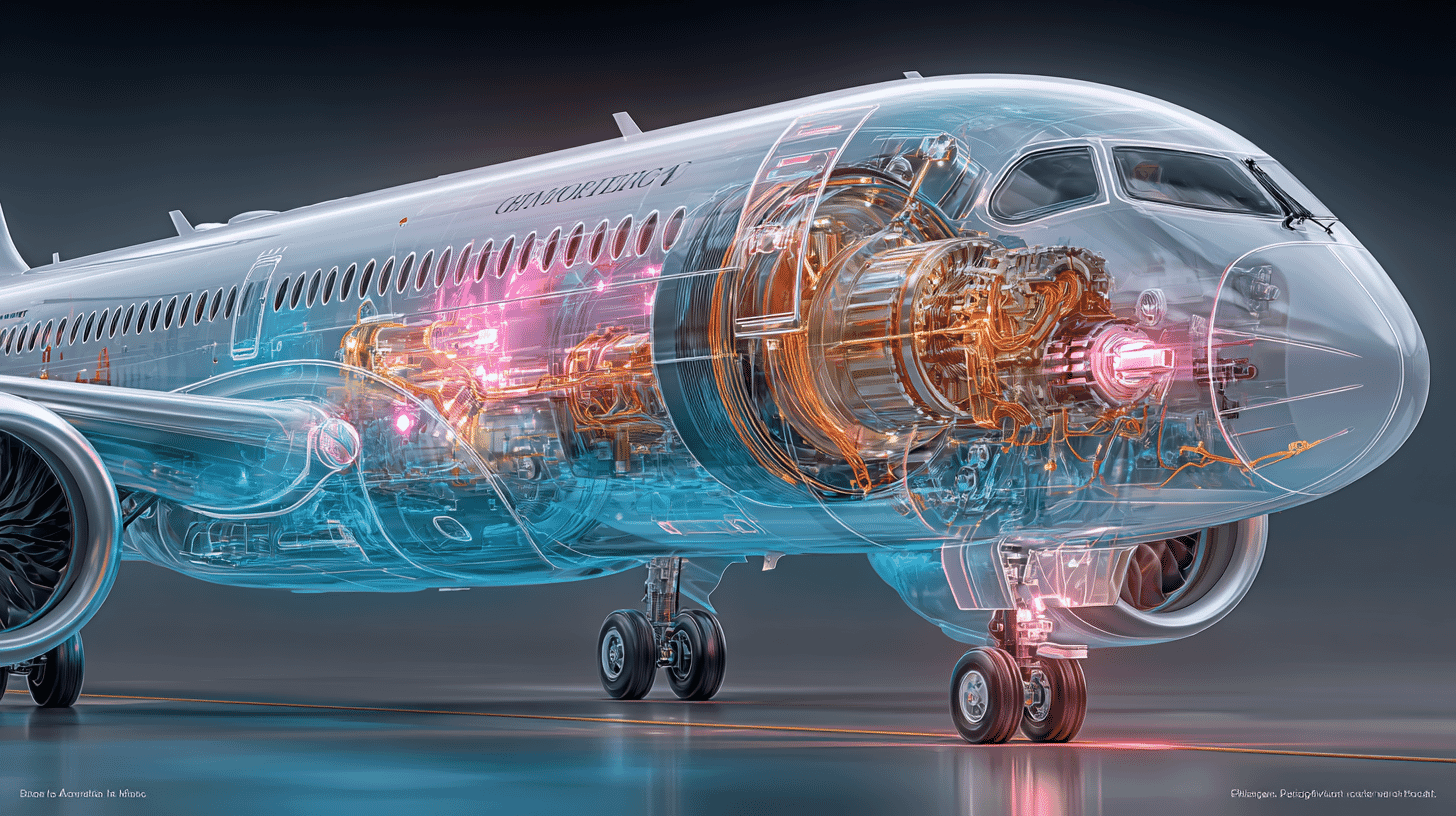
Same power output. One-tenth the weight. One-tenth the size. Toshiba, Airbus, and Toyota are racing to perfect what engineers now call the "ultimate motor": the superconducting motor. Airbus and Toshiba, who unveiled their joint research in 2024, are already prototyping a second-generation unit. Meanwhile, Toyota recently demonstrated a hydrogen-engined "GR Corolla" with a superconducting motor inside its fuel tank at Fuji Speedway. While flying-car startups crash and burn, why is Japan's relatively quiet motor technology suddenly the linchpin of global decarbonization?
Why It's Called the "Ultimate Motor"
A superconducting motor uses high-temperature superconductor (HTS) wire for its rotor or stator windings. Cool the wire to around -196°C (-321°F) and its electrical resistance drops to zero. No resistance means no heat loss. No heat means you can push enormous currents through the same wire. Same power output, but the motor itself shrinks to roughly one-tenth the size and weight of a conventional industrial motor.
Toshiba Energy Systems' 2 MW (2,000 kW) prototype, unveiled in 2022, measures roughly 500 mm in outer diameter and 700 mm in length. For comparison, a conventional 2 MW motor is the size of a small SUV. Power density (output per kilogram) reaches roughly 10x that of conventional designs.
The catch: superconducting motors have always struggled with the cost and complexity of cryogenic cooling. Maintaining -196°C requires liquid nitrogen or refrigeration units, making them uneconomic for most industrial applications.
That barrier is now collapsing, because of hydrogen energy.
Why Liquid Hydrogen Is the Perfect Match
Airbus aims to make commercial aviation carbon neutral by 2050, and its centerpiece is the hydrogen aircraft. Burning hydrogen as fuel emits only water vapor, zero CO2.
But there's a problem: liquid hydrogen runs at -253°C (-423°F), far colder than your kitchen freezer. Tanks, fuel lines, distribution manifolds, everything inside a hydrogen aircraft would carry this cryogenic liquid. From a normal engineering standpoint, it's a nightmare.
From a superconducting-motor standpoint, it's a gift.
A wire that becomes a superconductor at -196°C, cooled instead by a -253°C hydrogen line running alongside it, requires almost no extra refrigeration hardware. The fuel itself becomes the coolant. The whole electric propulsion system, generator, transmission lines, motor, is simultaneously cooled and powered by the same liquid hydrogen flow.
This is the leap Airbus's Grzegorz Ombach (Senior VP for Future Technologies) described when he announced the Toshiba partnership: an electric system with near-zero transmission losses, dramatically improved efficiency.
Airbus × Toshiba: Second Prototype in 2026, Service in 2040
Airbus subsidiary Airbus UpNext and Toshiba Energy Systems signed their cooperation at Japan Aerospace 2024 in Tokyo Big Sight in October 2024. It was the first external partnership under Airbus's "Tech Hub Japan," opened just five months earlier in May 2024.
Why Toshiba? Airbus had been derisking superconducting tech for over a decade with 500 kW prototypes. But the only company in the world that had built a 2 MW-class superconducting motor that small was Toshiba. Behind that capability sits 60 years of Japanese superconductor application know-how, starting with Japan's first MRI superconducting magnets in the 1980s, single-crystal silicon ingot pullers, heavy-ion cancer therapy systems, and more.
The two companies plan to complete a second-generation prototype by end of 2026, evolving Toshiba's 2022 unit into something that meets aviation requirements for safety, weight, and efficiency. It will become the core of Airbus UpNext's 2 MW-class superconducting electric propulsion demonstrator, "CryoProp."
Service entry target: around 2040. The roadmap calls for flight demonstrators in the 2030s and commercial hydrogen aircraft in the 2040s.
Toyota's Surprising Use Case: A Pump Motor for Race Cars
Toyota took the same technology in a totally different direction, it bolted one inside a fuel tank.
For several seasons, Toyota has fielded a hydrogen-powered "GR Corolla H2 Concept" in Japan's Super Taikyu endurance racing series. The car burns hydrogen directly in a conventional internal combustion engine, no electric motor, no superconductor in sight. Or so it appeared.
In November 2025, at the season finale at Fuji Speedway, Toyota debuted a new development vehicle with a superconducting motor on board. Not in the drivetrain. Inside the liquid hydrogen fuel tank.
The previous GR Corolla H2 had its fuel pump unit perched on top of the tank. Cryogenic insulation made it bulky and ate into usable tank volume. Toyota's solution: superconductorize the pump motor and submerge it inside the tank, where the -253°C hydrogen provides free cooling. No external cryogenic plumbing required.
The result? Tank capacity grew from 220 liters to 300 liters, about 10 extra laps at Fuji, according to Toyota. The team is now targeting a 40-lap stint without refueling.
Professor Takeshi Nakamura of Kyoto University, who advised the project, noted the motor uses commercially available superconducting wire. Unlike Airbus's 2 MW aviation motor, which pushes the cutting edge, Toyota's target is a "practical motor that can be made from off-the-shelf wire today."
Toyota's Two-Front Strategy: Joby in the Air, Hydrogen on the Ground
Here's what's interesting about Toyota's playbook: in the air, it's not developing superconducting motors directly.
Toyota has invested over $500 million in U.S. eVTOL leader Joby Aviation, and Joby's conventional electric motors are essentially built using Toyota's manufacturing know-how. Joby flew a hydrogen-electric variant of its S4 aircraft over 523 miles (842 km) in 2024, the first eVTOL hydrogen long-range flight.
So Toyota's strategy is split: air = Joby (battery + fuel cell); ground = in-house (hydrogen ICE + superconducting pump). Toyota appears to treat eVTOLs and hydrogen aircraft as separate markets requiring separate bets.
[ref src="https://images.unsplash.com/photo-1540979388789-6cee28a1cdc9?w=1600&fm=webp&auto=format" alt="Hydrogen aircraft concept" origin="Unsplash"]
eVTOL Carnage vs. Hydrogen Aircraft's Long Game
Flying-car startups have had a brutal year. Germany's Lilium went insolvent in February 2025; Archer Aviation acquired its ~300 patents for roughly $21 million in October. Volocopter, also German, sold to the Chinese parent of Diamond Aircraft in March 2025. U.S.-based Overair, spun out of tiltrotor pioneer Karem Aircraft, has similarly stumbled, with Korean investor Hanwha Aerospace reporting over $100 million in losses on its $170 million investment.
Joby and Archer survived but pushed back commercial service from 2024 to 2027 or later. Joby ended 2025 with about $1.4 billion in cash; Archer reported just $300,000 in revenue against a $618 million net loss for the year.
Against this backdrop, Airbus-Toshiba's 2040 hydrogen aircraft target sounds glacial. But it's a different market. eVTOLs target intra-city air taxi (around 100-150 miles). Hydrogen aircraft aim at regional and intercontinental flights. Where Joby's hydrogen-electric S4 reaches "San Francisco to San Diego," hydrogen aircraft with superconducting motors target "London to New York" and beyond.
For long-haul aviation, weight is everything. A 2 MW motor at one-tenth the weight means more fuel, more passengers, or more range. This is why Airbus is willing to play the 15-year game.
Why Japan?
That Tech Hub Japan's first external partner was Toshiba says something about how European industrial giants now view Japan's quiet expertise.
First, the HTS wire supply chain is concentrated in Japan. Fujikura, Sumitomo Electric, and Furukawa Electric lead the world in high-temperature superconducting tape production. Even Commonwealth Fusion Systems, the U.S. fusion startup, buys Japanese wire by the kilometer.
Second, Japan's heavy-electric majors (Toshiba, Mitsubishi Electric, Hitachi) have a century of experience designing large rotating machinery, turbine generators for power plants. That know-how transfers directly to superconducting motors, where rotor dynamics and high-current windings are the hardest problems.
Third, Japan has unmatched operational experience with superconducting hardware in the field, JR Tokai's maglev development, ITER fusion magnet supply, MRI magnet history. Other countries have research-grade systems; Japan has run, broken, and fixed real-world superconducting machines for decades. For a company like Airbus targeting commercial certification, that operational pedigree matters.
What's Still Hard
Some honest skepticism is warranted.
Production cost: HTS wire today runs in the tens of dollars per meter. Aviation motors require kilometers of wire. Cost has to drop by at least an order of magnitude before mass production makes sense.
Cryogenic system reliability: -196°C must be maintained for 10+ years in flight. Aviation certification asks brutal questions about failure modes. "Quench" events, where a superconductor abruptly loses its zero-resistance state, remain a problem JR Tokai still wrestles with on the maglev.
Certification timelines: Commercial aircraft type certification typically takes 10+ years. Even with a 2026 prototype, real passenger service in the early 2040s is the realistic outcome.
What keeps everyone moving despite this is the 2050 carbon neutrality deadline. Without breakthrough motors, that target slips out of reach.
References
- Toyota and Airbus's Superconducting "Ultimate Motor" for Hydrogen Aircraft and Cars - Nikkei xTECH
- Airbus and Toshiba Partner on Superconducting Motor Research - Toshiba Energy Systems
- Toyota Accelerates Superconducting Motor Development for Liquid Hydrogen - Japan Auto Council
- Why Airbus Picked Toshiba: "World Leader in Superconducting Motors" - MONOist
- Joby Air Taxi Explores Hydrogen for Extended Range - eplaneAI
- Archer Secures Lilium eVTOL Patents Over Joby - eplaneAI
In your country, what's the leading bet for decarbonizing aviation, battery-electric, hydrogen aircraft, or sustainable aviation fuel (SAF)? In Japan, the consensus is increasingly tilting toward hydrogen + superconducting motors.






Global Discussion
14 comments