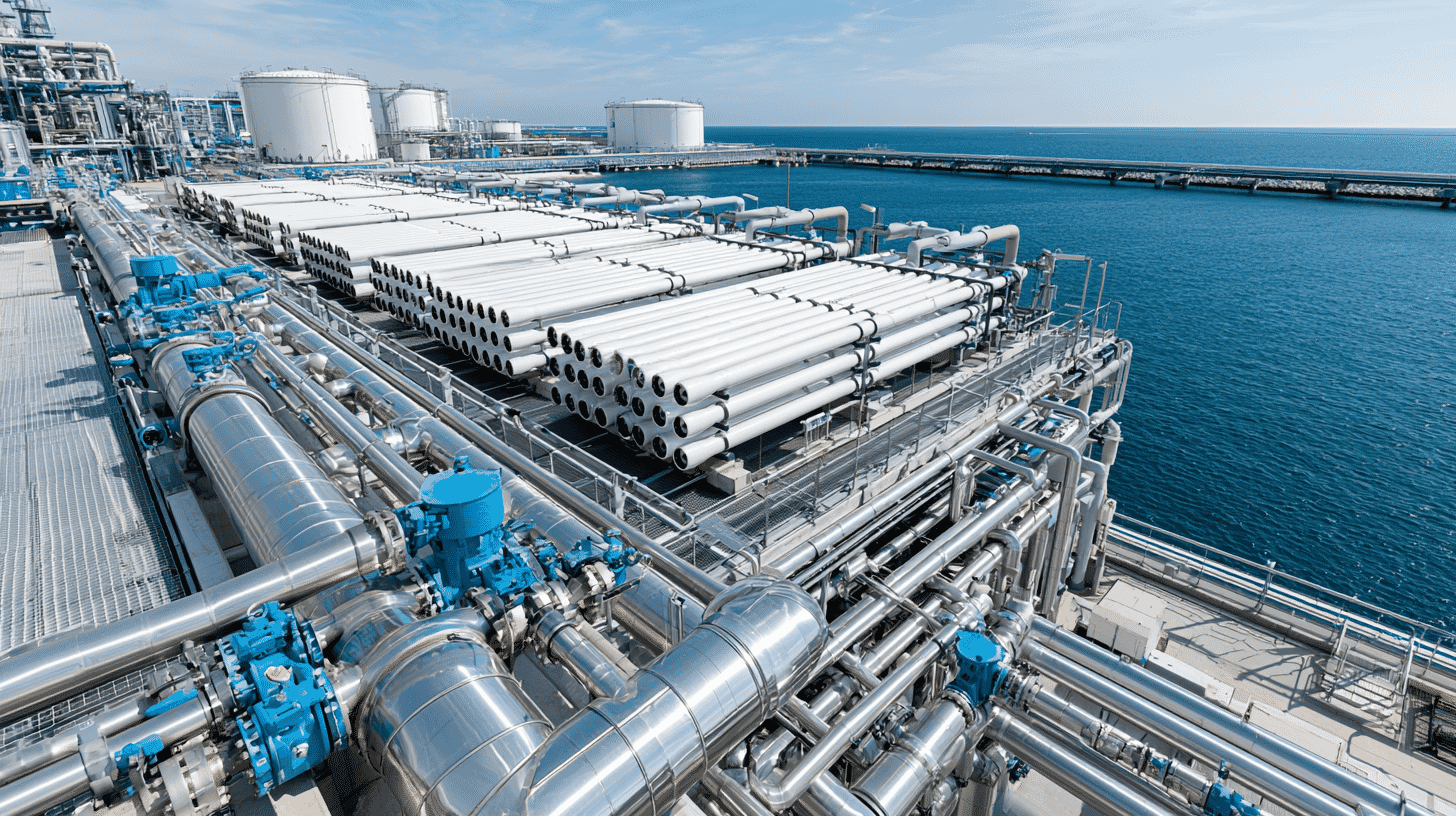
💧 Turning seawater into drinking water has a hidden catch: most plants have to filter it twice. Toray says its new membrane can do the job in a single pass, pulling out more than 99.9% of the salt and most of the boron that normally forces a second round. "One step instead of two" sounds like an engineering footnote. It isn't.
What Toray actually changed
On June 4, Toray announced a new line of reverse-osmosis membrane elements for seawater desalination, the TSW-K/M/V series, going on sale in October. Salt rejection lands at 99.90% to 99.92% depending on the model, and the company says it cut salt passage by up to 55% compared with its previous membrane.
Those decimals matter for what they let plant designers do: in a new desalination plant, a process that used to require two passes of RO can now be built around one. Toray also reports boron rejection in the 94–96% range and better resistance to the cleaning chemicals that wear membranes down, which it ties to longer membrane life. Toray credits the gain to a rebuilt membrane structure: it quantified the pore-size distribution of the polyamide layer, modeled how water molecules interact with the membrane and flow through the pores, and used that to control the pores at sub-nanometer precision. The price is undisclosed, and the product had its first public showing at Singapore International Water Week, which opened on June 15.
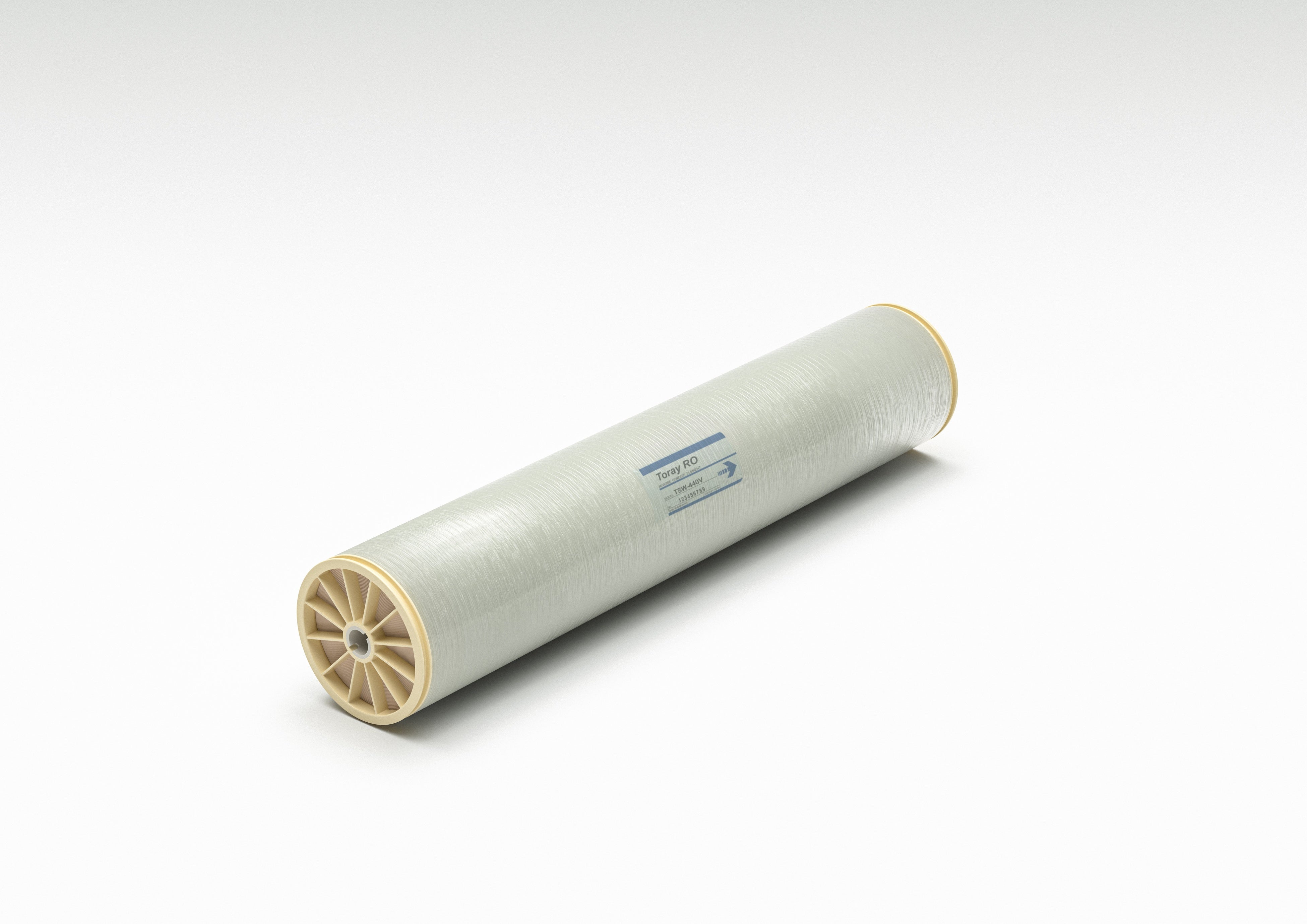
Source: Toray Industries / PR TIMES
The boron problem, and why desalination usually needs two passes
Reverse osmosis is conceptually simple. Push seawater against a semipermeable membrane under high pressure, and water molecules squeeze through while salt is left behind. The catch is that not everything dissolved in seawater behaves like salt.
Boron is the awkward one. Seawater carries roughly 4 to 6 milligrams of it per liter, and most of it exists as boric acid: a small, electrically neutral molecule that slips through an RO membrane far more easily than charged salt ions do. That matters because boron is toxic to many crops at low concentrations and is regulated in drinking water. The World Health Organization sets a guideline of 2.4 mg/L, and plants that supply irrigation water often aim well below that, since citrus and other sensitive plants suffer at concentrations a fraction of the human limit.
A single conventional RO pass usually can't hit those boron targets. So plants add a second pass, sending the already-filtered water through more membranes to scrub out what the first pass missed. That second stage exists largely because of boron. Toray's claim is that its membrane rejects salt and boron well enough that, for new plants, the first pass alone can clear the bar.
What you save by skipping a stage
A second RO pass is not a small add-on. It means more membrane modules, more high-pressure pumps, more electricity, more floor space and more maintenance, all to polish water that is already most of the way there. Desalination is energy-hungry to begin with. Modern RO has come a long way, from 15–20 kilowatt-hours per cubic meter in its early decades down to roughly 3.5–4.5 today, but energy remains the single biggest line in a plant's operating budget. Trim the process and you trim the bill that follows the plant for its entire life.
For plants that already run two passes, Toray frames the benefit differently: rather than eliminating the second stage, the membrane can lighten its load, which the company links to energy savings and steadier water quality. The longer membrane life from improved chemical resistance feeds the same math, since replacing membranes is one of the recurring costs operators dislike most.
None of this makes desalination free or clean. It still leaves behind brine, the concentrated salty water that gets pumped back to sea and raises real environmental questions, and it still runs on electricity that is often fossil-fueled. A more efficient membrane shaves the energy and cost; it doesn't erase the harder problems underneath.
Far beyond the Gulf
Toray is pitching the Middle East, where desalination demand keeps climbing. But framing this as a Gulf story undersells it. Reverse osmosis now accounts for around 70% of the world's desalination capacity, and more than 120 countries operate plants. Spain, Chile and Australia lean on RO precisely because they lack cheap fossil fuel and have to care about energy efficiency. The largest desalination plant in the Western Hemisphere sits in Carlsbad, California. India is building fast. Water scarcity already touches more than four billion people at some point each year.
That's the quiet logic of a materials company shipping a better membrane. Japanese firms are among the major suppliers in this market. The work is unglamorous, far upstream of anyone's tap. But anything that cuts a step, or a kilowatt, out of desalination eventually shows up in a water bill somewhere in the world.
In Japan this barely registers as news, a B2B announcement from a chemical maker. Yet if you've ever wondered where your water will come from in twenty years, desalination is increasingly part of the answer. Where does your country's water come from, and how secure does it feel to you?









Global Discussion
3 comments