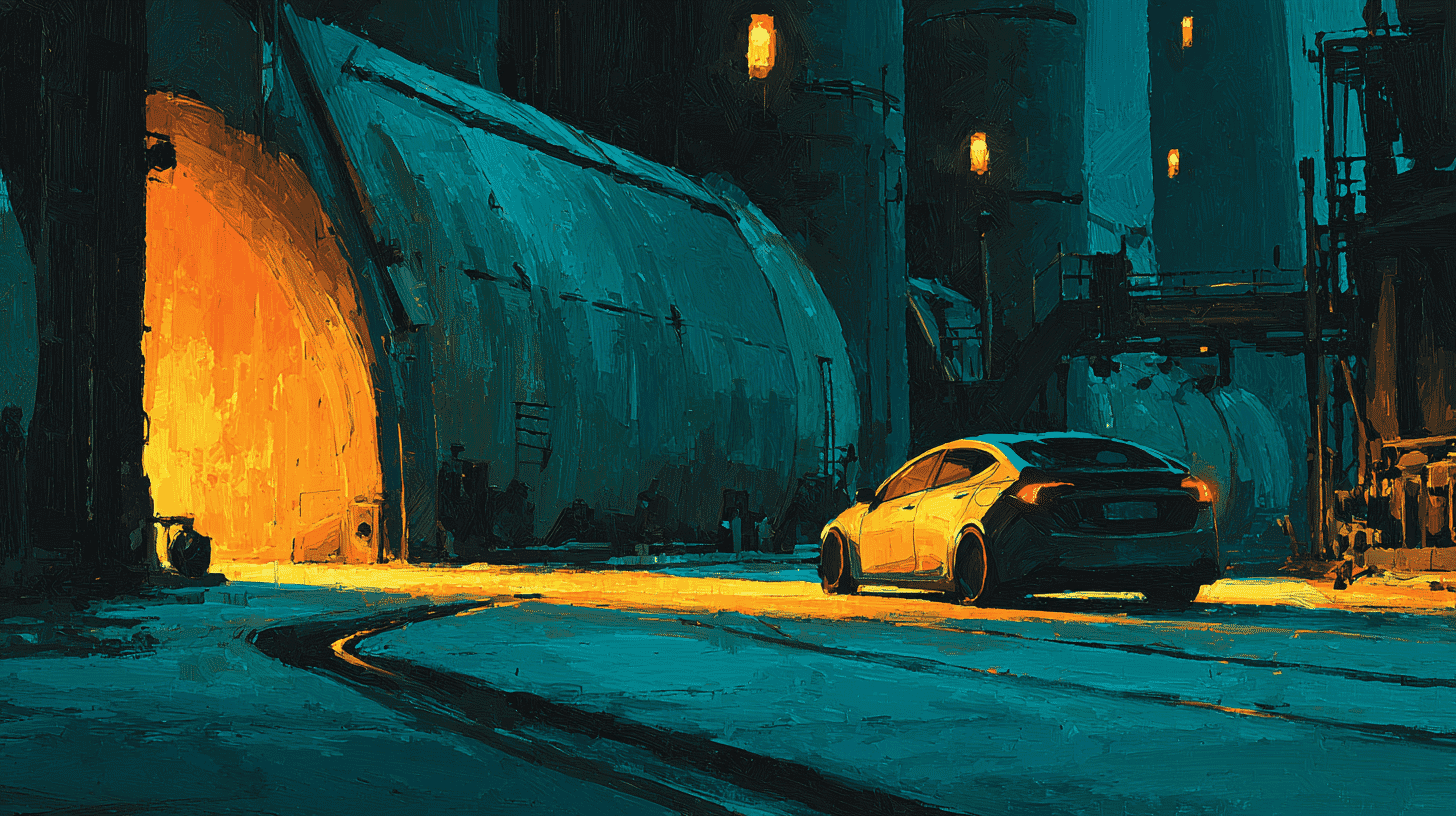
🚗 In 2023, Toyota unveiled the Lexus LF-ZC, an EV it described as one only a carmaker could build. It promised 1,000 km of range and a 20-minute full charge, the symbol of a giant's comeback after years of being told it had fallen behind Tesla. Then, before it ever reached a single buyer, it vanished. But here's the interesting part: what Toyota killed was the car, not the technology.
The Flagship "Car Lover's EV" That Died Before Launch
On May 28, 2026, Toyota confirmed it had halted development of the LF-ZC, the next-generation electric vehicle from its luxury Lexus brand. According to multiple reports, the decision reflects the global slowdown in EV demand, especially the sales stall in the key U.S. market, and shrinking appetite for low-slung coupe and sedan shapes.
The LF-ZC was never just one model. Revealed at the Japan Mobility Show 2023 in October of that year, it was billed as the first of Toyota's next-generation EVs, a flagship, in effect. At a time when typical EVs managed around 500 km on a charge, the LF-ZC aimed for roughly 1,000 km, with a 20-minute fast charge, thanks to a next-generation battery and aggressive weight reduction. Inside sat "Arene OS," a conversational software platform, with bamboo trim accents. Built around the idea of an EV only a carmaker could build, it was engineered with a philosophy deliberately distinct from making gasoline cars.
The original plan targeted a 2026 launch. But in 2024, Toyota pushed production back roughly 18 months to mid-2027, with observers suggesting it had hit snags in mass-producing the new technology. This time, a delay wasn't enough: the project itself was shelved. The car was to be built at Toyota's Tahara plant in Aichi, so suppliers that had already installed tooling for volume production are being compensated for their losses, reportedly on a scale that could reach tens of billions of yen.
Why Now?
There isn't a single reason.
The biggest factor is that the world's EV transition hasn't moved as fast as the early hype suggested. We've covered the cooling of EV booms in Thailand and Europe before, and the slowdown is now unmistakable in North America too. Demand propped up by subsidies thins out once the subsidies end, and consumer worries over charging infrastructure and resale value have kept buyers on the fence.
On top of that, the Trump administration's auto tariffs weigh heavily. In its results for the fiscal year ended March 2026, Toyota booked a tariff hit of about 1.38 trillion yen (roughly $8.7 billion). Revenue reached 50.68 trillion yen, the first time a Japanese company has cleared 50 trillion, but operating profit fell 21.5% to 3.77 trillion yen and net income fell 19.2% to 3.85 trillion yen (about $24.2 billion). With profits squeezed, pouring resources into a costly new sedan with an unclear path to profitability makes less and less sense.
And the LF-ZC was, by design, a low, sleek coupe-sedan. Global sales have tilted heavily toward SUVs. Lexus, too, is steering development and production resources toward large SUVs for North America and the three-row electric "TZ" it unveiled in May 2026. Spending heavily on a body shape few people want, versus concentrating on shapes that sell, is a blunt but reasonable call.
What It Dropped Was the Car. What It Kept Was Gigacasting.
This is the crux of the story. Toyota was explicit that it "has not given up on new EVs," and said the technology refined for the LF-ZC will carry over into other vehicles. The most symbolic of these is gigacasting.
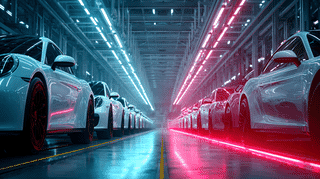
Gigacasting is a manufacturing technique that uses a giant aluminum die-casting machine to form, in a single shot, body sections that once required welding dozens of separate parts. For the LF-ZC, the plan split the body into three modules, front, center, and rear, casting the front and rear via gigacasting and housing the battery in the center. The result: dramatically fewer parts and process steps, and a body that is both lighter and stiffer. For manufacturing, it's an attempt to rewrite how a car is built.
Toyota is continuing that attempt even after killing the car. The logic is simple: gigacasting isn't an LF-ZC-only technology. SUV or sedan, EV or future hybrid, it works as a foundational technique for making body structures more efficient. A "product" can be canceled when demand fades, but the "underlying technology" can be carried forward to the next car. Executive vice president Yuki Nakajima has said the team could responsibly cancel the car precisely because there were vehicles lined up behind it.
[Update] On June 26, 2026, Toyota approved a successor EV that inherits the technology stack: gigacasting, Arene OS, the ADAS electronic platform and the prismatic cells. No name, timing or specification has been released, so the stack is production-ready while the vehicle meant to carry it does not yet exist.
Tesla Walked This Road Too
It was Tesla, of course, that put the word "gigacasting" on the global map. With the Model Y and Cybertruck, it productionized the approach of casting the front and rear of a body as single pieces, firing a starting gun that sent the entire industry racing to catch up. The LF-ZC was, in part, Toyota's answer to that gun.
Yet Tesla itself, according to 2024 reporting by Reuters and others, backed away from its more ambitious next-generation plan to cast an entire vehicle floor as a single piece, settling instead for its existing split front-and-rear castings. Single-piece casting demands enormous upfront investment and takes a long time to perfect for mass production, technical and economic hurdles steep enough to stop even the front-runner.
In other words, on the most aggressive application of gigacasting, both the pioneer (Tesla) and the pursuer (Toyota) are converging, each for its own reasons, on a "don't overdo it" landing point. The ideal of single-piece casting keeps colliding with the reality of the mass-production floor.
The Real Bet: Batteries Keep Running
The commitment to technology doesn't stop at gigacasting. Toyota hasn't slowed development of the next-generation batteries it frames as its "quality over quantity" play.
Chief among them is the solid-state battery, the headline bet, targeted for practical use in 2027–28. It promises over 1,000 km of range and a sub-10-minute charge, specs that could match or beat the convenience of a gasoline car. Because of cost, it will appear first in higher-priced vehicles like Lexus models. In parallel, Toyota is developing a cheaper "mass-market" battery that pairs the "bipolar" structure proven in hybrids with inexpensive LFP (lithium iron phosphate) cells, aiming to turn EVs from something for the few into an ordinary choice for the many.
Betting on core technology rather than a flashy launch is very much in character for Toyota.
"The Death of a Product" and "The Survival of a Technology"
Reading the LF-ZC cancellation as "Toyota's EV defeat" is probably jumping the gun. What was lost is one sedan; the manufacturing and battery technologies humming beneath it survive and transfer to the next car.
It can't all be spun as upside, of course. The view that Toyota trails Tesla and BYD in mass-producing EVs runs deep, and there's no guarantee hybrid dominance lasts forever. Pulling its flagship may also cost Toyota a chance to show what the brand's "EV identity" looks like.
Even so, in an era when demand is hard to read, separating "which car to build" from "which technology to bet on" may be one workable answer for the EV transition's awkward adjustment phase. In Japan, many see this as a coolly pragmatic move, but in your country, how would people react if a carmaker pulled the plug on its headline electric car?
References
- https://news.yahoo.co.jp/articles/23ca31667fb87c8374dc0efae7294a8d85d4c68f
- https://xtech.nikkei.com/atcl/nxt/column/18/03259/052900026/
- https://www.netdenjd.com/archives/669450
- https://finance.biggo.jp/news/wXmnb54BDXrLZJaA1Cgs
- https://global.toyota/en/newsroom/lexus/39888392.html
- https://www.lexus.eu/discover-lexus/news/2023/future-vision-at-the-japan-mobility-show
- https://insideevs.com/news/718125/tesla-single-piece-gigacasting/
- https://www.nikkei.com/article/DGXZQOFD066IP0W5A800C2000000/







Global Discussion
4 comments