Sony Semiconductor Solutions is mass-producing the IMX711, a direct-conversion X-ray CMOS image sensor based on a pixel structure invented at Japan's RIKEN institute. With an industry-fastest 26,100fps and noise low enough to measure single X-ray photons, it ends a decades-old trade-off in X-ray imaging. Here's why battery makers, chip fabs and scientists are paying attention.
Honda's full-scale eVTOL demonstrator, designated F1, completed its first flight in the US, hovering for about 90 seconds. Instead of going all-electric, Honda chose a gas-turbine hybrid built for 400km-plus intercity range. Here's the contrarian bet, and the F1 and HondaJet technology behind it.
In May 2026 Toyota canceled the Lexus LF-ZC, its next-gen EV—but it killed the car, not the tech. Why investment in gigacasting and solid-state batteries continues, compared with Tesla's own gigacasting retreat.
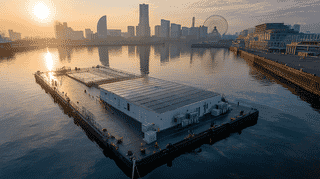
On March 25, 2026, five partners, NYK Line, NTT Facilities, Eurus Energy, MUFG Bank, and the City of Yokohama, launched a world-first floating data center powered entirely by solar panels and batteries at Yokohama Port. How does this off-grid demonstration differ from the MOL-Hitachi used-ship concept, and what does it say about Japan's answer to the AI power crisis?
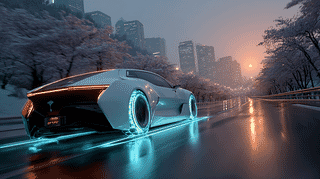
DENSO and the University of Tokyo signed a 10-year partnership starting April 2026 centered on Dynamic Wireless Power Transfer (DWPT). Learn how charging EVs while driving could shrink batteries, cut costs, and reshape energy infrastructure — plus how Japan's approach compares to Sweden, Israel, and the US.
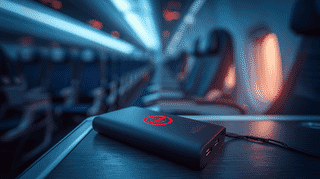
From April 24, 2026, Japan's transport ministry banned charging a power bank onboard an aircraft and charging other devices from one. Carry-on is capped at two units of 160Wh or less. The change follows an emergency revision of ICAO standards after the Air Busan 391 fire. Here are the rules, which breaches actually carry penalties, how to convert mAh to Wh, and the sodium-ion batteries banned outright the same day.
The explosive growth of AI data centers is creating a golden age for power electronics. With tens of thousands of GPUs fluctuating power equivalent to a nuclear plant by over 50%, Japanese makers like Mitsubishi Electric, Fuji Electric, and Toshiba see a massive opportunity. Includes US and Europe comparisons.
Singapore startup Flint begins mass production of biodegradable paper batteries. Made from cellulose, decomposing in 6 weeks, with no lithium or cobalt. Pilot programs with Logitech and Amazon underway, AA/AAA formats expected in 2026. Could this be the solution to battery waste?
CATL has taken sodium-ion cells into mass production. They can be shipped at 0V, which all but removes the fire risk in transit, they hold about 90 percent of their performance at -40°C, and they run past 10,000 charge cycles. Here is where the energy density problem still stands.