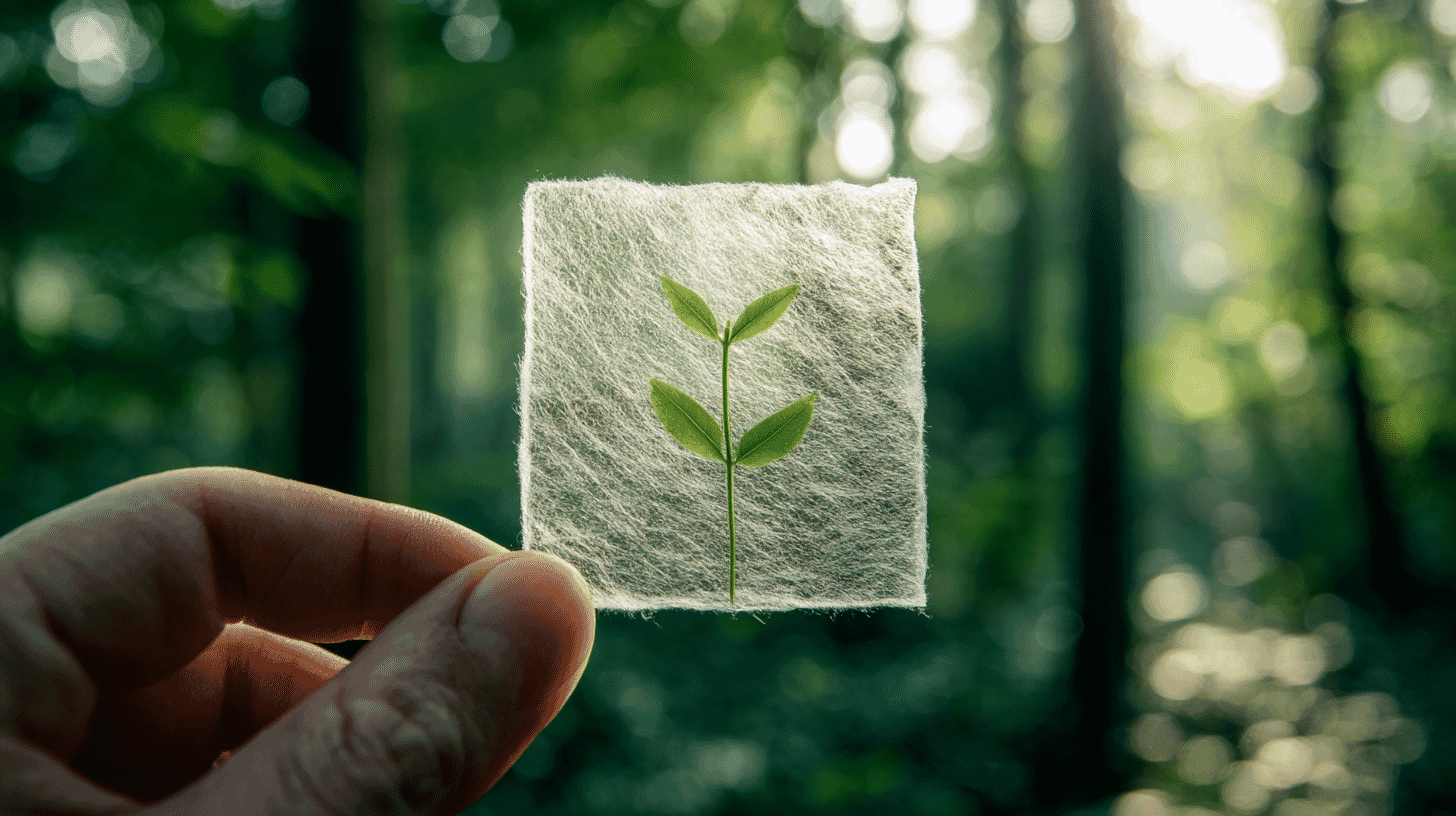
What if you could just bury your used batteries in the garden and have them decompose into the soil in about six weeks? No toxic waste, no recycling headaches, no fire hazards. It isn't science fiction: a Singapore startup called Flint has started mass-producing "paper batteries" that could change how we think about energy storage.
Who Is Flint? A Young Founder's Mission to Reinvent Batteries
Flint is a Singapore-based deep tech company founded by Carlo Charles, who was named to Forbes' "30 under 30 Asia 2025" in the Industry, Manufacturing & Energy category. The company first previewed its technology at a TechCrunch event in San Francisco in late 2023, immediately attracting attention from the tech industry.
In December 2024, Flint raised $2 million in seed funding from angel investors spanning nine countries, including France, Germany, Hong Kong, India, Singapore, Sweden, Switzerland, the UK, and the US. AI-focused venture capital firm Hatcher+ also participated in the round.
From CES Award to Mass Production
Flint's paper battery technology received the "Best of CES Sustainability Award" at CES 2025 in January, recognizing its innovative approach to safer, lower-carbon energy storage.
On January 2, 2026, the company officially announced that production had begun at its new 8,000+ square foot facility in Singapore. This marks a significant milestone, the transition from laboratory prototypes to manufactured cells ready for real-world deployment.
"Reinventing batteries isn't only about chemistry, it's about building something you can manufacture," said Charles. "Entering production is a turning point because it means our paper batteries can move beyond prototypes and into real devices, at real volumes, with quality controls that customers can validate."
The Science Behind the Paper Battery
Materials and Structure
Flint's battery technology uses cellulose, the natural polymer that forms plant cell walls, as its core material. Unlike traditional batteries, every major component incorporates this plant-derived substance:
- Anode: Zinc
- Cathode: Manganese
- Electrolyte: Water-based solution such as Hydrogel
- Separator: Cellulose paper
Crucially, the battery contains no lithium, cobalt, nickel, or PFAS (per- and polyfluoroalkyl substances, often called "forever chemicals"), materials that have raised significant environmental and health concerns.
Safety Performance
Because the battery uses water-based electrolytes, the risk of fire or explosion is dramatically lower than conventional lithium-ion batteries. In Flint's demonstrations, the battery continued operating even when bent, punctured, or exposed to an open flame, with no leaks or explosions. This damage-tolerant design represents a fundamental shift in battery safety.
Environmental Impact
According to the company, when disposed of, Flint's paper batteries can be buried in soil, where they biodegrade within approximately 6 weeks. The decomposition process leaves no harmful residues. While some components like plastic parts still require traditional recycling, about 80% of the battery naturally breaks down.
Cost Advantage
According to Flint, their paper batteries cost roughly half as much per kWh compared to lithium-ion batteries. The manufacturing process is also designed to integrate seamlessly with existing lithium-ion production lines, enabling rapid industrial adoption without requiring entirely new facilities.
Product Lineup: From AA Batteries to Ultra-Thin Pouches
At CES 2026, Flint showcased products in familiar formats that consumers already know.
AA and AAA Format Batteries
Standard-sized batteries made from renewable and sustainable materials. Expected lifespan is comparable to conventional alkaline batteries, with market release planned for later in 2026. At the CES booth, Flint demonstrated these batteries powering a toy train running on tracks.
Ultra-Thin Pouch Cells
Available in 1.5V and 3V configurations with 80mAh capacity. These cells are remarkably thin, just a few strands of hair thick, and flexible enough to bend. They're also rechargeable.
This flexibility could enable entirely new product designs. As Flint envisions: smartphones that fold more seamlessly, or EVs with more flexible battery placement creating roomier interiors.
Partner Companies and Applications
Flint has already initiated pilot programs with several global brands:
Confirmed Partners
- Logitech: Selected Flint as a winner of their Future Positive Technology Challenge 2025
- Amazon Devices: Exploring integration into handheld devices like Kindle and Fire TV
- Nimble: Already using Flint batteries in their tracking-enabled luggage tags for Apple accessories
- Dassault Systèmes: Providing support through their 3DEXPERIENCE Lab program
Target Applications
Initially, low-power devices are the primary focus: IoT sensors, wearable devices, remote controls, and tracking tags. Future applications could extend to home energy storage systems, medical devices, EVs, and even satellites or spacecraft.
Future Plans: European Expansion and Solid-State Development
Flint's ambitions extend far beyond its Singapore factory.
The company is in active discussions with one of the world's largest contract manufacturers to expand manufacturing capacity in Europe, with plans to diversify its supply chain. Charles explained: "Starting production in Singapore was an intentional choice. It shows the world that there's a credible path to making batteries without relying on the same centralized lithium supply chains the industry has depended on for decades."
In parallel, Flint is developing a solid-state derivative of its cellulose-based chemistry, targeting higher-density rechargeable applications. This next-generation technology aims to address markets currently dominated by lead-acid batteries and other legacy energy storage systems. Production plans include building a factory in Europe capable of producing 300 million batteries annually.
Breaking Free from Lithium Dependency
Modern society is deeply dependent on lithium-ion batteries. Smartphones, laptops, e-bikes, electric vehicles, countless devices that power our daily lives rely on lithium chemistry.
However, lithium mining has caused water depletion in South America's Atacama Desert, while cobalt extraction has been linked to child labor issues in Africa. According to Flint, if battery demand continues growing at current rates, raw materials could face shortages by 2030.
Paper batteries offer one answer to these structural problems. Cellulose is the most abundant organic polymer on Earth, available from plants worldwide. Flint currently sources cellulose from local Singapore plants but envisions future production using regional plant materials, including invasive species that are often considered ecological nuisances, creating locally-sourced manufacturing models.
Limitations and Challenges
In the interest of balance, it's important to acknowledge the current limitations of paper battery technology.
Energy Density: Compared to lithium-ion batteries, paper batteries have lower energy density, requiring larger volumes to store the same amount of power. Significant technical breakthroughs are still needed before they could power long-range EVs from manufacturers like Tesla or BMW.
Limited Applications: For now, low-power devices remain the focus. High-output applications aren't suitable targets. This positions paper batteries not as a "complete replacement for lithium-ion" but rather as an "alternative where lithium-ion is overkill."
Unproven Track Record: With mass production just beginning, long-term durability and performance stability in real-world conditions still require verification.
Battery recycling rates remain low in many countries, and disposal of used batteries is an everyday environmental issue. If batteries that return to the earth become widespread, our very concept of "throwing away" could transform.
How does your country handle battery disposal and recycling? Would you be interested in trying batteries that decompose into soil?
References
- https://www.flintlabs.com/blog/flints-paper-batteries-are-here
- https://www.prnewswire.com/news-releases/flints-paper-batteries-are-here-now-in-production-now-available-302651613.html
- https://eetimes.itmedia.co.jp/ee/articles/2601/23/news084.html
- https://www.gizmodo.jp/2026/01/flint-paper-battery-1.html
- https://cleantechnica.com/2026/01/02/one-step-closer-to-the-compostable-ev-battery-of-the-future/
- https://www.techspot.com/news/110870-paper-batteries-made-plants-want-replace-aa-aaa.html







Global Discussion
18 comments