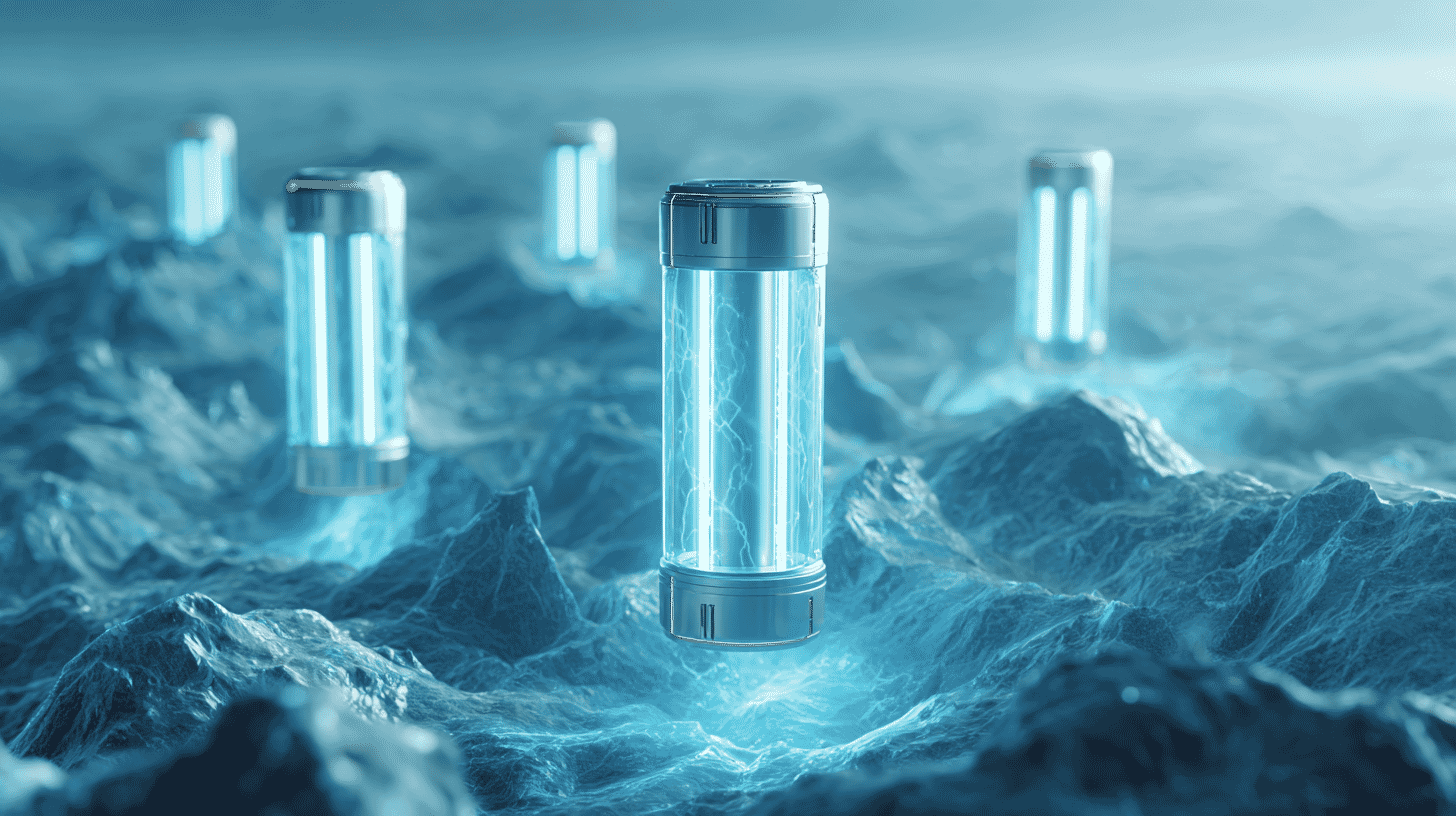
A lithium-ion cell degrades if you drain it completely, so it has to travel with charge still in it, and that is where the fire risk in transit comes from. A sodium-ion cell can go to 0V and come back. Here is what CATL's mass-produced version does well, and the energy density wall it still runs into.
2026: The Year of Mass Adoption
2025 marked a historic turning point for sodium-ion battery technology. CATL, the world's largest battery manufacturer based in China, began mass production of its sodium-ion battery brand "Naxtra" for electric vehicles. In Japan, electronics maker ELECOM launched the world's first sodium-ion mobile power bank, marking rapid progress toward commercialization.
Then in February 2026, CATL and Changan Automobile unveiled the world's first mass-production passenger car running on sodium-ion cells. It reaches the market in mid-2026, and CATL expects its sodium-ion shipments to hit gigawatt-hour scale within the year.
Key Advantages of Sodium-Ion Batteries
Fire Resistance, the Biggest Selling Point
The most significant advantage of sodium-ion batteries is their substantially lower thermal runaway risk compared to lithium-ion batteries. Most notably, they can be stored and transported in a fully discharged state (0V) without degradation.
Lithium-ion batteries deteriorate when completely discharged, requiring constant maintenance of a minimum charge level, a condition that can contribute to fire risk during transport. Sodium-ion batteries, however, remain stable even at 0V, virtually eliminating fire risk during shipping.
In 2025, the United Nations officially established transport regulations for this new technology (UN 3551, UN 3552, UN 3558), simplifying logistics and enhancing safety protocols.
CATL's Naxtra has demonstrated high safety performance in nail penetration tests, drill hole tests, and compression tests from various angles. The company states they have "eliminated the possibility of fire at the material level."
A Lifespan Past 10,000 Cycles
Sodium-ion batteries stand out on cycle life. While typical lithium-ion batteries last 500-2,000 cycles, sodium-ion batteries achieve 5,000+ cycles, with CATL's Naxtra exceeding 10,000 charge-discharge cycles.
This extended lifespan offers significant cost advantages for residential energy storage and industrial applications. Even with higher upfront costs, the total cost of ownership over the battery's lifetime becomes substantially more favorable.
Working at Minus 40 Degrees
Another major strength is performance retention in low-temperature environments. CATL's Naxtra operates across a temperature range of -40°C to +70°C (-40°F to 158°F), maintaining over 90% output even at -40°C.
Lithium-ion batteries suffer from increased internal resistance and dramatically reduced output in cold conditions, explaining why EV range drops significantly in winter. Sodium-ion's cold-weather performance provides a substantial advantage for EVs in cold climates and outdoor energy storage systems.
Sodium Never Runs Out
Sodium comprises approximately 2.3% of Earth's crust (about 23,600 ppm), over 1,000 times more abundant than lithium (about 20 ppm). It's also plentiful in seawater, virtually eliminating resource depletion concerns.
Additionally, sodium-ion batteries can use inexpensive aluminum current collectors for both electrodes, replacing the costly copper required in lithium-ion batteries. Configurations without expensive rare metals like cobalt or nickel are also possible, significantly reducing supply chain risks.
From 30 to 80 Percent in Ten Minutes
Sodium-ion batteries excel in fast-charging performance. CATL's Naxtra achieves a 5C charge rate, enabling SOC (State of Charge) increases from 30% to 80% in just 10 minutes. At room temperature, 80% charge is possible in 15 minutes.
Theoretically, sodium-ion batteries could achieve charging speeds five times faster than lithium-ion, with continued improvements expected.
Reusing Existing Production Lines
Since sodium-ion batteries share similar fundamental structures with lithium-ion batteries, existing manufacturing facilities can potentially be converted with minimal modifications. This represents a major advantage for scaling production while minimizing new capital investment.
Current Challenges
The Energy Density Gap
The primary challenge for sodium-ion batteries is lower energy density compared to lithium-ion technology. Current sodium-ion batteries achieve 100-175 Wh/kg, compared to 200-300 Wh/kg for high-performance lithium-ion batteries, roughly 60-70% of the capacity.
This stems from sodium's atomic mass being approximately three times that of lithium, with about twice the ionic volume. For EV applications, this translates to reduced driving range.
CATL has, however, shown a next-generation cell it says exceeds 200 Wh/kg, with mass production expected no earlier than 2027. The gap should keep narrowing as the technology matures.
Electrode Material Optimization
Graphite, commonly used in lithium-ion battery anodes, is unsuitable for sodium-ion batteries due to the larger sodium ion size. Development and optimization of alternative materials like hard carbon continues.
For cathode materials, various candidates are being researched including layered sodium oxides, polyanionic compounds (particularly NFPP: sodium iron phosphate), and Prussian blue analogues. In the Chinese market during early 2025, polyanionic systems held 60% market share due to their balance of stability and performance.
An Immature Supply Chain
Having only recently entered commercial production, sodium-ion batteries lack the mature supply chain infrastructure of lithium-ion technology. Establishing reliable material supply systems remains a challenge as production scales up.
Global Developments and Industry Activity
China: The Front-Runner
China currently dominates sodium-ion battery development and commercialization.
CATL launched its "Naxtra" brand in April 2025. A 24V start-stop battery for commercial vehicles went into mass production that June, with passenger EV cells following. The company claims 175 Wh/kg energy density, 500 km of range, and more than 10,000 charge cycles. In September 2025, Naxtra became the first sodium-ion battery anywhere to pass China's new national safety standard for EV batteries (GB 38031-2025).
BYD has invested in a 30 GWh sodium-ion battery pilot production line, while HiNa Battery is advancing a 100 MWh-scale energy storage project.
Japan: Differentiation Through Materials Technology
In Japan, Nippon Electric Glass has established a unique position with all-oxide solid-state sodium-ion battery development. Using oxide materials for all components (cathode, anode, and solid electrolyte), they've achieved an exceptional operating temperature range of -40°C to 200°C, targeting extreme environments in space, deep-sea, and medical applications.
ELECOM launched the world's first sodium-ion mobile power bank in March 2025. It works from -35°C to 50°C and lasts about 5,000 charge cycles, roughly ten times a conventional lithium product. In January 2026 it took the top prize at the Nikkei Superior Products and Services Awards for 2025.
Japan's strategy is not to meet China head-on in mass-market cell production. The realistic path runs through key components such as high-performance hard carbon anodes, and through a lead in next-generation technology.
Western Markets
In Europe, Sweden's Altris develops Prussian White-based sodium-ion batteries. Northvolt, which had partnered on this technology, went bankrupt in March 2025, and its assets were acquired by Lyten. In the United States, Natron Energy opened a Michigan assembly plant in 2024 but ceased operations in September 2025 amid funding difficulties.
Future Outlook by Application
Stationary Energy Storage (ESS)
The energy storage sector, where safety, longevity, and cost take priority over energy density, is expected to see the fastest sodium-ion adoption. Applications include residential storage systems, industrial energy storage, and grid-scale renewable energy storage.
Electric Vehicles
Near-term adoption will focus on smaller EVs prioritizing price over range. CATL's Naxtra achieves 500 km range, sufficient for urban commuting. As energy density improves, broader vehicle applications will follow.
Mobile Devices and Small Electronics
Energy density limitations make smartphone and laptop applications challenging currently, but safety-critical applications (emergency equipment, medical devices) show promising demand.
Coexistence, Not Replacement
Sodium-ion batteries are positioned for application-specific coexistence with lithium-ion rather than wholesale replacement. High-performance EVs and mobile devices that need maximum energy density will keep using lithium-ion, while applications that prioritize safety, longevity, and cost, particularly stationary storage and cold climates, will adopt sodium-ion faster.
Their main competitor is lithium iron phosphate (LFP). Sodium-ion is closing in on LFP performance while beating it on cold-weather operation and safety. If lithium prices surge again, sodium-ion's cost advantage grows sharper still.
What next-generation battery technologies are gaining attention in your country? How do you see EVs and energy storage?
References
- https://www.wsew.jp/hub/ja-jp/blog/article_95.html
- https://www.tel.co.jp/museum/magazine/report/202507_02/
- https://xtech.nikkei.com/atcl/nxt/column/18/00001/10559/
- https://response.jp/article/2025/04/25/395004.html
- https://www.neg.co.jp/products/na-ion-secondary-battery/
- https://www.businessinsider.jp/article/2503-elecom-sodium-ion-battery/
- https://electrek.co/2025/12/29/ev-battery-leader-catl-launching-new-cell-technology-2026/






Global Discussion
16 comments