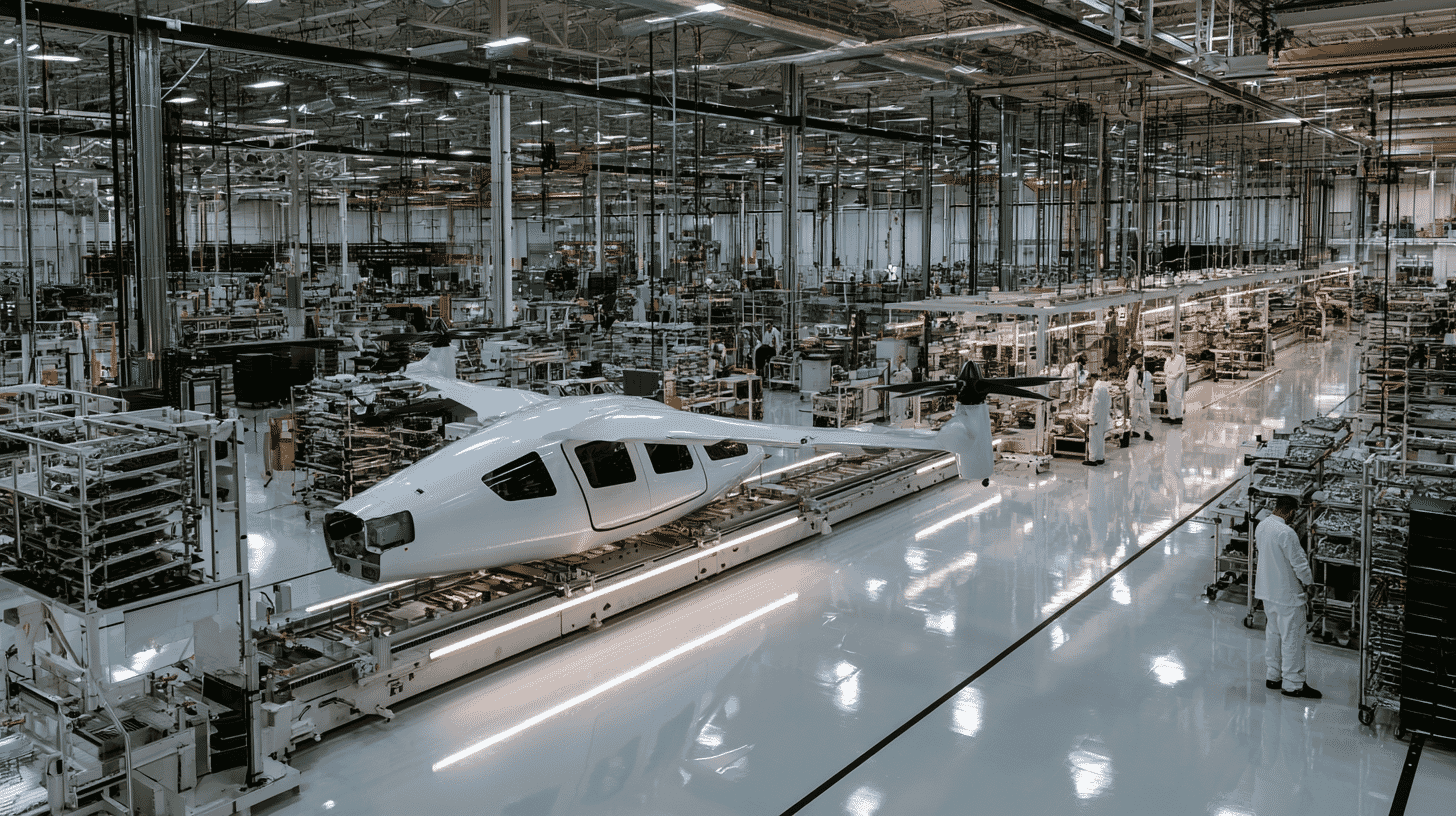
🚁 The flying car has a dirty secret: the hard part isn't the flying anymore. It's building the things at a price anyone can afford. On June 30, Toyota and Joby Aviation answered that problem by moving Toyota out of the investor's seat and onto the factory floor.
The two companies said they will set up a joint venture, incorporated in Delaware and based in California, to manufacture Joby's electric air taxi. The name is a mouthful, Joby Toyota Aero Manufacturing Preparation Company, but the split tells the real story: Toyota holds 51 percent, Joby 49. For the first time in a partnership that goes back nearly a decade, the world's largest automaker isn't just writing checks. It's taking the wheel on production.
From investor to the factory floor
On paper, the new company starts small. Regulatory filings show Toyota putting in $1.02 million of initial cash and Joby $980,000, with Toyota naming three of the five board directors and Joby the other two. But that opening figure is almost beside the point. Toyota's total commitment to Joby, counting what it invested through its venture arm, runs to roughly $894 million, and its 2024 top-up made it Joby's single largest shareholder. The final $250 million tranche is tied to certification and production milestones and to sign-off on the manufacturing supply agreement, and is expected in the last quarter of 2026.
The shift that matters isn't financial. A majority stake in a manufacturing venture puts Toyota on the hook for actually building the aircraft, not just funding the company that does.
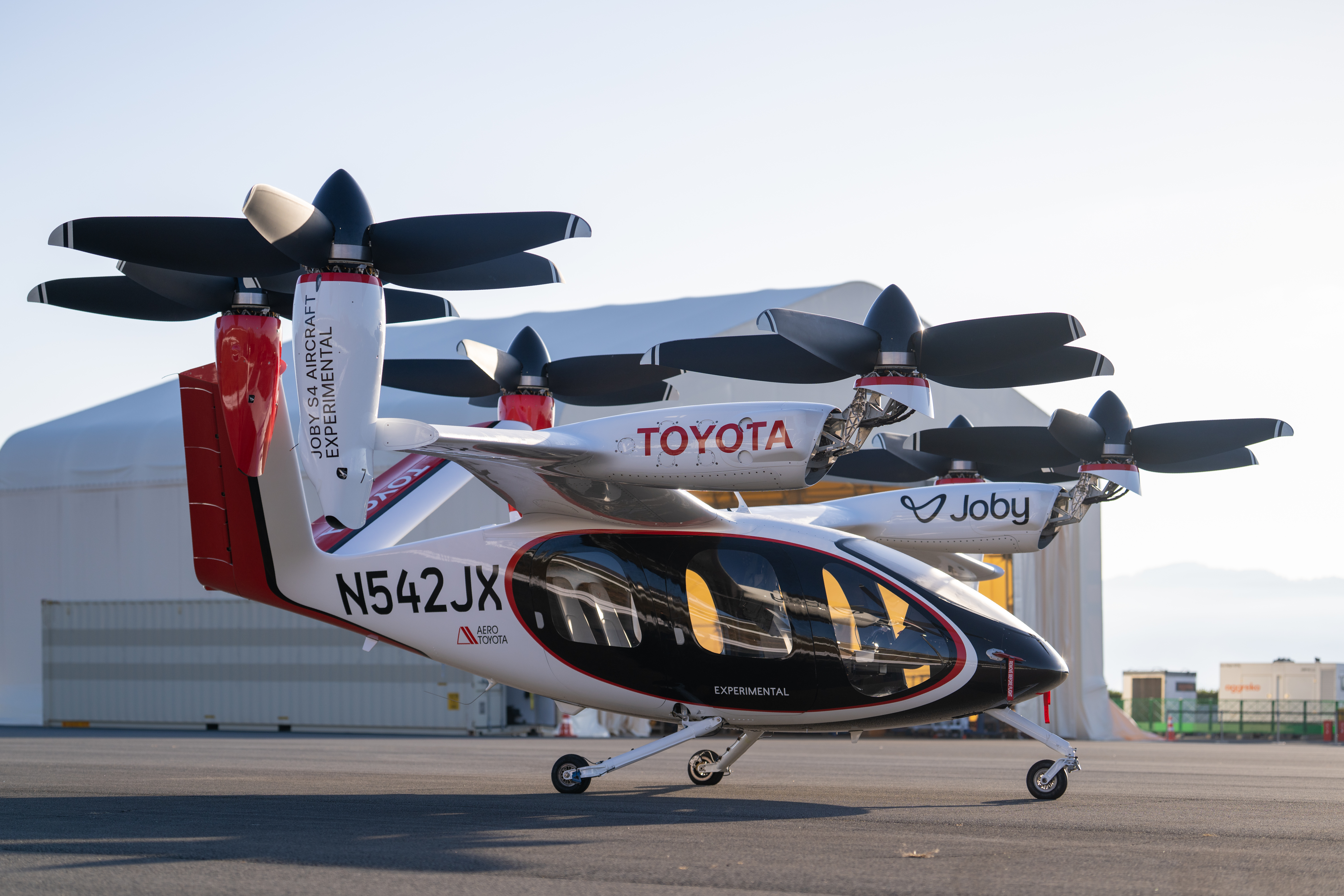
Source: Toyota Motor Corporation
The hard part isn't flying anymore
To understand why this matters, you have to understand where the eVTOL industry actually is. Joby's five-seat S4 has already done the dramatic stuff: one pilot, four passengers, six rotors, a top speed around 200 mph and a range of roughly 100 miles. It has flown point-to-point across New York City, departing JFK and landing at Manhattan heliports. In November 2025 it began power-on testing of its first FAA-conforming aircraft, flew that aircraft for the first time on March 11, 2026, and in late March had the Federal Aviation Administration confirm it had cleared Stage 4 of the agency's five-stage type certification. Only Stage 5, the certificate itself, remains. The flying, in other words, mostly works.
The unsolved problem is the assembly line. Building a handful of hand-crafted prototypes is one thing; turning out hundreds of identical, certified aircraft every year at a cost that lets you charge taxi fares rather than private-jet fares is another entirely. Joby is currently piloting production in Marina, California, and has said it wants to eventually build up to 500 aircraft a year at a plant in Dayton, Ohio. Getting there is exactly the kind of problem Toyota has spent 80 years solving.
That is the whole logic of the deal. Toyota engineers have been embedded with Joby since 2019, sharing the Toyota Production System, the lean, waste-cutting method that reshaped global industry, through process planning and tooling design. In 2023 the two signed a long-term agreement for Toyota to supply key powertrain and actuation parts. The joint venture formalizes all of it. The consensus among industry analysts has hardened around a single point: what now separates these aircraft from a real business is not the engineering of flight but the economics of volume. Almost no company on earth has a deeper record at that than Toyota.
Why so many rivals didn't make it
The timing looks smart against a backdrop of carnage. The eVTOL sector has burned through more than $13 billion in equity since 2019, and passenger revenue in the West remains, for practical purposes, zero. That gap between spending and earning has already killed companies.
Germany's Lilium, once a poster child for European air mobility, filed for insolvency twice and is now being scrapped. Volocopter, another German hopeful, was rescued out of bankruptcy and pivoted to lightweight aircraft. Hyundai-backed Supernal paused its work after its top engineers left. The pattern is hard to miss: pure-play startups without a deep-pocketed industrial parent could not survive the long, expensive gap between certification and a working factory. The survivors almost all have one thing in common: Joby with Toyota, Archer with Stellantis and United Airlines, Beta with GE Aerospace and the Qatar Investment Authority. They found a grown-up with a balance sheet and a manufacturing pedigree.
Joby's closest Western rival, Archer Aviation, is chasing the same finish line with its four-passenger Midnight, has lined up early operations in Abu Dhabi, and recently signed Serbia as a launch partner in Europe. But even the front-runners agree on the diagnosis: whoever can build at scale and at cost wins.
China took a different road
While the West argues about factories, China has already started selling tickets. EHang became the first company anywhere to win a full type certificate for an autonomous, pilotless eVTOL from China's aviation regulator, after logging 40,000 test flights. Its two-seat aircraft now carries paying passengers in Guangzhou and Hefei for around 300 yuan a ride, roughly $40, with no pilot on board. A separate Chinese firm, AutoFlight, has certified a cargo model.
Beijing has turned this into industrial policy. China's "low-altitude economy" is now a designated strategic pillar, and a revised civil aviation law took effect on July 1, 2026, pushing local governments to build the vertiports and rules to match. Chinese regulators chose to certify simpler, autonomous aircraft first, banking years of real operating experience while American and European regulators refined stricter standards for piloted craft. The result is a genuine split screen: China flying paying customers today, while the first U.S. type certification is not expected before late 2026 and could slip into 2027.
That is the context Toyota is buying into. Dubai is next on Joby's map, with commercial service from a dedicated vertiport at the international airport planned this year. But the American home market is a certification cycle away. A factory that can crank out affordable, reliable aircraft the moment approval lands is the difference between catching that wave and watching it pass.
What still has to go right
None of this is a guarantee. Skeptics point out that stamping out cars and building certified aircraft are not the same craft: aviation tolerances, safety cases and supply chains are unforgiving, and Toyota's legendary system has never been proven on a flying vehicle. There's also a harder question lurking under the hype: whether air taxis ever become everyday transport or stay a premium novelty for airport runs in a handful of rich cities. Joby's stock, which jumped on the announcement, is still down around a third for the year, a sign that Wall Street's patience with pre-revenue promises is wearing thin.
But the shape of the bet is now clear. The industry has spent a decade proving these machines can fly. The next decade is about proving someone can build them by the thousand without going broke. Toyota just decided that someone should be Toyota.
In Japan, "flying cars" have long been shorthand for a future that never quite arrives. This time, the future comes with an assembly line and a 51 percent stake. Would you climb into a mass-produced air taxi, and in your city, who do you trust to build it?
References
- https://global.toyota/jp/newsroom/corporate/44563481.html
- https://www.jobyaviation.com/news/joby-aviation-and-toyota-motor-corporation-launch-initial-phase-of-a-strategic-manufacturing-alliance-to-realize-air-mobility-for-all
- https://www.japantimes.co.jp/business/2026/07/01/companies/toyota-joint-venture-joby-aviation/








Global Discussion
0 comments