Zero Escape creator Kotaro Uchikoshi has revealed Crash Keys, a studio founded in March 2025, after a game it spent about a year and a half on was canceled. He is asking for work and investors, as he did in 2014.
Japan counted 6,220 university spinouts in October 2025, more than double the 2,905 five years earlier. A gene-edited sea bream and a pigment-free coating are the way in. Each Japanese listing raises only $28 million.
A paint maker in Imabari spent five years building a bear deterrent launcher called Kintaro. Its president fired it at his own body for a year and a half, and zoos refused to let him test it on a real bear.
Japan has begun selling Telomelysin, a rewired cold virus that multiplies only inside cancer cells and goes into esophageal tumors by endoscope. Three doses list at 9.3 million yen; the trial behind it had 37 patients.
Japan signed a mass-production contract for the Terra B1 interceptor drone on August 25, 2026, three months after opening the tender. Three foreign entries were tested too; only the Japanese aircraft got a contract.
ZEALS opened orders for D1, a 129.3 cm Japanese humanoid, from 5 million yen (about $32,000). Why the company calls it semi-domestic rather than fully Japanese, and why 100 units and 10,000 hours is a modest goal.
AIST and Tokyo startup OptQC have switched on MoQuren, a photonic quantum computer that needs no refrigerator and no vacuum chamber. What it can do now, and how Japan's bet differs from the US and China.
Tier IV, the company behind open-source self-driving stack Autoware, listed in Tokyo on July 22, 2026 and opened 7% below its offer price. How do you monetize software you give away?
LEAF, a deorbit device that drags dead small satellites out of orbit, was finished by space startup cosmobloom and Katsuragawa Seira, a Tokyo screw maker in business since 1938. How a town factory's eye ended up on a film thinner than kitchen wrap.
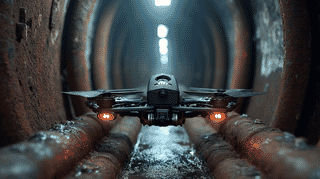
Japan's Rangle Pro hovers hands-free in pipes and sewers where GPS dies. A racing team turned its autonomous-control tech into an inspection drone taking on DJI.
An Osaka University startup, Endoluminal Solutions, has built a 4mm single-use endoscope aimed at replacing barium gastric-cancer screening. A look at the miniaturization behind it and where it fits in an endoscope industry Japan's Olympus dominates.
Toyota and America's Joby Aviation are setting up a California joint venture to mass-produce eVTOL air taxis, with Toyota holding 51% and Joby 49%. Now that the flying is largely solved, the race hinges on whether anyone can build these aircraft cheaply and at scale. Here is why Toyota's production system is the bet, how China pulled ahead, and why Europe's pure-play startups collapsed.
Resonac, BEAM and Nippon LEO signed an MOU to manufacture compound semiconductors in low Earth orbit. Why build chips in microgravity, and how Japan's bet compares to the US and China.
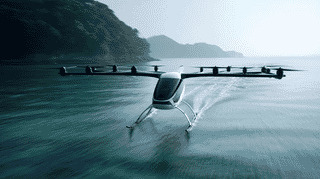
Japan's SKYDRIVE eVTOL flew stably at 100 km/h, a speed that sounds modest but marks a key step toward type certification. We unpack why a compact, wingless multirotor is a deliberate bet, and how Japan stacks up against China's already-flying EHang and US rivals Joby and Archer.
Japan's Koroyawa floor stays hard when you walk and softens only when you fall. Science Tokyo proved it prevents elderly hip fractures using a world-first simulation built from a real patient's CT data.
A Japanese radiative cooling film that stays below air temperature in direct sun, with zero electricity. How SPACECOOL dumps heat into space, its 29% energy cut in Saudi trials, and why passive cooling matters as the planet warms.
Tohoku University spinoff Space Quarters has demonstrated its DAIQ orbital assembly robot system on a ground model, showing three kinds of small robots cooperating to pick, place, and weld building panels into a larger structure. We look at how it compares to NASA's cancelled OSAM-1 and DARPA's NOM4D, and what makes Japan's robotics approach distinct.
A Chiba startup has rebuilt yokan into an energy bar now test-selling in Japan and Australia. Here is why this centuries-old confection is one of the smartest survival foods ever made.
ROHM and Quanmatic put quantum annealing to work on a chip fab's front-end process, lifting output about 3%. Here's why a number that sounds small is actually a big deal on a factory floor.
Katsuhiro Harada launched VS Studio under SNK. Shinji Mikami's Unbound was absorbed by Korea's SHIFT UP. Daisuke Taka burned through his savings to go solo. As Japan's most celebrated game creators strike out on their own, the capital keeping them afloat is overwhelmingly Saudi and Korean. Here's why Japan's own giants can't fund their stars, and why foreign money can.