Sakana AI, the Tokyo-based startup founded by former Google researchers, has raised $135M to reach a record $2.65B valuation — making it Japan's top unicorn. Citibank made its first-ever strategic investment in a Japanese company through this round. With backing from the CIA's venture arm and Google, Sakana is spearheading Japan's push for sovereign AI.
On March 4, 2026, Finland-born food delivery service Wolt ended all operations in Japan after six years. Despite being loved for its god-tier customer support and elegant Nordic design, Wolt couldn't break through the Uber Eats/Demae-can duopoly that controls 90% of the market. We analyze why Wolt lost, what delivery workers face next, and what foreign tech companies need to succeed in Japan.
The Nikkei reported on March 1, 2026 that the BOJ was exploring tokenizing its current account deposits; two days later Governor Ueda confirmed the sandbox at FIN/SUM 2026. Round-the-clock large-value settlement and links to mega-bank stablecoins are on the table. A look at the Fed and ECB comparison and the technical and legal obstacles.
Japan's Finance Minister Katayama announced a dedicated crypto and stablecoin bureau within the FSA at MoneyX 2026. With yen-backed stablecoin JPYC approaching $9 million in cumulative issuance and Japan's three megabanks launching pilot programs, we explore how Japan's regulatory approach compares to the US GENIUS Act and EU's MiCA framework.
Osaka University spinoff Reimei has launched the world's first corporate clinical trial of a corneal epithelial cell sheet made from donor-derived iPS cells, with the first transplant performed on July 9, 2026. How the approach could ease the global corneal donor shortage, what the Lancet-published first-in-human data showed, and where Japan's regenerative medicine regulation stands against the US FDA.
Japan Fintech Week 2026 kicks off in Tokyo. From Japan's first deposit-backed stablecoin to SBI's $65M blockchain bond with XRP rewards, plus crypto regulation reform and digital yen developments. Here's what is reshaping Japan's financial future.
Japan's Ministry of Economy backs MoneyX 2026, a next-gen finance conference focused on stablecoin adoption. With the world's first stablecoin regulatory framework, key players like JPYC, Progmat, and SBI are driving digital currency into real-world use. Includes comparison with the US GENIUS Act and EU's MiCA regulation.
Japan's Ministry of Defense has signed a landmark $1.8 billion contract for a satellite constellation project. A special purpose company "TriSat Constellation," formed by Mitsubishi Electric, SKY Perfect JSAT, and Mitsui, will lead the effort alongside domestic space startups like Synspective and iQPS. A deep dive into Japan's pivotal shift in space defense strategy.
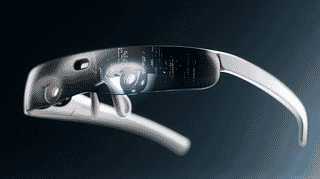
Eyewear that applies voltage to a liquid lens and refocuses automatically for myopia, hyperopia, and presbyopia. A look at where autofocus vision correction stands, centered on HOYA spinoff ViXion's 01S and the ViXion2 released in 2026.
No batteries. Just 280 grams of rubber. A Japanese bone-setter turned entrepreneur created "futto," a walking support device using rubber tubes as artificial muscles. Built with hardware store materials by a three-person family company, it now has peer-reviewed backing, a distribution deal with France Bed, and sales abroad. Here's how this $220 device answers a problem every aging society shares.
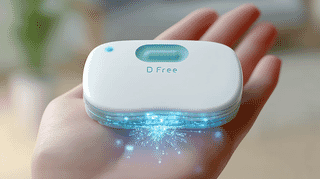
Japan-born IoT wearable "DFree" uses ultrasound to predict urination timing and has won the Grand Prize for Developmental Support Tools at BabyTech Awards 2025-26. How the 20-gram device works, why the judges picked it, how it came to be covered by Japan's long-term care insurance, and what it means for elderly care and children with disabilities.
Japan officially targets fusion power demonstration in the 2030s as part of its national strategy. With a new Cabinet Office task force, 80+ companies in the J-Fusion consortium, and decades of ITER expertise, Japan is accelerating its bid to lead the global fusion race against the US, China, and UK.
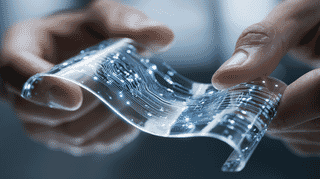
Osaka-based Satosen's liquid metal stretchable circuit board has been officially adopted by ATR-Promotions for biosignal measurement electrodes. With self-healing wiring that withstands over 250,000 stretch cycles, this technology opens doors for wearable devices, flexible displays, and soft robotics.
AVITA, led by world-renowned roboticist Hiroshi Ishiguro, has acquired all shares of android robot developer A-Lab, marking a full-scale entry into Physical AI. With A-Lab's track record including androids for Expo 2025, AVITA aims to evolve from CG avatars to physical robots. As the U.S. and China lead the humanoid market, this move signals Japan's push to reclaim its robotics legacy.
Japanese space startup SpaceOne launched its third KAIROS small rocket on March 5, 2026 after repeated delays, but flight was aborted about 68.8 seconds after liftoff, a third straight failure following Flights 1 and 2. Learn what the company changed, what went wrong this time, and where its "space delivery service" dream stands now.
Japan's cat-driven economy "Nekonomics" has reached approximately $19 billion in 2026, rivaling the Osaka World Expo. Explore the booming cat cafés, cat islands, feline health tech startups, and the unique cultural forces powering Japan's extraordinary cat business ecosystem.
Japan's Space Data Inc. and CYPHIC, the country's only electronic warfare startup, have launched a strategic partnership combining digital twin technology with anti-GPS spoofing capabilities. A deep look at how Japanese defense tech startups are tackling modern electronic warfare threats.
Japan's Sumitomo Corporation is pioneering a unique approach to nuclear fusion by partnering with three startups using different technologies—TAE Technologies, Tokamak Energy, and SHINE Technologies. Rather than waiting for fusion power plants, the trading giant is already monetizing derivative technologies in cancer treatment, battery storage, and industrial inspection, creating a new business model for the $23 billion fusion industry.
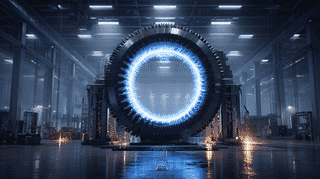
Japanese fusion startup Helical Fusion and veteran manufacturer Sugino Machine have jointly developed the world's only dedicated machine for producing high-temperature superconducting coils. Standing 6 meters tall and weighing 12 tons, this device is essential for building the "Helix HARUKA" demonstration reactor, bringing Japan closer to achieving the world's first commercial fusion power in the 2030s.
Japanese startup Milk. is developing technology that combines satellite-derived hyperspectral cameras with color AI to identify cancer cells. Pathology studies have reported 98% accuracy for pancreatic cancer, and the approach may one day detect cancer, and even the organ involved, from a urine sample.