Bio-venture Spiber's financial crisis delivers a fatal blow to Japan's Cool Japan Fund, pushing cumulative losses beyond $2.5 billion. With its third missed target triggering dissolution discussions, we analyze Japan's structural challenges in government-backed startup investment compared to Singapore's Temasek and other sovereign wealth funds.
Tokyo conducted Japan's first operational-scenario flight test of the domestic eVTOL 'SKYDRIVE' at Tokyo Big Sight, featuring facial recognition boarding and a mobile vertiport terminal. With Tokyo targeting commercial urban flights by 2030, we compare Japan's progress with US rivals Joby and Archer in the global air taxi race.
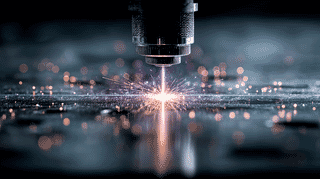
Tohoku University spinoff Space Quarters has successfully demonstrated electron beam welding in simulated zero-gravity and lunar gravity environments aboard an aircraft. The company achieved a world-first by welding sintered lunar regolith — the sandy material covering the Moon's surface. With its ultra-compact 7 kg welding system and JAXA partnership, this breakthrough brings humanity one step closer to building infrastructure in space.
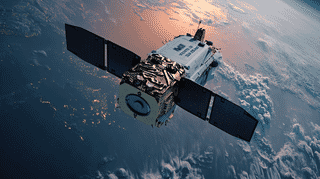
Japanese space laser startup Orbital Lasers has closed a $20 million Series A round backed by nine investors including Keio Innovation Initiative and JIC Venture Growth. Spun out from satellite operator SKY Perfect JSAT in 2024, the company develops compact, high-efficiency space lasers for debris removal via laser ablation and high-precision 3D terrain mapping via satellite LiDAR. We explore how it compares to Astroscale and SpaceX, and what it means for Japan's booming space startup ecosystem.
Rapidus's AI design agent 'Raads' is already in use by 3 companies — 2 domestic, 1 overseas. This LLM-based EDA suite enables natural language chip design, cutting design time by 50% and costs by 30%. We compare it with TSMC and Intel's AI tools and examine Rapidus's path to 2nm mass production.
Power Diamond Systems demonstrated the world's first actual power conversion using a diamond MOSFET in a DC-DC converter circuit. Following their recent 200V/1A switching milestone, this breakthrough advances diamond semiconductors from device-level testing to real circuit operation.
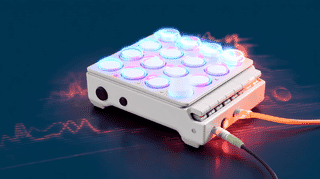
Japanese startup DOT P unveiled PONKEY, a solenoid-powered instrument robot, at SXSW 2026 in Austin, Texas. Featuring 16 custom-designed keys that light up, produce sound, and physically pop out, PONKEY functions as a drum machine, digital synthesizer, and AI communication device. Backed by Tokyo's TOKYO SUTEAM program, it's set for public release in 2027.
Japan's Power Diamond Systems, a Waseda University spinoff, achieved the world's first 200V/1A switching operation with a diamond MOSFET. With 550V breakdown voltage and 0.8A drain current in a single device, diamond semiconductors could surpass SiC and GaN as the ultimate power semiconductor for EVs and renewable energy.
Japanese fusion startup Helical Fusion has announced that Phase 1 of its final demonstration device Helix HARUKA will be built at the National Institute for Fusion Science (NIFS). With energization tests planned for 2027, the company is betting on Japan's unique helical approach to beat global rivals including Commonwealth Fusion Systems and TAE Technologies in the race to commercial fusion power.
Quemix CEO Yuichiro Matsushita achieved a world-first in quantum chemistry simulation on Japan's Fugaku supercomputer. This report explores how researcher autonomy drove the breakthrough, Quemix's partnerships with Honda and Asahi Kasei, and Japan's growing quantum startup ecosystem including QunaSys and Fixstars Amplify.
Spider silk — five times stronger than steel by weight — is finally becoming a mass-produced reality. U.S.-based Kraig Biocraft targets 10 tons per month while Japan's Spiber partners with 45+ brands. Explore Super Silk's potential in fashion, medicine, and defense, and how this bio-revolution is unfolding.
Japanese startup Orizuru Therapeutics has begun clinical trials transplanting iPS cell-derived islet cells into diabetes patients. The first-ever transplant surgery succeeded in February 2025, with company-sponsored trials planned in Japan and the US. Over a decade after Professor Yamanaka's Nobel Prize, Japan's regenerative medicine enters the practical stage.
Japanese space startup Astroscale has announced its ISSA-J1 mission to realize a 'space safety patrol' service in orbit. As the space debris crisis intensifies with over 130 million pieces of junk circling Earth, this article explores how Astroscale's first-mover advantage in on-orbit servicing compares to rivals like ClearSpace and SpaceX, and what it means for Japan's growing space industry.
Oxide Corporation, an optical crystal maker in Hokuto, Yamanashi, began selling Frequad-K, a 302nm UV laser source for quantum computers, on March 9, 2026. The wavelength is what excites ytterbium atoms into the Rydberg states neutral-atom machines need, and the first unit went to a domestic customer. We look at why 95% world share in semiconductor wafer inspection crystals transfers to quantum, and at the 436nm quantum communications laser Oxide shipped to LQUOM in July.
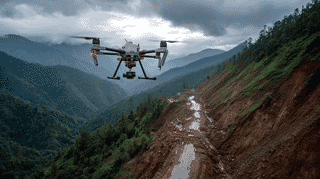
Aizawa Concrete's F3DP is a gasoline-powered drone with a robotic arm and nozzle that extrudes concrete in flight. It is aimed at printing formwork for floating offshore wind platforms by the end of 2028. A machine born from Japan's construction math: 4.77 million workers, 36.6% of them over 55.
Agro Ludens started mass-producing CoMeat, a rice-derived mycoprotein made with koji fermentation, at its Nasu plant in Tochigi in April 2026. It uses processing-grade rice, not table rice, and Japan's agriculture ministry approved mycoprotein as a new-market rice use in March. Plus: Japan's swing from rice shortage to rice glut, Beyond Meat down 99%, and why JR East is now farming.
On March 9, 2026, Ethereum Japan launched the Digital Assets Working Group to define practical standards for corporate RWA and stablecoin use: access control, accounting, KYC/AML, audit readiness. Six firms joined, with Allied Architects as secretariat. Plus where the $33.5 billion RWA market actually stands, and Japan's crypto bill clearing its Upper House committee on July 14.
Yaskawa's June 2026 plan puts 120 billion yen into Physical AI. FANUC published a ROS 2 driver on GitHub and partnered with both NVIDIA and Google. Mujin raised 36.4 billion. Japan still owns 35% of an industrial robot's cost through precision reducers, but the killer app hasn't shown up.
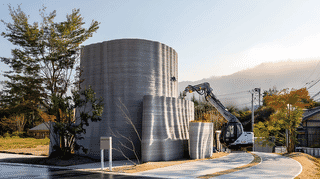
Japan's first two-story 3D-printed house "Stealth House" has been completed in Miyagi Prefecture, built by startups KIZUKI and ONOCOM with 20+ collaborating companies. As Japan's construction industry faces a severe labor shortage with 200,000+ fewer workers since 1997, multiple firms including Serendix and Lib Work are accelerating 3D concrete printing technology. We compare with U.S. giant ICON, explore Japan's strict building code compliance, and examine cost advantages.
Chiba Institute of Technology has achieved the world's first ground combustion test of thrust vector control (TVC) using a gas hybrid rocket. Part of the Hestia Project, which aims to launch small satellites via balloon-based "Rockoon" method, this breakthrough demonstrated successful thrust vectoring at 2.0 kN over 8 seconds — opening a new path for affordable space access.