
Assembling structures in space requires welding, and welding in vacuum and near-zero gravity has never been established at a practical level. A Japanese startup called Space Quarters has now demonstrated it in both microgravity and simulated lunar gravity, and achieved a world first by welding building material made from lunar regolith, the sandy substance that blankets the Moon's surface. It also shrank the welding equipment from over 220 lbs (100 kg) to 15 lbs (7 kg).
What Is Space Quarters?
Space Quarters is a startup founded in 2022 that spun out of Tohoku University. Based in Shibuya, Tokyo, it is led by CEO Shogo Onishi, an engineer-turned-entrepreneur.
Onishi worked on rockets at Tohoku University, then developed gas turbines at IHI and personal mobility devices at WHILL, before landing on a gap: humanity has no established method for constructing large structures in space.
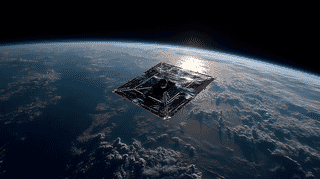
The company's core idea is simple. Instead of launching fully assembled structures into orbit, where the rocket fairing sets the ceiling on size, Space Quarters proposes sending flat panels up and welding them together on site with robotic systems. Ship the lumber, not the house.
In October 2025, Space Quarters raised 750 million yen (approximately $5 million) in seed funding from investors including Frontier Innovations, Keio Innovation Initiative, Tokyu Construction, Mitsubishi UFJ Capital, and SMBC Venture Capital.
The Breakthrough: Welding in Simulated Space
The experiment used a parabolic flight aircraft operated by Diamond Air Service to create brief windows of microgravity (near-weightlessness) and 1/6 G (the gravity you'd experience standing on the Moon). Inside the aircraft, Space Quarters installed a high-vacuum chamber housing their custom-built compact electron beam welding machine.
The results: over 20 successful welding tests across multiple materials and conditions in both microgravity and lunar gravity, stable joints with sufficient structural strength, and the world's first successful welding of sintered lunar regolith building material under simulated lunar gravity.
The regolith material was provided by Obayashi Corporation, one of Japan's largest construction firms, as part of a joint research project. This represents a critical milestone because it demonstrates that materials sourced directly from the Moon's surface could potentially be used as construction material, welded together to form buildings, shelters, and other infrastructure.
Why Electron Beam Welding?
Among the approaches being explored for space construction, including 3D printing, bolt assembly, and adhesive bonding, Space Quarters chose electron beam welding for one reason above others: space is already a vacuum.
On Earth, electron beam welding requires creating an artificial vacuum, which is expensive and complex. In space, however, the vacuum environment comes free. Electron beams are also highly energy-efficient, which is crucial in space where power generation and heat dissipation are major constraints.
The real engineering achievement lies in miniaturization. Standard electron beam welding equipment typically weighs over 220 lbs (100 kg). Space Quarters' system, high-voltage power supply and electron beam gun together, weighs less than 15 lbs (7 kg). That's light enough to be mounted on a robotic arm or carried by a small autonomous robot, making mobile welding operations in space feasible. This technology was developed through a joint research program with JAXA's Space Exploration Innovation Hub.
Why Regolith Welding Is a Game-Changer
The biggest obstacle to building anything on the Moon is transportation cost. Delivering material from Earth to the lunar surface runs to hundreds of thousands of dollars per kilogram by most estimates. At those prices, shipping conventional building materials for large-scale construction isn't feasible.
This is where ISRU, In-Situ Resource Utilization, comes in. The idea is to use resources already available at the destination rather than hauling everything from Earth. The Moon's surface is covered in regolith, a layer of fine, glass-like dust created by billions of years of meteorite impacts. If this material can be processed into building blocks and then assembled into structures, the cost equation changes dramatically.
Space Quarters' successful welding of sintered regolith under lunar gravity conditions is a proof of concept for exactly this approach. If blocks made from lunar soil can be reliably welded together, it opens the door to constructing habitats, landing pads, and other infrastructure using almost entirely local materials.
How Does This Compare to Global Efforts?
Space construction technology is a hot field worldwide, with multiple approaches being pursued simultaneously.
NASA has partnered with ICON, a Texas-based construction technology company, awarding them a $57.2 million contract in 2022 to develop the "Olympus" system, a large-scale 3D printer that uses lasers to melt regolith into ceramic-like structures. In February 2025, ICON flew an experiment called "Duneflow" on a Blue Origin rocket to study how lunar dust simulant behaves in low gravity. NASA's Langley Research Center is also developing Electron Beam Freeform Fabrication (EBF3), which uses electron beams for welding, 3D printing, and cutting.
ESA (the European Space Agency) has been investigating regolith-based 3D printing for years, collaborating with Foster + Partners architects and even producing test bricks from meteorite dust shaped like LEGO blocks to demonstrate the concept.
China's International Lunar Research Station (ILRS) program, partnered with Russia and other nations, also includes plans for using lunar resources in construction, though details remain limited.
Where Space Quarters differentiates itself is its narrow focus on welding as a joining technology, and the miniaturization. 3D printing systems tend to be large and heavy, requiring significant infrastructure just to deploy; a 15 lb welding tool on a robotic arm moves. The two approaches aren't necessarily competitors, and could prove complementary, with 3D printing making the panels and welding joining them.
Japan's Growing Space Startup Ecosystem
Space Quarters' achievement is part of a broader wave of Japanese space startups that are carving out specialized niches in the global space industry.
ispace is pursuing commercial lunar transportation and exploration through its HAKUTO-R program. Interstellar Technologies, based in Hokkaido, has been launching its MOMO sounding rocket and is developing the orbital-class ZERO rocket. AstroX is pioneering a balloon-launched rocket (Rockoon) system for ultra-low-cost satellite launches. Pale Blue is developing water-based propulsion systems for small satellites.
Japan's space sector was traditionally dominated by JAXA and major industrial players like Mitsubishi Heavy Industries. These startups signal a diversification, with companies targeting everything from launch services to in-orbit manufacturing to, in Space Quarters' case, space construction.
What Comes Next
Space Quarters plans to commercialize its technology in phases. The near-term goal is manufacturing large communication antennas in geostationary orbit, where a single satellite with a massive antenna could potentially replace thousands of smaller satellites needed for global communications coverage. The longer-term vision includes constructing habitable structures for orbital stations and lunar bases.
The lunar clock has moved since. NASA flew Artemis II, a crewed flight around the Moon, in April 2026, but in February 2026 it restructured the program: Artemis III is now a low Earth orbit demonstration of docking with the commercial landers rather than a landing. The first crewed lunar landing since Apollo 17 has shifted to Artemis IV, targeted for no earlier than 2028, with permanent base construction beyond that. Which means the need for proven space construction technology, welding included, arrives later than once planned, but arrives.
Building in space is no longer science fiction. A small startup from Japan is laying the technical groundwork one weld at a time.
What's the conversation about space construction like in your country?
References
- https://prtimes.jp/main/html/rd/p/000000018.000115275.html
- https://space-quarters.com/
- https://startup.tohoku.ac.jp/achievement/space-quarters/
- https://www.nasa.gov/technology/manufacturing-materials-3-d-printing/nasa-looks-to-advance-3d-printing-construction-systems-for-the-moon-and-mars/
- https://www.nasa.gov/news-release/nasa-adds-mission-to-artemis-lunar-program-updates-architecture/








Global Discussion
15 comments