A University of Tokyo-led team finds Ryugu's sodium in clay and about 90% of its chlorine in serpentine, implying water a hundred times less salty than the sea. A Kyoto-led team had read a brine.
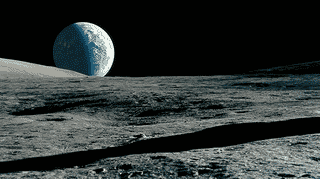
A Moon clock gains about 56 microseconds a day on Earth clocks, about 17 km of navigation error per day if uncorrected. The CGPM's lunar time draft seeks one reference scale and never mentions optical clocks.
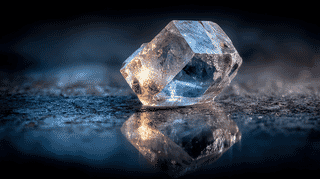
An Osaka-led Japan-US team tells left- and right-handed amino acids apart one molecule at a time. Soai's Nobel shows a tilt can grow from chance, and asteroids Ryugu and Bennu show none, so detectors must read both.
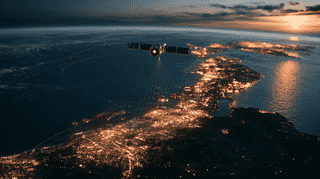
NEC plans several hundred laser-linked satellites, the Yomiuri reports. Japan's Kirari made a two-way laser link in 2005, but Starlink now has about 11,100. Why Japan still wants its own.
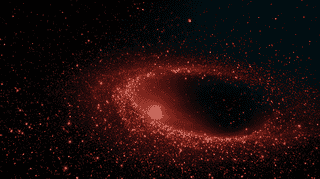
An international team used NAOJ's ATERUI III to show how a newborn black hole could look like one of Webb's little red dots. NAOJ's Japanese release says 'closing in'; its English one says 'explained.'
A Hokkaido University-led study says rough terrain hides Mercury's own tectonic wrinkles, and that past estimates missed up to 30 percent of the contraction. BepiColombo arrives to test it on November 21.
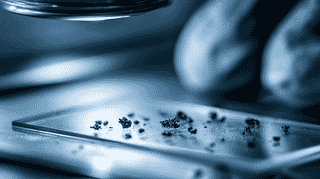
A Japanese team found ammonium, nitriles and sodium nitrate clustered around the salt veins in Hayabusa2's Ryugu grains, which reframes the 75-fold gap between Bennu's water-extractable ammonia and Ryugu's.
JAXA has set MMX for launch at 4:41:03 a.m. on October 20, 2026. The probe lands on Phobos, collects at least 10 grams and returns in fiscal 2031, chasing a first from the Martian system.
Cold sleep was a movie prop. Then ESA calculated that a hibernating crew would cut a Mars spacecraft's mass by a third, and a Japanese lab found the brain switch. With humans, it is still a matter of hours.
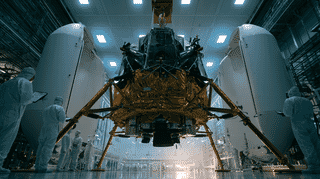
ispace and Mitsubishi Heavy will launch the ULTRA lunar lander on an H3 rocket in 2028, with no rideshare. Of the 18.7 billion yen Mission 3 expects to bring in, 12 billion is a government subsidy.
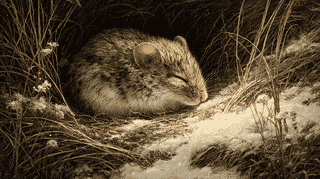
Mice spent two days in artificial hibernation and lost more than half the synapses in the hippocampus, yet still knew where the food was. What survived was not the big connections but the tightly clustered ones.
A lump of iron from a Toyama riverbed turned out to be a meteorite. Enomoto Takeaki had five swords forged from it in 1898, and the same rock later served as a reference for researchers analysing Tutankhamun's dagger.
Japan's H3 Rocket No. 9 put the Michibiki No. 7 satellite into orbit on August 11, 2026, the first operational payload since the No. 8 failure. The seven-satellite goal now waits on fiscal 2031.
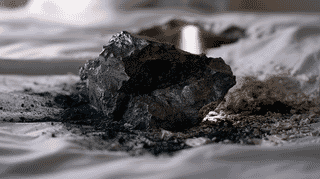
A rock punched through a New Jersey ceiling on July 16, 2024. The homeowner sealed the pieces in jars within minutes, letting a team with the Institute of Science Tokyo and JAMSTEC read traces of ancient asteroid brine.
Japanese researchers held 1.58 tesla inside a 20 mm model in a 7 km/s hypersonic flow, about 2.1 times what a comparable neodymium magnet gives. Heat flux itself, though, was not among the measurements.
NAOJ puts NINJA on the Subaru Telescope this summer, a spectrograph that grabs 0.85 to 2.5 micrometers in one exposure. Why Japan bet on follow-up, not discovery.
LEAF, a deorbit device that drags dead small satellites out of orbit, was finished by space startup cosmobloom and Katsuragawa Seira, a Tokyo screw maker in business since 1938. How a town factory's eye ended up on a film thinner than kitchen wrap.
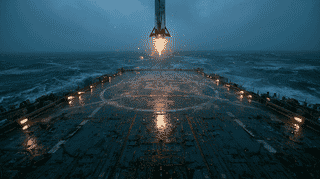
NYK Line, Japan's largest shipping company, is working with Mitsubishi Heavy Industries to catch reusable rocket boosters on a ship at sea. The idea began in an in-house training program, became the first shipping-company project selected for JAXA's Space Strategy Fund, and now faces a question NYK's own engineers raise: will anyone launch often enough to make it pay?
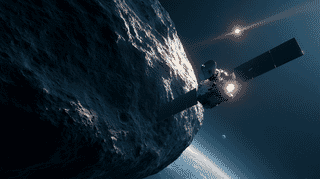
On July 5, Hayabusa2 passed 800 meters from asteroid Torifune at 5 km/s, its first major win since 2020. A look at why Japan keeps flying a retired probe, the road to 1998 KY26, and how it compares to NASA's OSIRIS-APEX.
Resonac, BEAM and Nippon LEO signed an MOU to manufacture compound semiconductors in low Earth orbit. Why build chips in microgravity, and how Japan's bet compares to the US and China.