🚀 Japan plans to launch an entire H3 rocket carrying exactly one thing: a lunar lander. No rideshare satellites, no spare capacity sold off. For a program that has spent years learning to pack more into every flight, that is an expensive way to use a rocket.
A whole rocket for a single passenger
On July 29, 2026, the Tokyo space company ispace and Mitsubishi Heavy Industries signed a launch services contract. Mitsubishi will fly ispace's new lander, ULTRA, on an H3 rocket sometime in 2028. It will be ispace's third attempt at a lunar landing, and the first time the company has ridden a Japanese rocket.
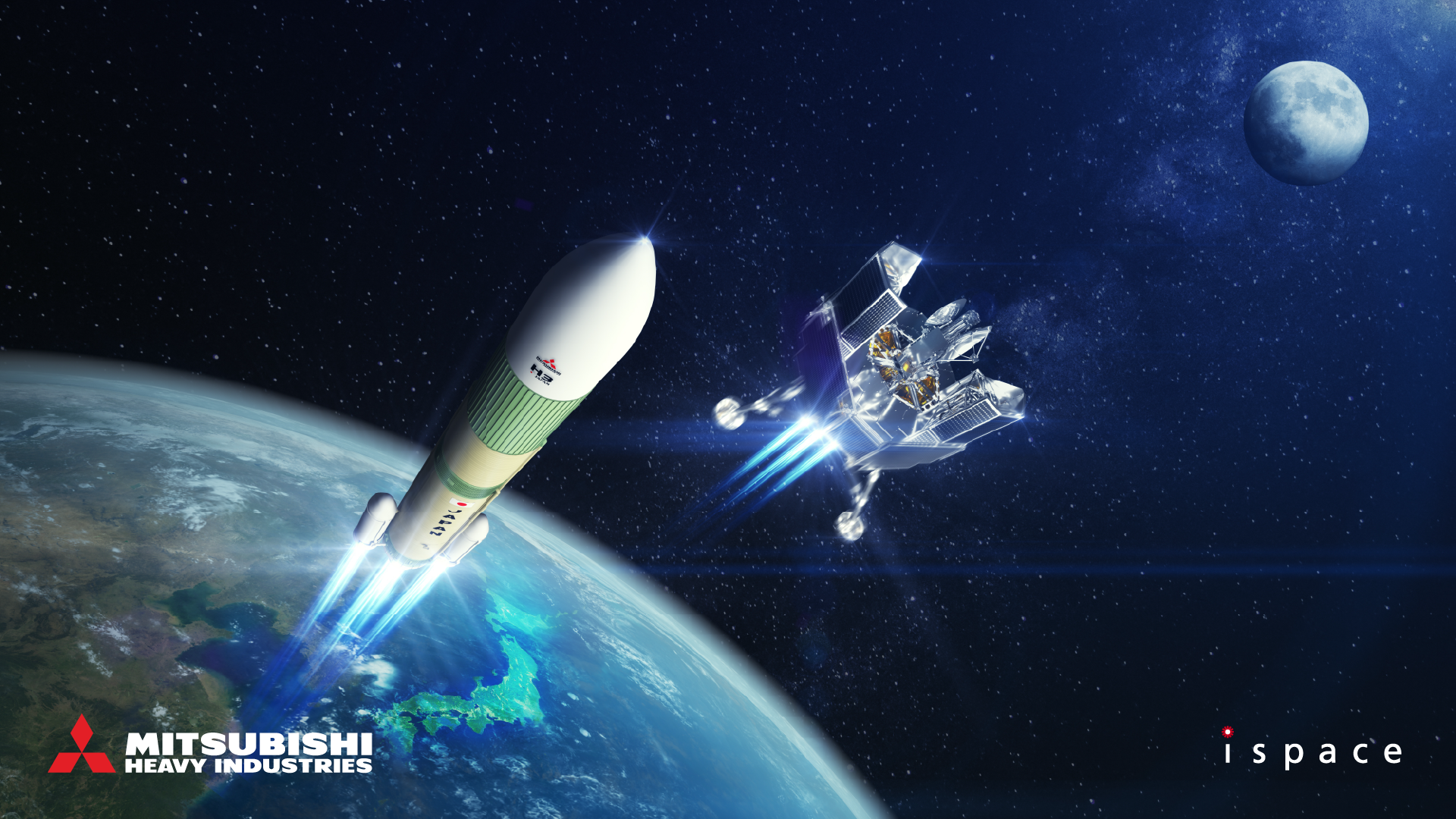
Source: ispace
The vehicle will fly in the H3-22S configuration: two main engines, two solid boosters, and the shorter of the two available fairings. Iwao Igarashi, who heads the space business unit in Mitsubishi's defense and space segment, told Nikkan Kogyo Shimbun that the rocket is being used exclusively for ULTRA, and that the two companies traded design notes so the lander would sit comfortably inside it. Landers are awkward cargo. They have legs.
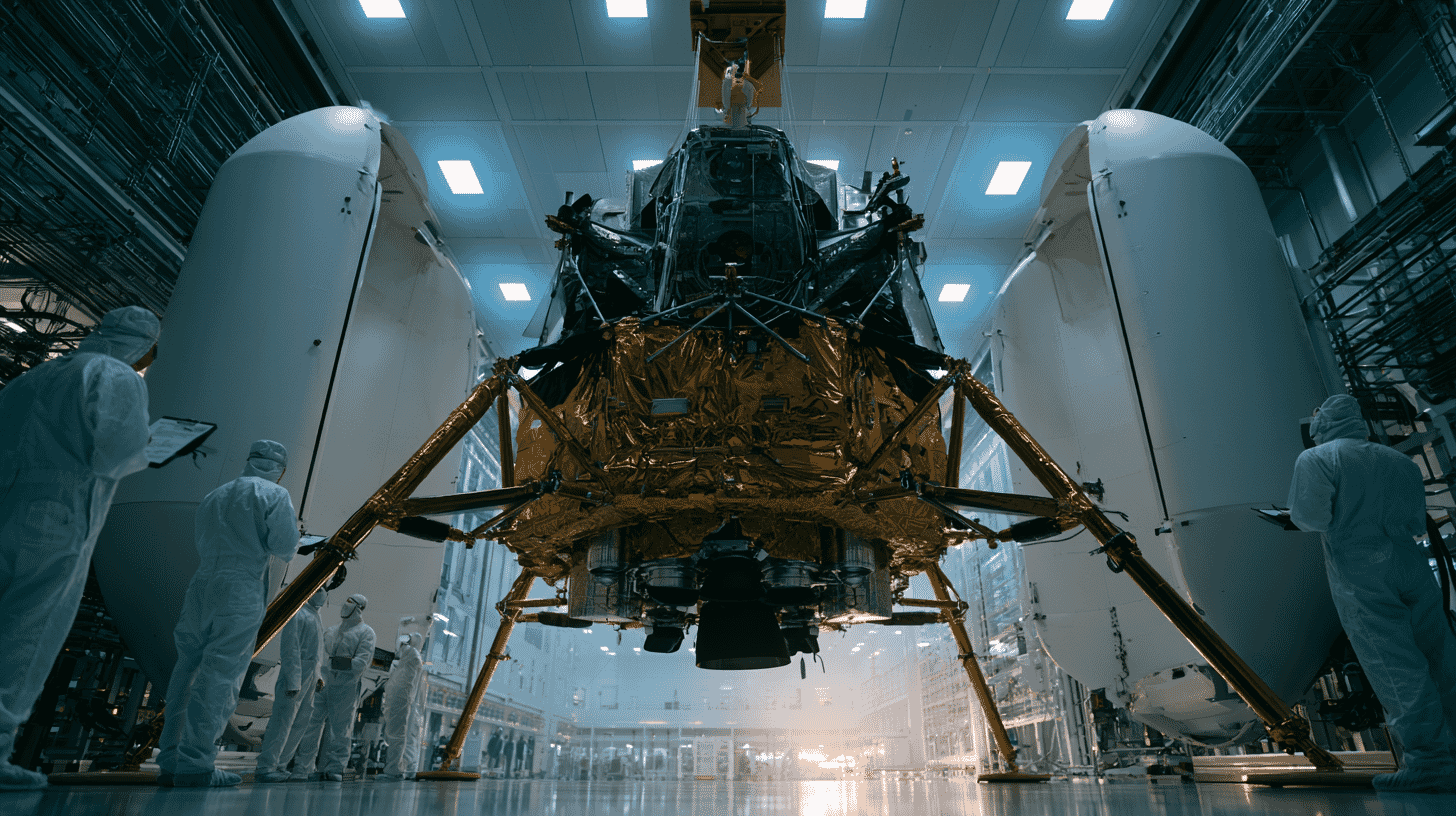
ULTRA is a bigger machine than either of its predecessors. It stands about 3.6 metres tall and 3.3 metres across, weighs roughly 4.0 tonnes fuelled and 1.0 tonne dry, and can carry up to 200 kg of customer payload. RESILIENCE, the lander that failed in June 2025, topped out at 30 kg. Vibration and acoustic testing on the structural model is finished, and ispace says flight model manufacturing starts this winter after two more design reviews.
The ground stations matter as much as the rocket
ispace's first two landers went up on SpaceX Falcon 9 rockets. Both reached lunar orbit. Neither landed. Switching to H3 does not obviously make the landing part easier, and neither company has disclosed what the contract is worth.
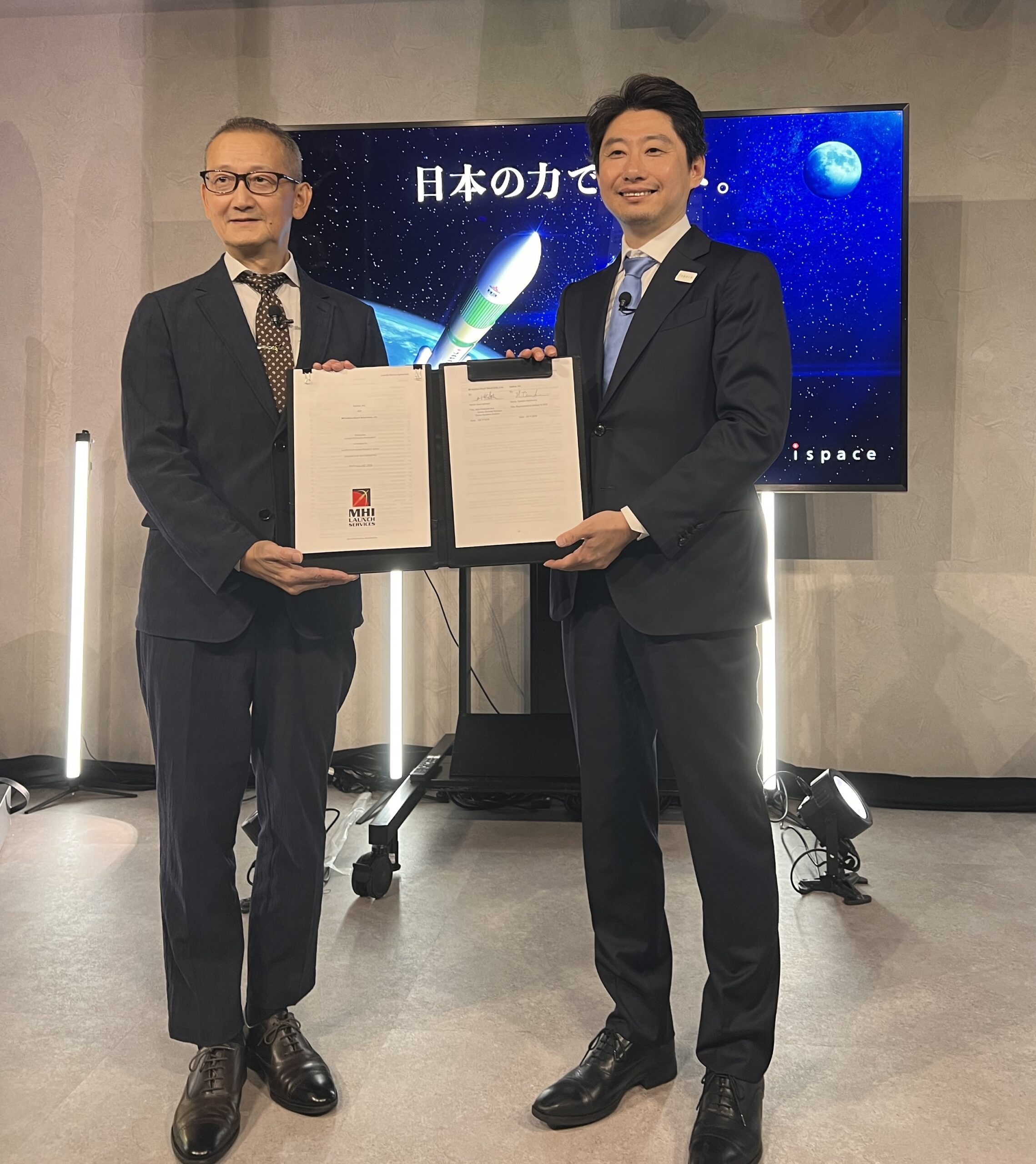
Source: ispace
Part of the reason for picking H3 anyway is positioning. ispace founder and CEO Takeshi Hakamada has argued that as lunar infrastructure gets built out, the Moon becomes a place that matters for national security, and that Japan needs a transport system of its own. Part of it is timing. Launch operations for H3 are being handed from JAXA to Mitsubishi in stages, following the pattern set by H-IIA, which moved across from its thirteenth flight in 2007 and went on to a 98 percent success rate. By 2028, a Japanese company will plausibly be selling the ride as well as building the rocket.
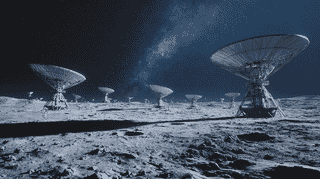
The less visible piece sits on the ground. In July 2026 ispace signed a memorandum with Sky Perfect JSAT covering JSAT Space Line, a commercial tracking service built on antennas in Hokkaido, Ibaraki and Okinawa plus overseas partner sites. The two want to establish communications between ULTRA and those stations during Mission 3, and to test whether the network can back up the European Space Agency's ESOC ground stations, adding redundancy on links such as the X-band downlink.
So "all-domestic" comes with an asterisk. ispace still leans on European antennas and foreign partners. What is genuinely new is having a Japanese commercial option at every layer: the lander, the rocket, and the dishes that talk to both.
What changed after two crashes
The two failures were different problems producing the same symptom.
In April 2023, Mission 1's lander misjudged its own altitude, hovered around five kilometres above the surface believing it had arrived, exhausted its propellant and fell.
Mission 2 got closer. On June 6, 2025, RESILIENCE descended from lunar orbit, oriented itself almost vertically, then went silent. ispace's analysis of the flight data concluded that a hardware fault in the laser range finder, the instrument that measures distance to the surface, delayed usable readings until far too late in the descent. The lander could not shed enough speed and hit hard. Software, propulsion and power were explicitly ruled out.
ispace handed the post-mortem to an outside task force rather than keeping it in house. Chief technology officer Ryo Ujiie has said the company is now developing with advice from JAXA, drawing on what the agency learned from SLIM, the small lander that made Japan's first successful lunar touchdown in January 2024 and did it with pinpoint accuracy.
In America, NASA buys the ride. In Japan, the state funds the vehicle.
NASA's Commercial Lunar Payload Services program works by placing orders. Firefly Aerospace received $93.3 million to carry ten NASA payloads on Blue Ghost Mission 1. The CLPS 1.0 framework carries a combined ceiling of $2.6 billion running through November 2028, and NASA's Ignition announcement on March 24, 2026 set a target of up to thirty robotic landings starting in 2027, with a successor vehicle, CLPS 2.0, aimed at a $6 billion cap across a ten-year ordering period. NASA is a customer. Companies compete for the work.
The results are mixed. Intuitive Machines' Nova-C reached the surface in February 2024 but tipped over. Firefly's Blue Ghost landed upright in March 2025, the first commercial lander to touch down without falling over.
China occupies the other end. Chang'e 7, a roughly 8,200 kg stack of orbiter, lander, rover and a hopping probe built to leap into permanently shadowed craters, was rolled vertically out to its launch area at Wenchang on August 19, 2026, atop a Long March 5. It carries 21 science payloads, six of them from international partners. The agency has not named a launch date. Chang'e 8, due around 2028 or 2029, will test manufacturing with lunar soil, and it too is open to foreign hardware: 200 kg was set aside and ten projects were selected in April 2025. Those slots are allocated through an announcement of opportunity. There is no ride to buy.
Japan sits between the two and resembles neither. Most of the money reaching ispace arrives as development subsidy rather than payment for delivery: the SBIR program run by Japan's Ministry of Economy, Trade and Industry for Mission 3, JAXA's Space Strategy Fund for Mission 4. That lowers the company's capital risk substantially. It also means the government is funding a capability rather than buying a result, which changes who carries the schedule risk and who gets to define success.
Does the delivery business actually add up?
Not yet, and ispace's own disclosures show why.
The total revenue Mission 3 is expected to bring in stands at 18.7 billion yen, about $118 million, as of the company's August 7, 2026 briefing. Up to 12 billion yen of that, roughly $75 million, is the ministry subsidy. Another 4.7 billion yen, about $30 million, comes from Institute of Science Tokyo, whose lunar orbiting satellite is itself funded through a JAXA-backed university program. The genuinely external customers, Taiwan's TASA, South Korea's Unmanned Exploration Laboratory, the JAL group and Control Data Systems, come to 1.9 billion yen combined, about $12 million.
The quarterly picture is starker. For the three months to June 2026, ispace booked revenue of 168 million yen, roughly $1.1 million, down 85.5 percent year on year, against an operating loss of about 6.4 billion yen, roughly $40 million. Full-year guidance is an operating loss of 17.7 billion yen, around $111 million. Cash on hand at the end of June was 25.7 billion yen, about $162 million.
There is a longer runway behind those figures. Contracts already secured across missions total roughly 54.6 billion yen, near $343 million, with another 100 billion yen or so, about $629 million, sitting in memoranda that carry no legal force. Mission 4 in 2029 is budgeted at 32.6 billion yen on its own, about $205 million.
The calendar keeps moving, though. The SBIR program originally had Mission 3 flying in 2027; as of July 2026 ispace expects 2028, a change that still needs formal ministry approval. In lunar delivery, the schedule is effectively the product, and this one has slipped before.
JAL and its trading arm JALUX are gathering regional specialities and company products from around Japan into a cargo box called Möbius Ark, to be set down on the surface and left for whoever opens it next. A national time capsule, riding to the Moon on a rocket that, as of 2026, JAXA still operates.
In Japan, opinion tends to split between people who see a domestic transport system finally taking shape and people who note that two crashes have not slowed the flow of public money.
What would the argument sound like where you live? If a company in your country had failed twice at something this hard, would the government still be writing the cheques?
References
- https://newswitch.jp/p/50018
- https://www.ispace-inc.com/2026/07/29/ispace-and-mitsubishi-heavy-industries-agree-to-launch-mission-3-ultra-lunar-lander-aboard-h3-rocket/
- https://www.mhi.com/jp/news/260729.html
- https://www.ispace-inc.com/wp-content/uploads/2026/08/2027%E5%B9%B43%E6%9C%88%E6%9C%9FQ1%E6%B1%BA%E7%AE%97%E8%AA%AC%E6%98%8E%E8%B3%87%E6%96%99-1.pdf
- https://prtimes.jp/main/html/rd/p/000000157.000140640.html
- https://space-connect.jp/ispace-2027q1/
- https://www.jaxa.jp/press/2024/01/20240125-1_j.html
- https://www.nasa.gov/missions/artemis/clps
- https://www.nasa.gov/news-release/nasa-selects-firefly-aerospace-for-artemis-commercial-moon-delivery-in-2023/
- https://www.nasa.gov/ignition/
- https://www.nasa.gov/news-release/nasa-unveils-initiatives-to-achieve-americas-national-space-policy/
- https://news.cgtn.com/news/2026-08-19/China-prepares-to-launch-Chang-e-7-lunar-probe--1PJoxLa6h7W/p.html
- https://www.cnsa.gov.cn/english/n6465652/n6465653/c10670293/content.html






Global Discussion
3 comments