
In a conventional rocket, the tank becomes dead weight once the fuel is gone. The "autophage" rocket being developed by a British research team burns the tank itself as fuel as it flies. In 2025 a UK Space Agency grant set design work under way on a spacecraft built on the same idea. Here is how the technology works, how it could cut the cost of reaching lunar orbit, and what still stands in the way.
What is an Autophage Rocket?
"Autophage" comes from the Greek word meaning "self-eating." Conventional rockets must continue carrying their empty tanks long after the fuel is consumed. This excess mass, known as "dead weight," has been a major obstacle to efficient space travel.
The autophage rocket offers a novel solution. It uses waste heat from combustion to sequentially melt its own plastic fuselage, feeding the molten material into the combustion chamber as additional fuel. In other words, the rocket literally "eats itself" as it flies.
The University of Glasgow's "Ouroboros-3" Engine
Leading the charge in making this concept a reality is the research team at the University of Glasgow's James Watt School of Engineering. Their "Ouroboros-3" engine successfully completed test firings in January 2024 at the MachLab facility at Machrihanish Airbase in Scotland.
The engine's name comes from the ancient symbol of a serpent eating its own tail. It uses high-density polyethylene plastic tubing as its autophagic fuel source, burning it alongside the main propellants, a mix of liquid propane and gaseous oxygen. Tests achieved 100 newtons of thrust, demonstrating that the plastic fuselage can supply up to one-fifth of the total propellant.
Professor Patrick Harkness explains: "A conventional rocket's structure makes up between five and 12 percent of its total mass. Our tests show that the Ouroboros-3 can burn a very similar amount of its own structural mass as propellant. If we could make at least some of that mass available for payload instead, it would be a compelling prospect for future rocket designs."
Why "Self-Consumption" is Revolutionary
The Limits of Traditional Rockets
There's a fundamental limit to rocket miniaturization. When you scale down a rocket, the propellant mass decreases, but the mass of tanks and other components doesn't shrink at the same rate. This is the barrier to miniaturisation that follows from the rocket equation (Tsiolkovsky's equation). It's why rockets have remained essentially the same size since the 1950s.
Benefits of Autophage Technology
Autophage technology offers an effective solution to this problem:
Improved Mass Efficiency, By consuming tanks as fuel, dead weight is dramatically reduced. The same mass of rocket can carry more payload to space.
Enabling Smaller Rockets, Small payloads like nanosatellites can be launched on smaller, cheaper rockets without waiting for expensive "rideshare" opportunities on larger vehicles.
Reducing Space Debris, Less spent rocket hardware remains in orbit. By the time an autophage rocket reaches its destination, almost nothing remains except the payload.
The "Economical Transfer Vehicle" Project Launches
In September 2025, the UK Space Agency announced new funding at the International Astronautical Congress (IAC) in Sydney. UK-based Meridian Space Command and French propulsion company Alpha Impulsion received £150,000 (approximately $201,000) to begin a Preliminary Design Review for the "Economical Transfer Vehicle" (ETV).
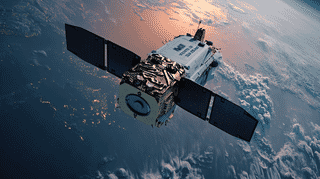
The ETV is conceived as "the world's first self-eating spacecraft." Key specifications include:
- Payload Capacity: Up to 50kg
- Total Launch Mass: Approximately 250kg
- Delta-V Capability: About 4.5 km/s
- Orbital Maneuvering: Up to 30-degree inclination changes within LEO
- Reachable Destinations: LEO, MEO, GEO, highly elliptical orbits, lunar orbit, and beyond
According to Meridian CEO Sam Richards, the ETV could potentially deliver payloads to lunar orbit at "an order of magnitude cheaper" than current chemical propulsion systems. The project has already attracted interest from missions including ShakthiSAT, a global STEM mission led by Space Kidz India to deliver a micro-lander to the lunar surface.
Historical Background and International Collaboration
The autophage rocket concept isn't new, it was first proposed and patented in 1938. However, controlled combustion testing wasn't achieved until 2018, when a pioneering research partnership between the University of Glasgow and Dnipro National University in Ukraine reached this milestone.
Since then, the technology has steadily matured through funding from the UK Ministry of Defence's Defence & Security Accelerator (DASA) and testing at facilities like Kingston University's rocket laboratory. The Glasgow team received an additional £290,000 in 2024 to continue development.
Impact on the Space Industry
Dr. Paul Bate, CEO of the UK Space Agency, has praised the technology's potential: "The University of Glasgow's impressive work towards an autophage engine is an example of one which has great potential to meet the growing global appetite for developments in the efficiency and sustainability of rocket propulsion."
The impact on the space startup ecosystem could be tremendous:
Expanding the Small Satellite Market, By the mid-2020s, demand for small payload launches could reach 3,000 per year, representing a potential market value of £100 million.
Boosting UK Space Industry Competitiveness, Enabling launches from UK sites like the Sutherland spaceport in Scotland, reducing dependence on launch sites in the USA or Kazakhstan.
Sustainable Space Development, An environmentally friendly approach that minimizes disposable rocket components, addressing the growing space debris problem.
Challenges and Future Prospects
Technical challenges remain. Maintaining structural integrity while feeding the fuselage into the combustion chamber, developing materials that withstand extreme temperatures, and scaling up thrust as the design grows larger are all ongoing concerns. The research team is exploring heat-resistant materials like tungsten and graphite.
However, the foundational technology has been proven, and the path to commercialization is clear. Alpha Impulsion confirmed stable ignition and controlled combustion during a six-day test campaign in May 2025, opening the door to launch and in-orbit missions.
In the world of space development, creativity has always been required to defy the natural law of gravity. The seemingly strange idea of a spacecraft "eating itself" might become the key to democratizing access to space.
In Japan, JAXA and private companies are advancing innovative space technologies, but what unique approaches to space development exist in your country? And what do you think about this kind of "paradigm shift" in technological innovation?
References
- https://www.gla.ac.uk/news/archiveofnews/2024/january/headline_1033908_en.html
- https://payloadspace.com/uk-funds-design-review-of-new-autophage-spacecraft/
- https://www.gov.uk/government/news/uk-space-agency-goes-global-with-23-new-projects
- https://meridianspacecommand.com/etv
- https://www.gov.uk/government/news/revolutionary-rocket-eats-for-the-stars






Global Discussion
15 comments