Japanese researchers heated hematite to 1,200°C in a hard vacuum and pulled 0.03 grams of oxygen from 1 gram without melting it. Lunar soil is still only a calculation. How it compares with ESA and NASA methods.
A Moon clock gains about 56 microseconds a day on Earth clocks, about 17 km of navigation error per day if uncorrected. The CGPM's lunar time draft seeks one reference scale and never mentions optical clocks.
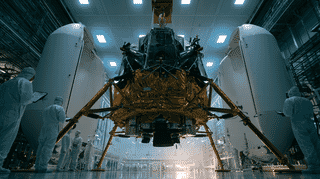
ispace and Mitsubishi Heavy will launch the ULTRA lunar lander on an H3 rocket in 2028, with no rideshare. Of the 18.7 billion yen Mission 3 expects to bring in, 12 billion is a government subsidy.
A Tohoku University team grew rice to the heading stage in soil mimicking the Moon's surface, using fertilizer made from nothing but air and electricity via plasma. The unlikely inspiration? Gundam's beam saber. As NASA pushes toward a lunar base, it could become foundational tech for growing food in space.
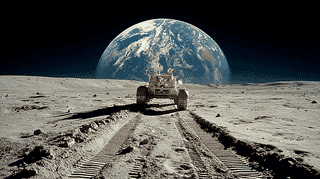
With Artemis II home safely, we look at Japan's contributions to lunar exploration: Toyota's Lunar Cruiser, MHI's regenerative fuel cells, Bridgestone's lunar tires, and the rest of the hardware keeping crews alive on the Moon.
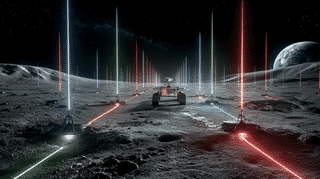
Casio and JAXA have demonstrated ±5cm positioning accuracy using LED-based visible light communication technology 'picalico' in a simulated lunar environment. With no GPS available on the Moon, this warehouse-born technology could become essential infrastructure for future lunar bases and rover operations.
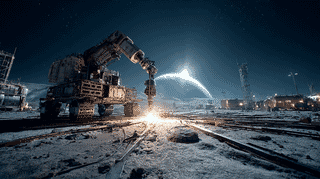
Tohoku University spinoff Space Quarters has successfully demonstrated electron beam welding in simulated zero-gravity and lunar gravity environments aboard an aircraft. The company achieved a world-first by welding sintered lunar regolith — the sandy material covering the Moon's surface. With its ultra-compact 7 kg welding system and JAXA partnership, this breakthrough brings humanity one step closer to building infrastructure in space.
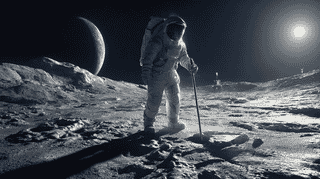
PASS (Portable Active Seismic Source), a compact seismic device developed by the University of Tokyo, has been selected for NASA's Artemis IV mission. Astronauts will use this staff-like tool to generate vibrations and map the Moon's subsurface structure. Learn how this Japanese innovation will support water resource exploration, mineral surveys, and foundation assessments for future lunar bases.