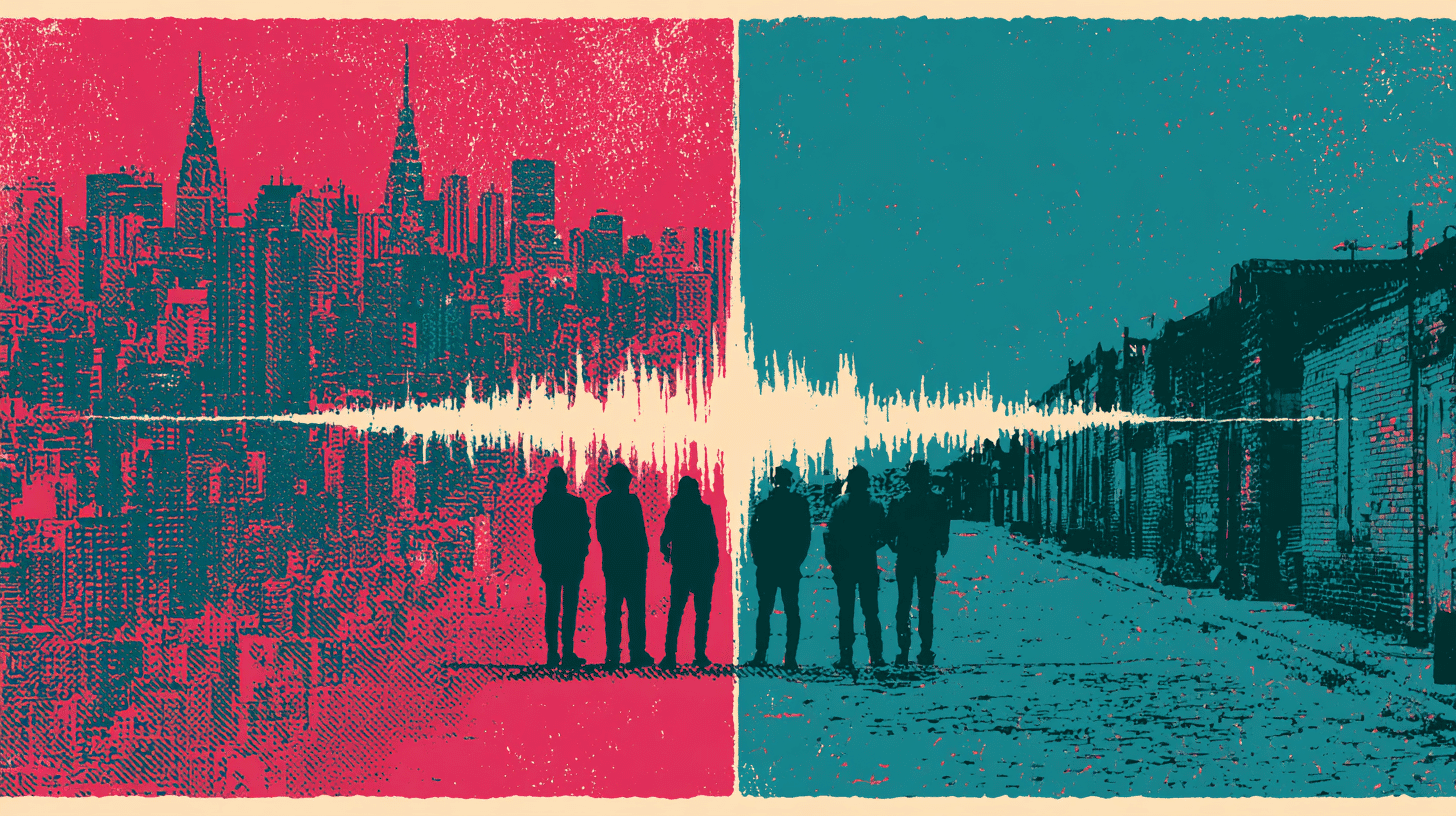
🎧 A Japanese boy group just booked an Atlanta hitmaker and an Alabama rapper for the same track, and put a snippet on TikTok three days before anyone could hear the whole thing. The song is called "BRUCE WAYNE." The strategy behind it is more interesting than the title.
The Song, and the Names Attached to It
BE:FIRST released "BRUCE WAYNE feat. Flo Milli, ATL Jacob" on July 31, 2026, as a digital single. A partial preview went live at 8 a.m. Japan time on July 28 across Instagram and TikTok.
The credits are the story. SKY-HI and ATL Jacob share the production credit. Flo Milli features on it. Neither name means much to a casual listener in Osaka, and both mean a great deal to anyone who has spent time inside American rap over the past six years.
One note on the title: Bruce Wayne is Batman's civilian name, and the release materials say nothing about why the song carries it.
Who Are ATL Jacob and Flo Milli?
ATL Jacob is a producer, rapper and entrepreneur from Atlanta. According to his label profile, Future found him at 17 and installed him as an in-house producer at Freebandz. From there he built credits with Drake, Moneybagg Yo, Kodak Black, Lil Durk and Lil Baby. He is not a session hand brought in to add flavour. He is one of the people whose drum programming defines what mainstream American rap has sounded like since roughly 2019.
Flo Milli is 26, comes from Mobile, Alabama, and writes both her raps and her hooks. Her streaming total has passed four billion. She arrived the way people arrive now: "Beef FloMix" and "In The Party" went up on SoundCloud in late 2018, TikTok found them, and the algorithm did what the algorithm does. That clipped, cocky delivery is recognisable within a bar, which is exactly what a group shopping for American texture would want on a hook.
Put plainly, BE:FIRST did not hire two people who happened to be available. They hired a specific sound.
A Quick Primer on BE:FIRST
For readers meeting them for the first time: BE:FIRST are six performers, SOTA, SHUNTO, MANATO, RYUHEI, JUNON and LEO, signed to BMSG, a Tokyo label run by the rapper-producer SKY-HI. They came out of a televised audition and debuted in 2021, rooted in hip-hop and R&B, with every member writing, rapping, singing and contributing to choreography rather than slotting into fixed roles.
Domestically the numbers are enormous. Their 2025 dome tour ran nine shows across four cities and drew roughly 300,000 people. Their first solo stadium dates, in May 2026, brought in about 100,000 across two nights. Also in 2025 they ran their first overseas tour, "BE:FIRST World Tour 2025 -Who is BE:FIRST?-," through 12 cities in the United States, Asia and Europe.
Climbing a Collaboration Ladder
"BRUCE WAYNE" is not a one-off. Looked at across 2026, it is the third rung on a ladder.
In June, the group put out a remix of "Doesn't Really Matter" with Janet Jackson and shared a stage with her at her Tokyo-area show. On July 1 they released "Missing," produced by the British DJ Jonas Blue. Four weeks later comes an Atlanta rap record. Legacy American pop, then British dance-pop, then contemporary US hip-hop, in the space of seven weeks.
Behind all of it sits a move of a different kind. On July 16, Billboard Japan reported that SKY-HI and all six members had been named 2026 members of the Recording Academy, which gives them voting and attendance eligibility for the 69th Grammy Awards. Voting membership does not win anyone a trophy. What it does is place a Japanese group inside the room where American industry consensus gets formed, which is a different kind of asset than a chart position.
August fills in the rest. On August 1 they performed the halftime show at the Hip Hop International 2026 Final in Arizona, a global dance competition rather than a music festival, which is a shrewd fit for a group whose choreography travels better than its lyrics. On August 8 they appear at Head In The Clouds LA 2026. Earlier in the month they play LaLaLa Festival 2026 in Indonesia.
650 Seats in New York, 100,000 in Tokyo
Here is where honesty helps more than hype.
In September and October, BE:FIRST run the BE:FIRST WORLD SHOWCASE 2026: Bangkok on September 25, Taipei on September 27, Manila on October 3, then two nights in New York. The October 23 date is at the Gramercy Theatre, a Live Nation room in Manhattan that holds about 650 people. Tickets for it sold out immediately, and an additional show was added for October 22.
Sold out is sold out, and a second night added on demand is a real signal. But the gap is worth stating clearly. Five months after filling a Tokyo stadium with 100,000 people, this group is playing a venue that holds roughly the population of a large Japanese high school year group. That is not a failure. Almost every act that eventually sells out arenas abroad passed through a room this size first.
Back home, meanwhile, a domestic dome tour starts in January 2027. The two scales are running in parallel, funded by each other.
Not the K-Pop Route
The obvious comparison is Korea, and the comparison is instructive mainly for how the approaches differ.
Korean agencies spent much of the past decade building infrastructure aimed directly at the United States: local subsidiaries, English-language singles engineered for American radio and playlists, and in some cases groups assembled outside Korea entirely. The bet was on relocating part of the operation to where the market is.
BMSG appears to be running a different play. BE:FIRST remain a Tokyo group with a Japanese fanbase paying for stadiums and domes, and the overseas move is being made by importing American and British collaborators into the catalogue rather than exporting the group into a foreign system. Small venues abroad, big venues at home, and a growing list of credits that give US programmers a reason to take a call.
It is too early to say whether that works. A viral snippet is not a Billboard entry, a 650-seat theatre is not Madison Square Garden, and plenty of Japanese acts have released a well-produced English-language collaboration that went nowhere outside Japan. What is different this time is the volume and the consistency. A schedule this dense inside a single summer is not a publicity gesture. It is a campaign.
The full song landed on July 31. From here, the numbers answer.
When an overseas act tries to break into your country, what actually convinces you to listen? A local collaborator you trust, a show you can get to, or something else?







Global Discussion
4 comments