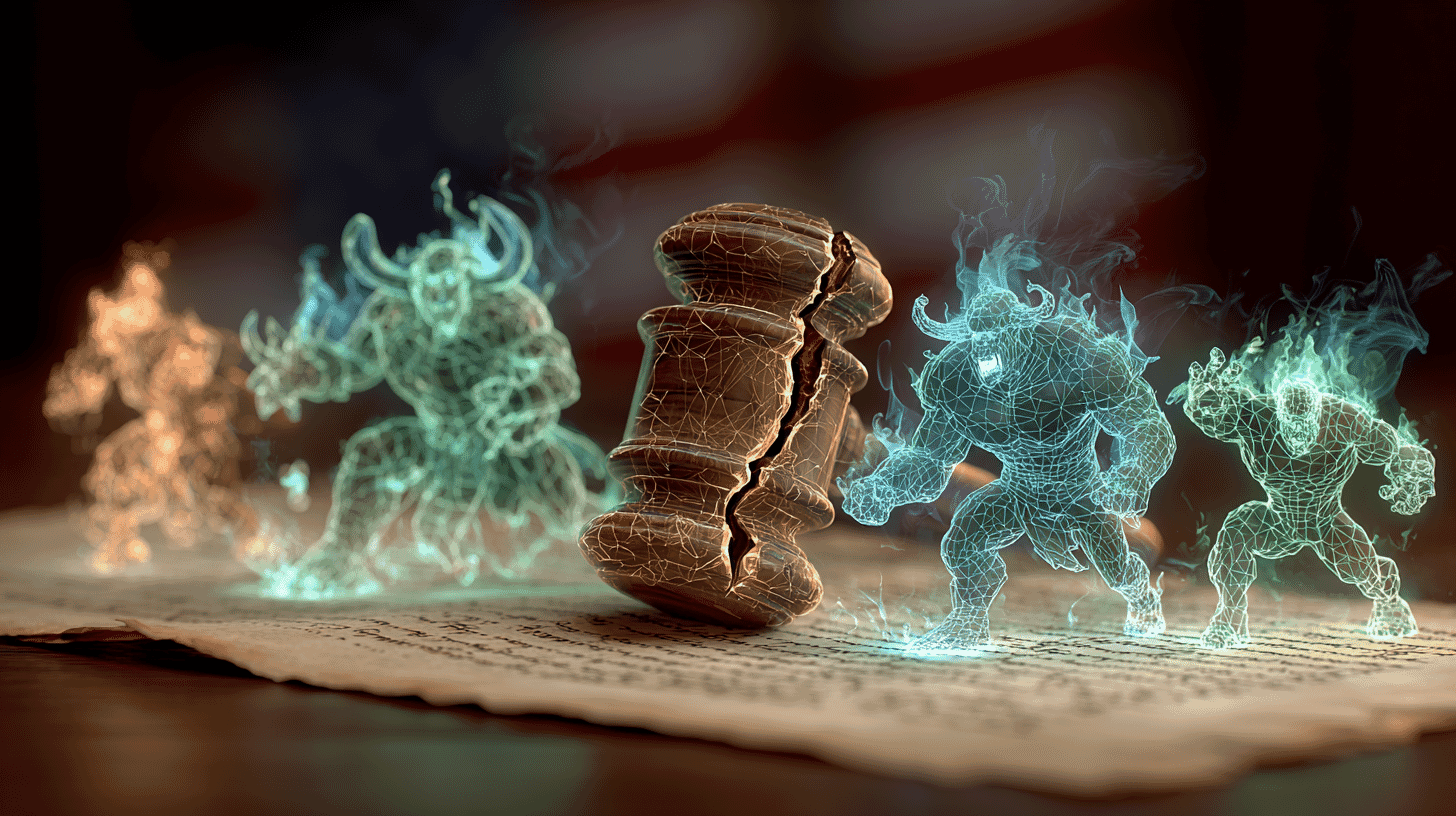
Can you really patent "summoning a character to fight for you" in a video game? The U.S. Patent Office has said no, rejecting all 26 claims of Nintendo's contested battle mechanic patent in a rare director-ordered reexamination. Here is what happened, why it matters, and what it means for the Palworld lawsuit.
What Just Happened
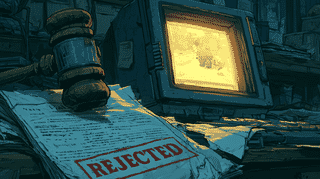
On April 1, 2026, the United States Patent and Trademark Office (USPTO) issued a non-final rejection of U.S. Patent No. 12,403,397, a patent held by Nintendo and The Pokémon Company that covers a game system where players summon sub-characters to fight on their behalf.
All 26 claims in the patent were struck down. The examiner concluded that the mechanics described were too similar to existing prior art to deserve patent protection. In other words, the USPTO determined that the concepts were "obvious", not novel enough to be owned by any single company.
What Was This Patent About?
The so-called "397 patent" described a system where a player controls a main character on a field while summoning a sub-character to engage in combat. It defined two battle modes:
- Mode 1 (Manual): If an enemy is present where the sub-character appears, the player directly controls the battle. If no enemy is nearby, the sub-character moves automatically.
- Mode 2 (Automatic): The player sends the sub-character in a specific direction, and if an enemy is encountered along the way, combat proceeds automatically.
The patent listed Shigeru Ohmori, director of Pokémon Scarlet and Violet, as the inventor. It's widely believed to be based on the "Let's Go" auto-battle feature in those games, where players can send their Pokémon out to fight wild encounters independently.
When the patent was first granted in September 2025, it sparked immediate backlash. Critics pointed out that the claims were extremely broad, potentially covering not just Pokémon games, but any title where players summon companions to fight, from Pikmin to Persona. Video game IP lawyer Kirk Sigmon publicly stated that the claims should never have been allowed.
Why the USPTO Rejected It
The USPTO's 104-page examination document cited four pieces of prior art, previously filed patents that describe similar mechanics:
- A Konami patent (filed 2002): Describing sub-characters that fight alongside players in both automatic and manual modes
- Two Nintendo patents (filed 2019 and 2022): Describing companion character battle mechanics, meaning Nintendo's own previous filings worked against the new patent
- A Bandai Namco patent (filed 2020): Covering related game combat systems
The examiner reached this conclusion without playing or even viewing any video games. The entire case was decided on paper, based on the technical descriptions in existing patent documents. The verdict: what the 397 patent described was an obvious combination of techniques that anyone skilled in game development would naturally arrive at.
The irony is hard to miss, two of the four prior art references that torpedoed Nintendo's patent were filed by Nintendo itself.
Why This Reexamination Was So Unusual
The reexamination was ordered in November 2025 by USPTO Director John A. Squires under his own authority. Reviews initiated by the director, without any third-party petition, account for roughly 1% of reexaminations. The previous instance has been reported as 2012, with some accounts putting it at 2003; either way, it had been well over a decade. Normally, patent reexaminations are triggered by third parties who feel threatened by a patent. In this case, no outside company filed a challenge. The USPTO director himself decided the patent needed another look.
This fits Squires' stated philosophy of making patents "born strong", ensuring that only genuinely innovative inventions receive protection, rather than granting weak patents that get invalidated later in costly litigation. The 397 patent, granted just before Squires took office, appears to have been a prime example of the kind of quality issue he aimed to address.
Public pressure also played a role. GamesFray, a legal analysis site specializing in gaming IP, was among the first to raise alarms about the patent's scope, and subsequent coverage by outlets like PC Gamer, Nintendo Life, and Dexerto amplified the concern.
Connection to the Palworld Lawsuit
Nintendo and The Pokémon Company filed a patent infringement lawsuit against Pocketpair, the developer of Palworld, in Tokyo District Court in September 2024. The case centers on three specific Japanese patents related to creature-catching and companion mechanics.
It's important to note that the 397 patent rejected by the USPTO is not one of the three patents at issue in the Palworld case. The Japanese equivalent (Patent No. 7482585) is a separate filing.
However, the rejection sends a broader signal. If the USPTO determined that "summoning a character to battle" is too obvious and well-established to patent, similar arguments could strengthen Pocketpair's position against the other Nintendo patents. One of the three patents in the Japanese lawsuit has already received a rejection notice from Japan's Patent Office as well.
What Happens Next
This rejection is non-final, meaning the story isn't over. Nintendo has two months (with the option to request an extension) to respond, either by arguing against the rejection or amending the claims to a narrower scope. If the USPTO issues a final rejection, Nintendo can still appeal to the Federal Circuit. And even if just one of the 26 claims survives, Nintendo retains the right to enforce it. As of July 2026, no final decision has been made public.
The question under argument is whether a single company can own "send out a companion character to fight," a mechanic that has been in games for decades. What the rejection established is that the evidence against it was sitting in Nintendo's own back catalogue of filings, not a rival's.
In your country, how do people feel about patents on game mechanics? Should companies be able to own fundamental gameplay systems, or does that stifle creativity? We'd love to hear your thoughts.
References
- https://automaton-media.com/articles/newsjp/20260402-434094/
- https://gamesfray.com/huge-blow-for-nintendo-head-of-u-s-patent-office-takes-rare-step-to-order-reexamination-of-summon-subcharacter-and-let-it-fight-in-1-of-2-modes-patent/
- https://www.nintendolife.com/news/2026/04/nintendos-summon-character-to-fight-patent-rejected-by-us-patent-office
- https://www.pcgamer.com/gaming-industry/us-patent-office-revokes-nintendos-controversial-pokemon-battling-patent-in-nonfinal-decision/
- https://data.uspto.gov/patent-file-wrapper/search/details/90020162/documents




Global Discussion
15 comments