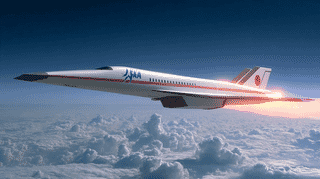
Waseda University, JAXA, the University of Tokyo, and Keio University have completed Japan's first Mach 5 combustion test using a hypersonic experimental aircraft. How does Japan's passenger-focused strategy compare with the US (Hermeus, Lockheed) and a militarily advanced China?
Chuya Koyama's Space Brothers manga concludes June 11, 2026 in Morning issue 28 after 18 years and 432 chapters. We break down the 2-week cover treatment, 35 million copies sold, Crunchyroll anime streaming, and how fans worldwide are saying goodbye.
NTT and JAXA have completed the world's first orbital demonstration of satellite MIMO communication and IoT sensing technology aboard a low-Earth orbit satellite. By applying MIMO, the same technology that speeds up your smartphone, to space, they aim to double satellite data transmission capacity. The breakthrough could bring IoT connectivity to mountains, oceans, and remote islands where no cell towers exist.
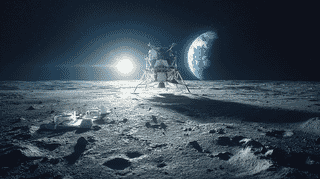
Japanese lunar startup ispace has unveiled 'Lunar Connect,' a communication and positioning service using lunar orbiting satellites. Partnering with KDDI for ground stations and planning 5 satellites by 2030, ispace is pivoting from a transport company to a space infrastructure provider. The new unified ULTRA lander marks another strategic shift.
ispace's Improvement Task Force, co-chaired by MIT and Keio professors, has released 7 recommendations after analyzing two failed lunar landings using CAST methodology. With the new integrated ULTRA lander, JAXA SLIM technology transfer, and restructured missions through 2030, ispace is emerging as a role model for how space startups can learn from failure.
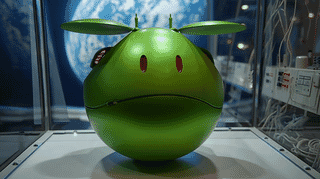
Space Entry Inc. launches 'Minna no Haro,' an autonomous space robot inspired by Gundam's iconic Haro, bound for the ISS Kibo module. Designed by legendary mecha designer Kunio Okawara and running Zephyr RTOS, the project achieves three world firsts and invites public participation through crowdfunding.
Renesas Electronics' Intersil-brand radiation-hardened ICs are aboard NASA's Artemis 2 crewed lunar mission, powering critical subsystems in the Orion spacecraft and SLS rocket. Discover the 60+ year heritage behind these space-grade chips and what Japan's role in the $1.8 billion rad-hard semiconductor market means for the future of space exploration.
Astroscale and France's Exotrail sign a deal for satellite deorbiting missions, with President Macron and PM Takaichi visiting Astroscale's Tokyo HQ. The partnership targets space debris removal technology by 2030 amid a booming orbital servicing market.
NTT Docomo launches 'docomo Starlink Direct' on April 27, 2026, offering free satellite-to-smartphone communication for 22 million subscribers. Using SpaceX's Starlink constellation of 650+ satellites as cell towers in space, the service covers mountains, remote islands, and seas across Japan. We compare it with KDDI's pioneering au service and T-Mobile's U.S. rollout.
Asia's largest satellite operator SKY Perfect JSAT has unveiled plans to build a 100-satellite constellation combining Earth observation and communications. With a $230M investment in Planet Labs' Pelican satellites and expanded partnerships with QPS Institute, the company is positioning itself as a 'space solutions provider', taking a fundamentally different approach from SpaceX's Starlink and Amazon's Leo broadband networks.
With Artemis II home safely, we look at Japan's contributions to lunar exploration: Toyota's Lunar Cruiser, MHI's regenerative fuel cells, Bridgestone's lunar tires, and the rest of the hardware keeping crews alive on the Moon.
Casio and JAXA have demonstrated ±5cm positioning accuracy using LED-based visible light communication technology 'picalico' in a simulated lunar environment. With no GPS available on the Moon, this warehouse-born technology could become essential infrastructure for future lunar bases and rover operations.
Japanese space startup Synspective successfully launched its 8th StriX SAR satellite via Rocket Lab's Electron rocket from New Zealand. The company is building a 30-satellite constellation and holds a role in a 283.1 billion yen Japanese defense program, competing with Finland's ICEYE and America's Capella Space in the global SAR market.
Tohoku University spinoff Space Quarters has successfully demonstrated electron beam welding in simulated zero-gravity and lunar gravity environments aboard an aircraft. The company achieved a world-first by welding sintered lunar regolith — the sandy material covering the Moon's surface. With its ultra-compact 7 kg welding system and JAXA partnership, this breakthrough brings humanity one step closer to building infrastructure in space.
Japanese space laser startup Orbital Lasers has closed a $20 million Series A round backed by nine investors including Keio Innovation Initiative and JIC Venture Growth. Spun out from satellite operator SKY Perfect JSAT in 2024, the company develops compact, high-efficiency space lasers for debris removal via laser ablation and high-precision 3D terrain mapping via satellite LiDAR. We explore how it compares to Astroscale and SpaceX, and what it means for Japan's booming space startup ecosystem.
Japanese space startup Astroscale has announced its ISSA-J1 mission to realize a 'space safety patrol' service in orbit. As the space debris crisis intensifies with over 130 million pieces of junk circling Earth, this article explores how Astroscale's first-mover advantage in on-orbit servicing compares to rivals like ClearSpace and SpaceX, and what it means for Japan's growing space industry.
Chiba Institute of Technology has achieved the world's first ground combustion test of thrust vector control (TVC) using a gas hybrid rocket. Part of the Hestia Project, which aims to launch small satellites via balloon-based "Rockoon" method, this breakthrough demonstrated successful thrust vectoring at 2.0 kN over 8 seconds — opening a new path for affordable space access.
As AI demand pushes terrestrial data centers toward their limits in power and cooling, a new frontier is opening in orbit. Japan's NTT Group and SKY Perfect JSAT are moving first through their joint venture Space Compass, built on the IOWN optical platform, while Google's Project Suncatcher and the startup Starcloud race to put solar-powered AI infrastructure in space. Inside Japan's edge in inter-satellite optical links, and the radiation, cooling and launch-cost problems still unsolved.
Japan's Ministry of Defense has signed a landmark $1.8 billion contract for a satellite constellation project. A special purpose company "TriSat Constellation," formed by Mitsubishi Electric, SKY Perfect JSAT, and Mitsui, will lead the effort alongside domestic space startups like Synspective and iQPS. A deep dive into Japan's pivotal shift in space defense strategy.
Japanese space startup SpaceOne launched its third KAIROS small rocket on March 5, 2026 after repeated delays, but flight was aborted about 68.8 seconds after liftoff, a third straight failure following Flights 1 and 2. Learn what the company changed, what went wrong this time, and where its "space delivery service" dream stands now.