Japan's Space Data Inc. and CYPHIC, the country's only electronic warfare startup, have launched a strategic partnership combining digital twin technology with anti-GPS spoofing capabilities. A deep look at how Japanese defense tech startups are tackling modern electronic warfare threats.
Japanese startup AstroX has raised $15 million in Series A funding to develop its revolutionary Rockoon launch system — using high-altitude balloons to carry rockets to the stratosphere before firing them into space. Based in Fukushima's Minamisoma, the company aims to reach space by 2026 and achieve orbital insertion by 2029, challenging the global space launch industry with a low-cost, flexible alternative.
Japanese space startup ALE announces "Starlight Challenge," its third attempt to create the world's first artificial shooting stars after two previous setbacks. Targeting a 2028 space demonstration and commercialization by 2029, this ambitious project blends space entertainment with atmospheric science research.
A Japanese-led research team has detected the largest sulfur-bearing organic molecule ever found in interstellar space, a 13-atom ring compound near the Milky Way's center. The discovery bridges simple space chemistry and complex building blocks of life found in comets and meteorites, offering a key missing link in understanding life's cosmic origins.
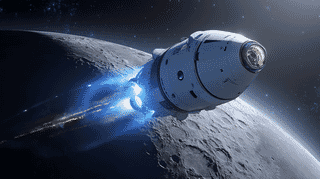
University of Tokyo-born startup Pale Blue enters the Orbital Transfer Vehicle (OTV) business after being selected for JAXA's Space Strategy Fund. With its unique water-based propulsion technology, the company aims to create "branch line transportation" in space. A deep dive into Japan's growing space industry.
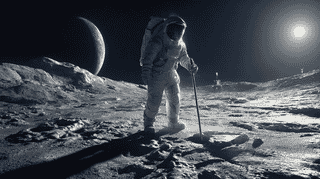
PASS (Portable Active Seismic Source), a compact seismic device developed by the University of Tokyo, has been selected for NASA's Artemis IV mission. Astronauts will use this staff-like tool to generate vibrations and map the Moon's subsurface structure. Learn how this Japanese innovation will support water resource exploration, mineral surveys, and foundation assessments for future lunar bases.
Japan's National Archives now sells a clear file featuring "The Barbarian Woman of Utsuro-bune" - a mysterious disc-shaped vessel that allegedly washed ashore in 1803 with a foreign woman inside. Discover how this Edo-period historical document from "Kōken Zuihitsu," known globally as Japan's UFO incident, is merging Japanese mystery with pop culture.
University of Arizona researchers plan to use samples from asteroid Bennu, returned by NASA's OSIRIS-REx, to test the idea that consciousness existed before life. It is a minority view that mainstream science does not support. Here is what the hypothesis says, where panpsychism and astrobiology meet, and the criticism it faces.
Explore Fujitsu's groundbreaking explainable AI "Kozuchi XAI" for solar flare impact prediction. Learn how this collaborative research with Nagoya University and JAXA aims to protect astronauts and critical infrastructure from space weather hazards.
UK startups are developing revolutionary "autophage" spacecraft that consume their own fuel tanks for propulsion. This self-eating rocket technology could enable low-cost deep space missions, with £150,000 funding secured in 2025 for lunar orbit capabilities. Learn how this innovation is reshaping space exploration.
Australian researchers have developed "thermoradiative diodes" that convert infrared radiation emitted from Earth into space at night into electricity. This reverse solar panel technology shows promise for satellite power and deep space missions. Explore the potential and challenges of this renewable energy breakthrough.
UFO sightings are surging across Japan in 2025. From Fukushima's "UFO Village" to mysterious lights over nuclear plants, discover Japan's UAP hotspots. Learn about the bipartisan UFO caucus pushing for disclosure and how Japan fits into the global UAP transparency movement.
SETI researchers propose revolutionary communication protocols using AI and large language models for extraterrestrial contact. Learn how humanity's first interstellar conversation could happen through AI ambassadors carrying our knowledge across the cosmos.
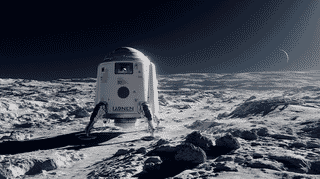
Japanese space startup ispace has been selected for JAXA's Space Strategy Fund, securing up to $130 million over about five years for a 2029 lunar south pole landing. The mission tackles precision landing, extended surface operations and relay satellite deployment. After a 2026 reshuffle it is now designated Mission 4.
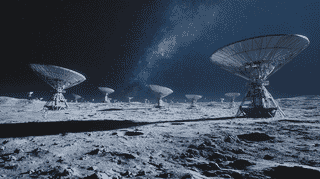
JAXA, the National Astronomical Observatory of Japan, and Tohoku University are working toward TSUKUYOMI, a radio telescope on the Moon. A prototype called LOPTA flies in the 2020s, with 10 or more antennas to follow by the late 2030s. The target is the 21-cm hydrogen line from the Cosmic Dark Ages, the first 100 million years after the Big Bang.
Yamagata University is building Benibana Sat, a 1U CubeSat targeting launch by fiscal 2028. Named for the prefectural flower, the project is aimed less at the satellite than at keeping the firms and people who can build one inside the prefecture.
"open.space" is an open-source phased array antenna built for Earth-Moon-Earth (EME) communication. It aims to replace the traditional dish-and-kilowatt setup with a 1-meter, 240-element array, priced from $49-99 for a single tile up to $4,999 for the full array. Here is what the project offers and where it now stands.