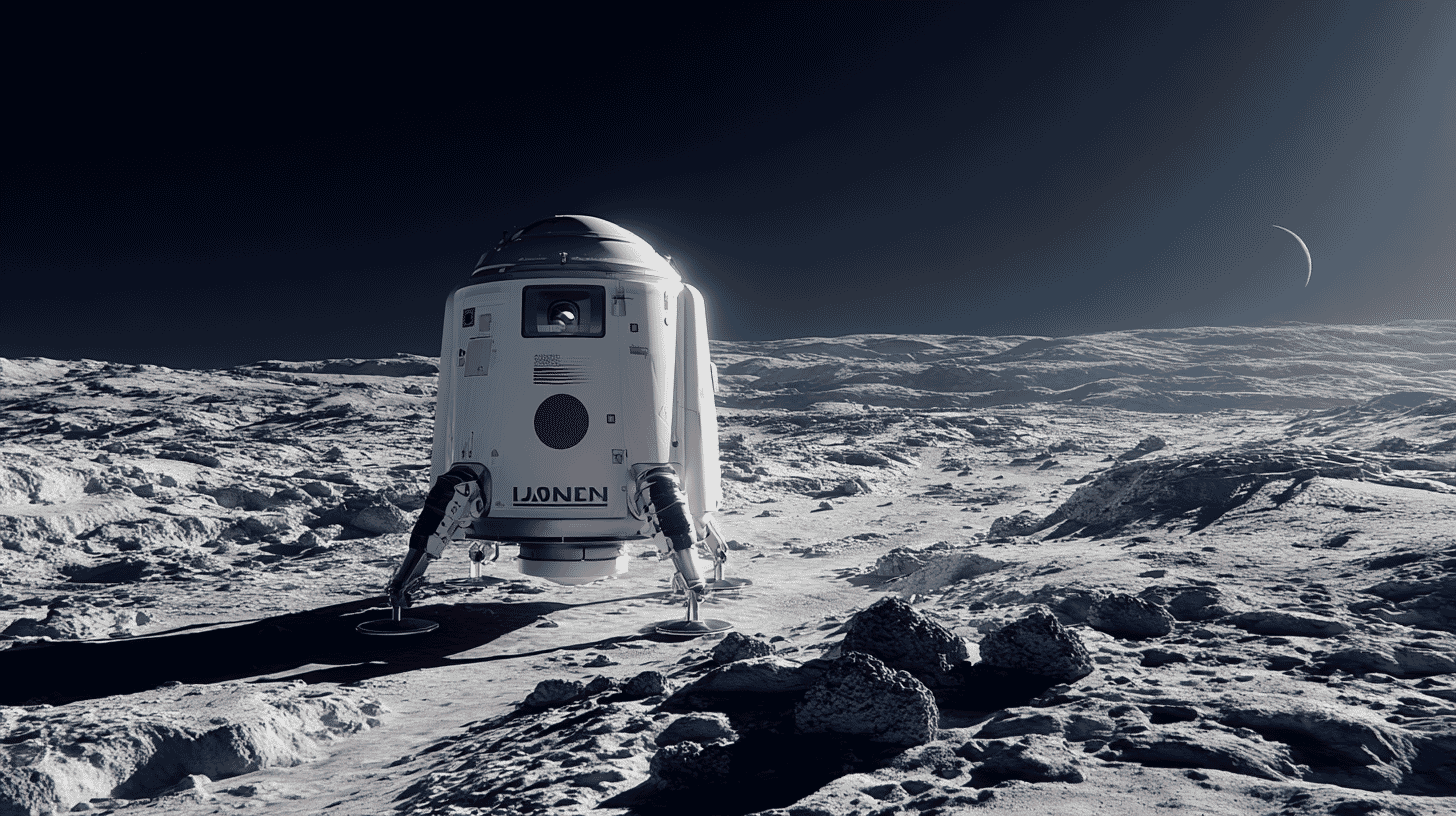
Japanese space venture ispace has secured government backing worth up to $130 million to reach the Moon's south pole, one of the most challenging landing sites in the solar system. The 2029 mission could position Japan as a key player in the global race for lunar water resources.
ispace Wins Japan Space Strategy Fund: Up to $130M for Lunar South Pole Mission
On January 16, 2026, Japanese space startup ispace announced its selection as an implementing organization for the "High-Precision Landing Technology at the Lunar Polar Region" project under JAXA's Space Strategy Fund. The backing provides up to approximately 20 billion yen (roughly $130 million) over about five years, letting the company formally begin developing a new lunar lander for "Mission 6," targeted for launch in 2029. The craft will be an evolution of the lander due to fly on the 2028 mission.
Update: ispace renumbered its missions during 2026. What this article calls Mission 6 is now Mission 4; the 2029 launch date and the near-south-pole precision landing objective are unchanged. The text below keeps the numbering used at the time of the award.
Founded in 2010, ispace has been at the forefront of commercial lunar development, from its participation in the Google Lunar XPRIZE as Team HAKUTO to its subsequent private lunar exploration missions. Following the December 2022 launch of Mission 1 and the January 2025 launch of Mission 2, this funding opens a new stage for the company.
Why the Lunar South Pole: The "Cosmic Gas Station"
The Moon is believed to harbor substantial water resources in the form of ice. The south polar region, particularly in "permanently shadowed" craters where sunlight never reaches, is considered highly likely to contain preserved water ice.
This lunar water has several potential applications:
- Splitting into hydrogen and oxygen for rocket propellant
- Manufacturing fuel at a staging base for deep space exploration to Mars and beyond
- Providing drinking water for future lunar inhabitants
According to NASA data, the Moon contains significant water ice deposits that could prove crucial for the future of space exploration.
Mission 6's Three Major Challenges
ispace's Mission 6 will tackle three critical technological objectives:
1. Precision Landing at the Lunar South Pole
The lunar south polar region is considered one of the most difficult landing zones on the Moon. Several factors contribute to this challenge.
First, the terrain poses significant obstacles. The area around the south pole features numerous slopes, ledges, and rocks, making it difficult to identify safe landing spots. Additionally, the extremely low sun angle creates long shadows that complicate camera-based terrain recognition. Achieving pinpoint landing accuracy under these conditions represents a cutting-edge challenge globally.
2. Extended Surface Operations
Previous missions (Mission 1 and Mission 2) limited lander operations to the lunar daytime, approximately 14 days of continuous sunlight. Mission 6 aims to leverage the unique environment of the lunar south pole, where near-horizontal sunlight is available almost continuously, to achieve operations lasting more than 14 days. This represents a crucial step toward developing future "lunar night survival" technology.
3. Communication Relay Satellite Deployment
Direct Earth communication becomes challenging at the lunar south pole and the far side of the Moon. ispace plans to deploy a communication relay satellite into lunar orbit during Mission 6 to ensure stable communications.
This relay satellite is expected to continue operating after the mission concludes, serving as foundational infrastructure for future lunar exploration and human activities. The company is also considering developing a constellation of multiple satellites and offering data relay services.
ispace's Journey So Far
Operating under the vision "Expand our planet. Expand our future.," ispace is committed to lunar resource development. The company works out of three locations, Japan, Luxembourg and the United States, with roughly 350 staff as of July 2026.
Key milestones include Mission 1 in April 2023, when ispace aimed to become the first private company to achieve a lunar landing. Although the landing was unsuccessful, the mission achieved 8 of 10 planned milestones, including reaching lunar orbit, and accumulated valuable data and expertise.
Mission 2, launched in January 2025, achieved the historic first lunar flyby by a commercial lunar lander. The June 6, 2025 landing attempt ended with communication loss just before touchdown. However, the knowledge gained from these experiences has significantly advanced the technological maturity of subsequent missions.
Future Mission Timeline
At the time of the award, ispace listed the following alongside Mission 6:
- Mission 3 (2027): Led by the U.S. subsidiary, contributing to NASA's Artemis program
- Mission 4 (2028): Lunar landing using the Series 3 lander
- Mission 6 (2029): High-precision landing at the lunar south pole (newly funded)
Update: That lineup was substantially reshuffled during 2026. As published at the end of July 2026:
- New Mission 2.5 (2027 at the earliest): Places a single satellite in lunar orbit, the starting point for the "Lunar Connect" communications and positioning service
- New Mission 3 (formerly Mission 4, 2028): Flies "ULTRA," a new lander developed by the Japanese operation with METI SBIR subsidies. On July 29, 2026 ispace signed a launch services contract with Mitsubishi Heavy Industries to fly it on an H3 rocket, pairing a domestic lander with a domestic launcher
- New Mission 4 (formerly Mission 6, 2029): Precision landing near the south pole, the mission funded by the Space Strategy Fund described here
- New Mission 5 (formerly Mission 3, 2030): Team Draper Commercial Mission 1, led by the U.S. operation, pushed back after a change of engine
CEO Takeshi Hakamada stated: "ispace's vision is to create a world where Earth and Moon function as one system, with space infrastructure supporting a sustainable economy for people on Earth. Lunar water resource exploration is the starting point for realizing this vision."
The International Race to the Moon
International competition for lunar exploration has intensified. India's Chandrayaan-3 achieved the world's first landing near the lunar south pole in 2023. JAXA's SLIM successfully landed on the Moon in January 2024, making Japan the fifth country to achieve a lunar landing.
In the United States, Intuitive Machines accomplished the first private company lunar landing in February 2024, while Astrobotic Technology continues advancing its lunar missions. China has steadily built its track record through the Chang'e series, including achieving the world's first far-side lunar landing.
Against this backdrop, ispace's challenge to achieve precision landing at the lunar south pole carries significant implications for Japan's space industry. The model of a private company receiving government-scale funding to tackle cutting-edge technology is also attracting attention as a new paradigm for public-private space development cooperation.
In Japan, there's active discussion about "embracing challenges without fearing failure" and "the potential of private-sector space development." Interest is also growing in how governments should support lunar development and the future prospects of the space business.
How is private space development progressing in your country? What's the government support structure like, and what expectations do people have for the space industry?






Global Discussion
15 comments